Start with the source
Yellow tea authenticity begins with the garden, because production is small enough that a real tea has one.
Junshan Yinzhen comes from Junshan island in Dongting Lake, and Huoshan Huangya from Huoshan county in Anhui.
Both names are used loosely, and a tin that says yellow tea without a place is telling you nothing.
Ask for the garden, and expect a specific answer rather than a county or a province.
Then ask for the picking date. Yellow tea follows the green tea calendar, and spring is the point.
A tin with a best-before date but no picking date is the standard evasion in this category.
Ask who made it. A named producer is a much better sign than a named style.
Buy from a specialist in Chinese tea, because a general shop cannot answer any of this.
Be careful with the word imperial, which appears on packaging and means nothing at all.
If the seller cannot name the garden, the price should be the green tea price.
Taste as proof
Taste is decisive in yellow tea, because the thing that defines it is something you can smell and drink.
The piling step, men huang (闷黄), removes the grassy edge of a green tea and leaves something rounder.
A real yellow tea smells of corn, chestnut or warm hay, and tastes soft with no bitter edge.
Grassiness means the piling did not happen, and that is a green tea with a yellow label.
Brew at 80 to 85 degrees and watch for bitterness, which is the clearest sign you have been misled.
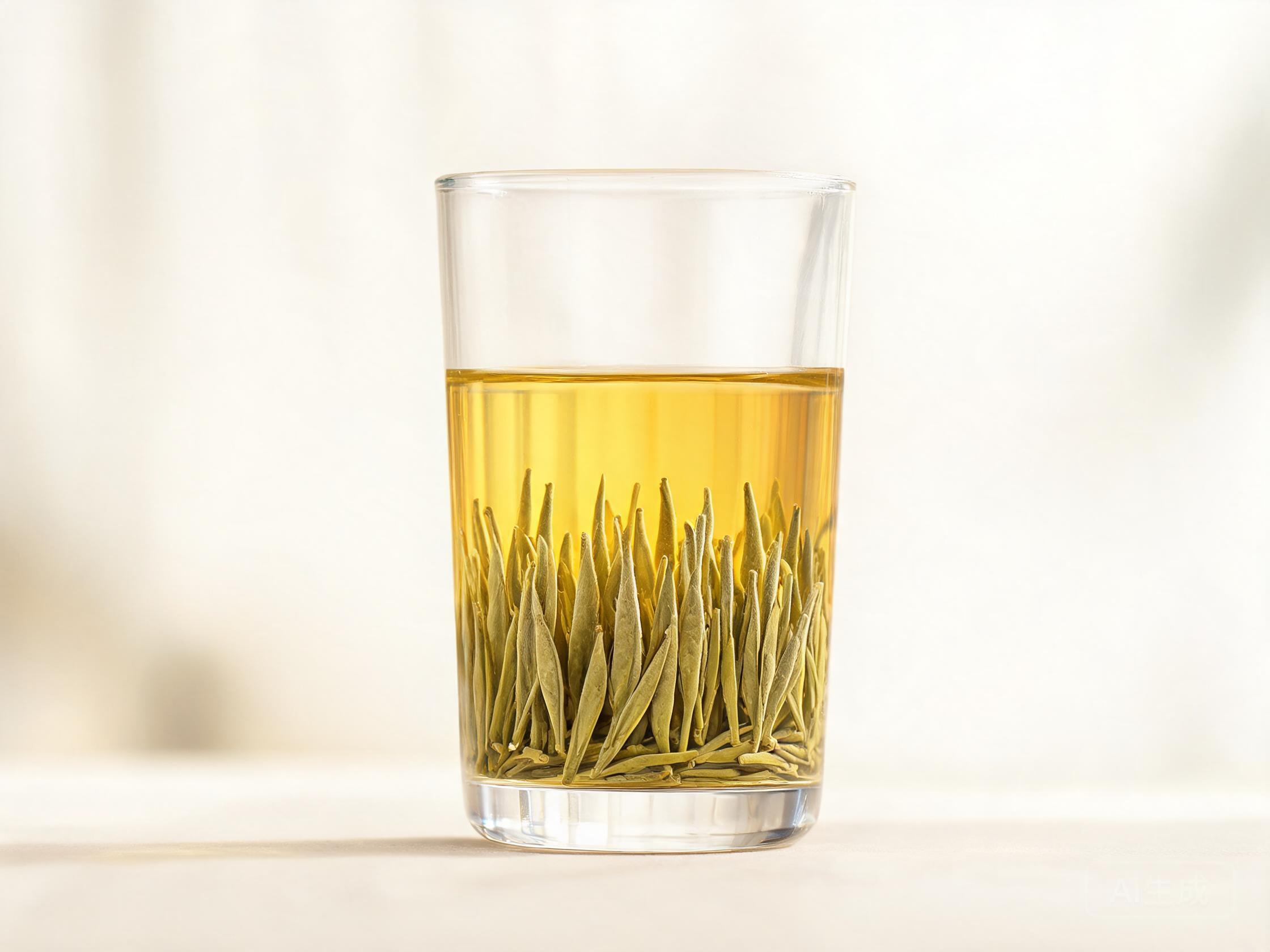
The liquor should be a pale, bright yellow, softer than a green tea of the same grade.
Brew it three times. A real yellow tea gives up most of what it has early, and the third tells you the quality.
Look at the wet leaf for a soft, even yellow, since green patches mean an uneven piling.
Compare it against a green tea from the same producer, because the difference is the entire point.
If it tastes like a good green tea and costs three times as much, it probably is one.
At 3 grams a cup, 25 grams is about eight sessions, enough for this comparison and not much money.
Packaging and provenance
Yellow tea packaging is the weakest evidence in any category, because gift tins dominate the trade.
A gift tin hides the leaf, which is the only thing that can settle the question.
Look for a producer, a garden and a picking date, and expect to find none of them on a gift tin.
Geographical indication marks exist for some yellow teas and are worth checking for.
A standard product code is a small but real sign that the tea was packed legally.
Imperial tribute, royal grade and similar wording are marketing rather than information.
Loose leaf in a sealed pouch is a better buy than a tin, because you can inspect it.
Be suspicious of yellow tea sold at green tea prices, and of green tea sold at yellow prices.
Keep the packaging with your notes, so that next year you can check what you were told this year.
None of it proves anything, and the category is small enough that the seller matters more than the box.
A practical test
Buy 25 grams from two different sellers, at different prices, and drink them side by side.
Brew both at 85 degrees with the same dose, and smell the dry leaf before you start.
The cheaper one is usually greener and grassier, and the dearer one rounder and softer.
If you cannot tell them apart, buy the cheaper one, and that is a genuine conclusion.
Then buy a green tea from the same producer and put all three in a row.
That comparison teaches the category faster than anything written about it.
Ask the specialist which they would drink, and why, and compare it with your own note.
Keep the price per gram with the notes, because value is most of the judgement here.
Repeat once a year in spring, when the new pickings arrive and the choice is real.
Two or three years of that and the fakes become obvious in about ten seconds.
Two producers at 25 grams each costs less than one 100 gram tin, and it answers the question directly.