Where it comes from
Junshan Yinzhen(君山银针)comes from Junshan, a small island in Dongting Lake.
The island sits in Hunan near Yueyang, and it covers under 1 square kilometre.
That size is why the tea is scarce, and why it is so often faked.
It is a yellow tea, which is the category Chinese drinkers know least well.
It is frequently mistaken for a white tea, since both are made from buds.
The difference is one processing step, and it changes both colour and taste.
The tea is also called the king of yellow tea, which is a marketing phrase.
There is no official ranking of teas, and no body awards that title.
What the phrase reflects is price and reputation rather than any measurement.
Junshan has carried tea plantings for a long time, and it supplied tribute.
Tribute status is documented, and it is not the same thing as evidence of quality.
Picking runs for roughly 10 days in early April, and a late frost ruins it.
The lake keeps temperatures mild, which matters for a bud-only tea.
What makes it a yellow tea
The defining step is men huang(闷黄), and no other category uses it.
The hot leaf is piled and kept damp so that it changes without leaf enzymes doing the work.
The step runs for 6 to 8 hours, and it is easy to get wrong.
It removes the grassy edge that green tea keeps, and it softens the liquor.
It also lowers the catechin content, and that drop is measurable.
So the chemistry moves away from green tea rather than past it.
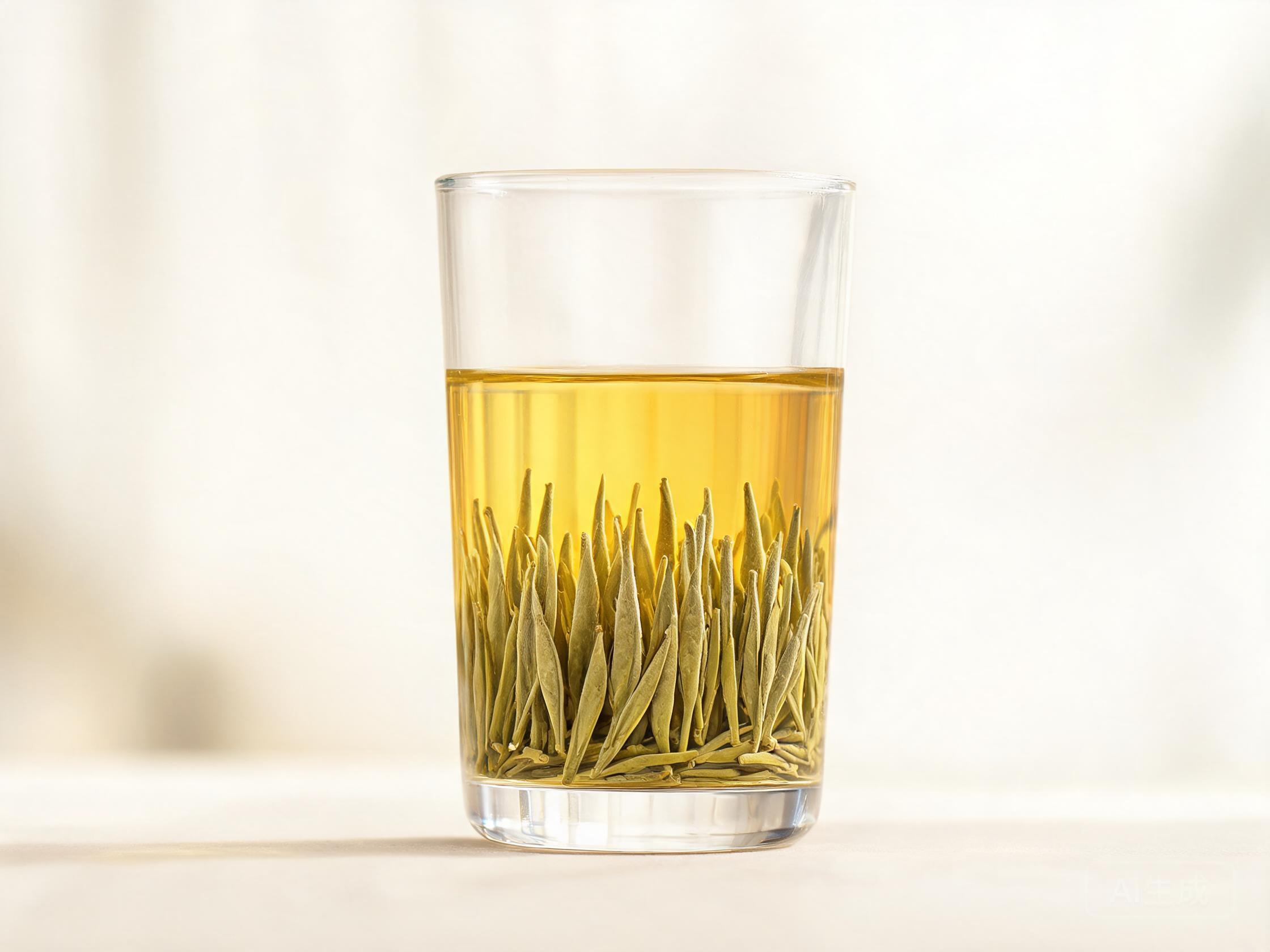
The dry bud stays silvery, while the liquor turns yellow rather than green.
That contrast is where the phrase golden jade in silver comes from.
The buds are described as silver outside and gold within, which is closer to poetry than fact.
What is real is the pale yellow liquor and the absence of grassiness.
A sample that tastes like green tea probably never got the step.
Some producers shorten it, and some skip it and sell the tea anyway.
The category is small enough that almost nobody is checking most of it.
How to judge a sample
Start with the dry bud, which should be plump, straight and evenly sized.
The down should be visible, and the colour silvery rather than bright white.
Buds that are flat, thin or broken belong to a lower grade.
Smell the dry leaf, then smell it again once the glass has warmed it.
The warmed aroma should be sweet, with a faint note of cooked corn.
That note is characteristic of the category and hard to mistake for anything else.
Brew 3 g in 150 ml at 85 °C and watch what the buds do.
Good material stands upright in the glass, and that is the party trick.
It is also the least reliable quality signal, since almost any bud manages it.
Judge the liquor instead, which should be clear and pale yellow.
Taste for sweetness and for a thick, soft finish with no grassy edge.
Astringency should sit low, and bitterness means the water ran too hot.
The spent buds should be uniform, soft and yellow rather than green.
Buying it and brewing it
Scarcity and price make this an easy tea to get wrong as a buyer.
Tea sold as Junshan Yinzhen is grown well beyond the island itself.
Some of it is genuine yellow tea made elsewhere, and some of it is green tea.
A seller who names the island is the first filter, and most cannot.
Price is a weak signal here, since expensive fakes are common.
A low price is a reliable warning, and a high one proves nothing at all.
Put it beside Huoshan Huangya(霍山黄芽)before deciding what you like.
Both are yellow teas, and they drink differently enough to teach you something.
Brew at 85 °C for 2 minutes, and use a glass for the first cup.
Three infusions is a fair expectation, and the second is usually the best.
Yellow tea keeps better than green tea and worse than white, so buy it fresh.
Store it sealed and cool, and drink it inside the year.
Pay for the cup, and treat every claim about rank as decoration.