The common tricks
The dominant trick in yellow tea is simpler than most: selling green tea as yellow tea.
The category is small, expensive and poorly understood, which makes it almost ideal for this.
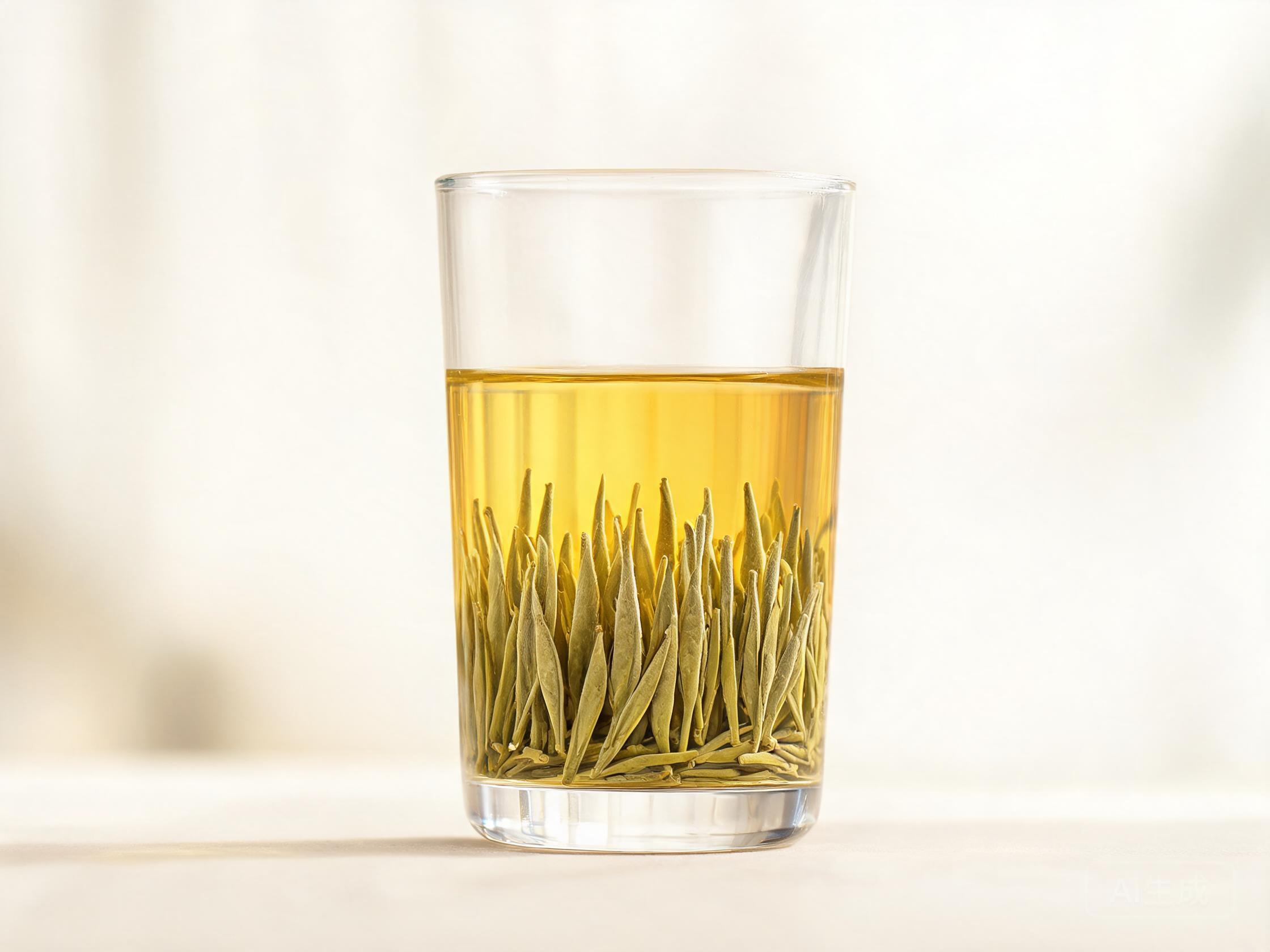
Bright green leaf sold as yellow tea is the commonest version, and it is visible if you look.
The second is the aged yellow tea claim, which has no tradition behind it and no market for it.
The third is the gift tin, which hides the leaf and usually carries no picking date.
The fourth is a named origin used loosely. Junshan and Huoshan are places, and the names are not.
The fifth is a piling that was too short or too cool, giving a green tea with a yellow label.
The sixth is smoke, used to suggest a rounded character that the piling never produced.
The seventh is simply the price: green tea sold at yellow tea prices is the same trick again.
None of these need any skill to carry out, and all are avoidable by looking at the leaf.
A real yellow tea costs several times a comparable green tea by weight, which is the whole motive.
Why they work
Yellow tea is expensive, so the margin on substituting a green tea is large.
Most buyers have never drunk a real one, so there is nothing to compare against.
The difference between a yellow tea and a mild green tea is real but subtle.
Grades are not standardised, so there is no external reference to check a claim against.
Gift packaging exists precisely to stop you inspecting the leaf before you pay.
Place names are used as quality adjectives by now, and few buyers know they are places.
A short piling produces something genuinely between the two, which is hard to call.
Smoke reads as a deliberate character note rather than as a cover for something.
Prices vary so widely that a high price does not signal much to most buyers.
Small category, high price, no standards: that is the whole explanation.
Production is small enough that a genuine tea usually comes with a garden name and a spring date.
Defence
Look at the colour of the dry leaf first. It should be yellow-green, and bright green rules it out.
Smell for grassiness, which means the piling did not happen.
Insist on a garden name, and expect a specific answer rather than a county.
Ask for the picking date, and be suspicious of a tin with only a best-before date.
Buy loose leaf rather than a gift tin, so that you can see what you are getting.
Brew at 80 to 85 degrees and look for bitterness, which means a green tea or a poor one.
Compare it against a green tea from the same producer, since the difference is the point.
Buy 25 grams from two producers and compare them, which costs less than one mistake.
Watch the price per gram. Real yellow tea is expensive, and a cheap one is not real.
Buy from a specialist in Chinese tea rather than from a general gift shop.
At 3 grams a cup, 25 grams is about eight sessions, which is enough to judge before buying more.
When in doubt
When you cannot verify that it is yellow tea, pay the green tea price, because that is what it is.
A gift tin without a date is worth a green tea price and nothing above it.
Aged yellow tea is worth nothing extra, so do not pay for the claim.
Buy Longjing instead. It is a third of the price and a more reliable pleasure.
Ask the seller to describe the piling step, which a specialist can do in a sentence.
Buy in spring, when the new pickings arrive, and not in December.
Keep to the smallest quantity that lets you judge, which is 25 grams.
Do not buy on reputation alone, since the reputation is exactly what is being sold.
There is very little real yellow tea, which is a reason to be more careful rather than less.
Doubt is the right default in the most expensive category in tea.
Two producers at 25 grams each costs less than one 100 gram tin, and tells you far more.