What to look at
Reprocessed tea has two checklists, and using the wrong one on the wrong half is how people get caught.
For jasmine, the two things that matter are the aroma and how much flower is left in the leaf.
Good jasmine has almost no visible flower, because the petals are sifted out after each round of scenting.
The aroma should be soft and slightly sweet. Sharp and perfume-like means it was sprayed with oil rather than scented.
The base leaf matters too. Jasmine made on poor green tea still tastes of poor green tea underneath.
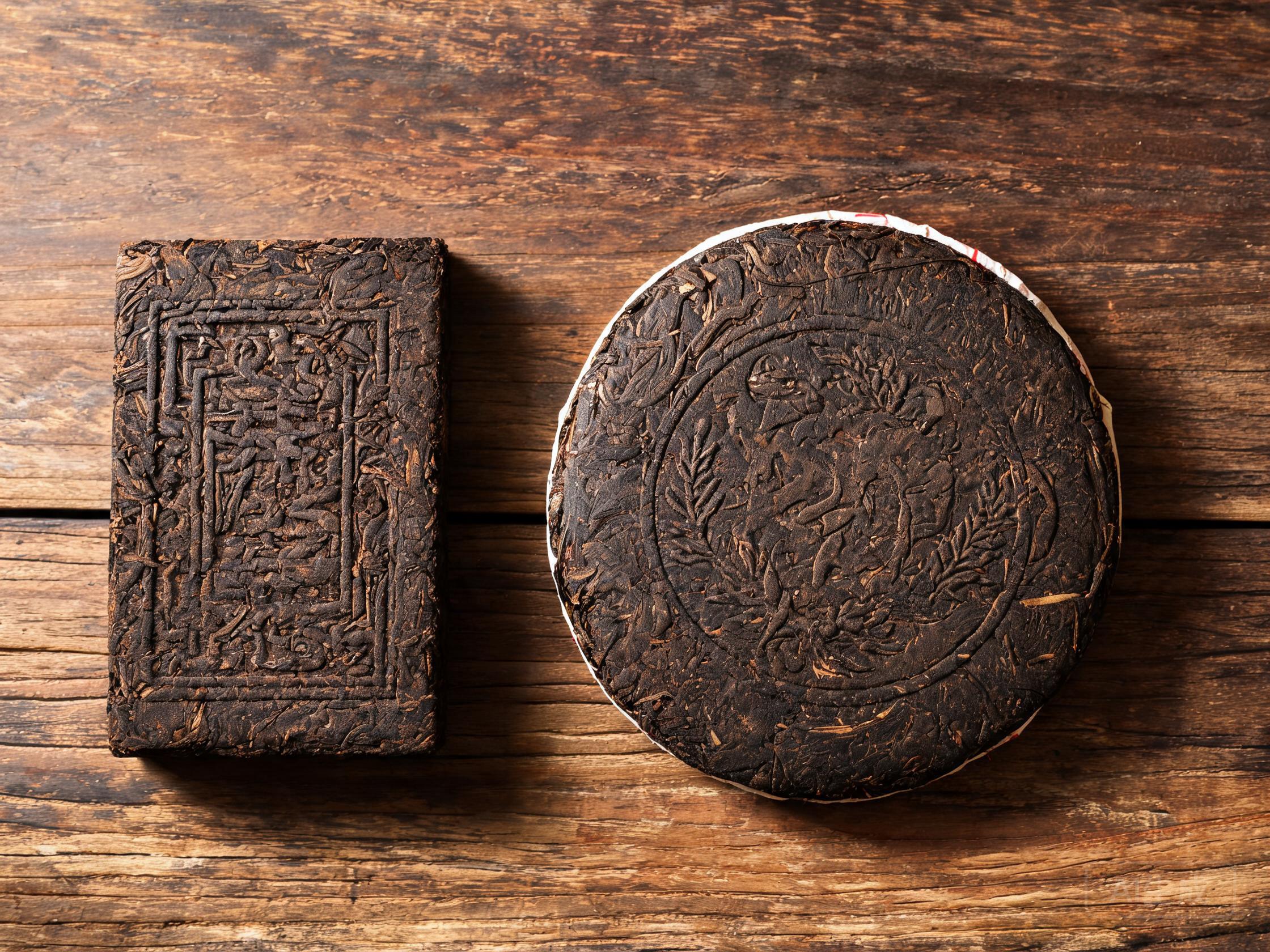
For compressed tea, look at the cake surface: even, with a mix of buds and leaf rather than uniform dust.
Break off a corner if you can. The interior should match the surface, and a darker or dustier middle is the tell.
Smell the broken edge rather than the wrapper. That is where the tea tells you the truth.
For ripe dark tea the liquor should be dark and clear, and it should smell earthy rather than sour or fishy.
A standard cake is 357 grams, and at 7 grams a session that is roughly 50 sessions from one object.
The order of inspection
For jasmine the order is simple: look, smell dry, brew, smell wet, taste.
Check how much flower is mixed through the leaf first, because that is a five-second test.
Brew at around 85 degrees for two minutes. Boiling water makes jasmine bitter and hides the aroma.
For a cake, start before you brew: look at the wrapper, then the cake surface, then a broken edge.
Rinse compressed tea once with boiling water and pour it away, then smell the wet leaf in the hot pot.
Judge the liquor for clarity and depth of colour, which for ripe tea should be dark red-brown and clean.
Taste across several steeps. Compressed tea is judged on endurance as much as on flavour.
Look at the wet leaf at the end. It should be soft and whole, and it should not collapse into sludge.
Write the date and the price on whatever you open. Records are part of judging this category.
Three steeps is the minimum for a compressed tea. Anything finished by the second was never much.
Red flags
For jasmine, the first red flag is a sharp, chemical aroma that hits the back of the throat.
The second is an aroma that fades within a week of opening, which means it was sprayed rather than scented.
A lot of dried flower left in the leaf means nobody sifted it, and usually means few rounds.
For compressed tea, a fishy or sour smell means the fermentation went wrong, and ageing will not fix it.
A white or grey bloom needs checking. Some is harmless and some is mould, and a smell test separates them.
A dark surface with a pale interior is the standard fake for an aged cake.
Unmarked cakes with no factory or year are cheap for a reason: nobody will stand behind them.
In the cup, a muddy liquor and a flat taste with no sweetness are the two things to walk away from.
One flag is a warning, three are a decision, and the price decides how careful you need to be.
Keep a baseline
For jasmine the baseline is easy: buy a seven-round tea once from a shop you trust, and remember it.
Compare every other jasmine to it, and you will never again pay seven-round money for a three-round tea.
Keep 25 grams sealed and dated, and smell it side by side against each new purchase.
For compressed tea the baseline should be a ripe cake from a known factory, bought young and drunk over a year.
That gives you a reference for cleanliness and body, which is what separates good ripe tea from bad.
Do not use an expensive aged cake as your baseline, because you cannot know whether it is representative.
Keep a written note for every cake: factory, year, price, and what it smelled like on opening.
Two or three years of those notes teach more than any amount of reading about the category.
In both halves the rule is the same: judge against tea you have verified, not against a description.
Twenty five grams of jasmine costs little, and at 3 grams a cup it gives eight sessions, enough to judge it.