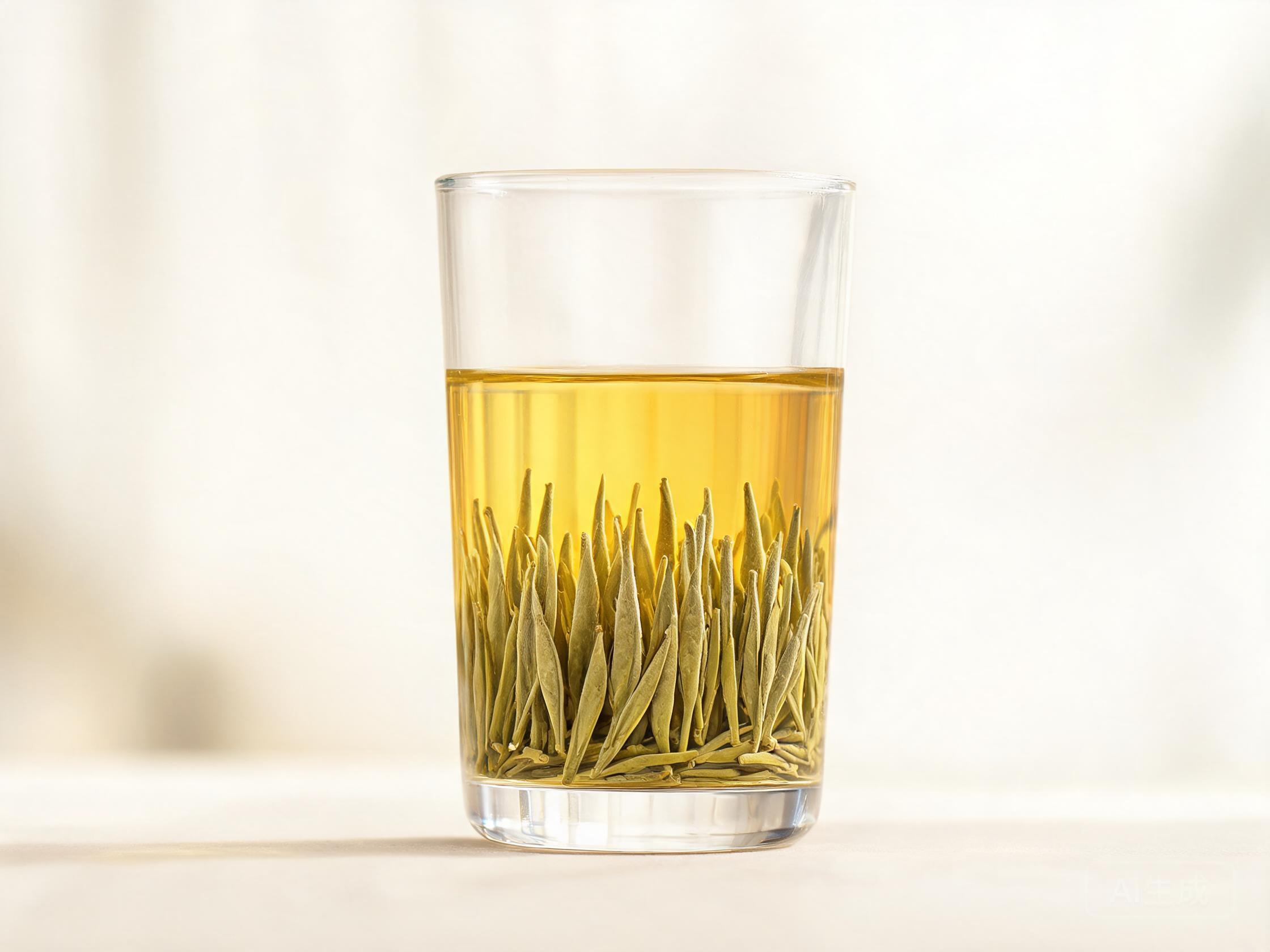
What to look at
Yellow tea is judged on colour first, because the colour is the clearest evidence that the tea is what it claims.
The dry leaf should be yellow-green rather than green, and that is the fastest test you have.
Bright green leaf sold as yellow tea has not been through the piling step, whatever the label says.
Junshan Yinzhen should be fat, straight buds of a uniform pale yellow, with fine down.
Huoshan Huangya is looser and a deeper yellow, with open leaf rather than buds.
The dry aroma should be corn, chestnut or warm hay, and the grassy note of a green tea should have gone.
The liquor should be a pale, bright yellow, softer and clearer than a green tea of the same grade.
On the palate, look for a rounded, slightly sweet taste with no bitterness at the edges.
The wet leaf should be a soft, even yellow. Green patches mean the piling was uneven or never happened.
At 3 grams a cup, 50 grams is about 16 sessions, which is two to three weeks of a morning habit.
The order of inspection
Look first, in daylight, because the colour of the leaf is worth more than anything else you will check.
Smell the dry leaf next. Grassiness is the fault to look for, and it rules the tea out immediately.
Brew at 80 to 85 degrees with 3 grams for 150ml. Too hot brings out the bitterness the piling was meant to remove.
Smell the wet leaf after the first pour. A good yellow tea smells sweet and slightly toasted at this point.
Look at the liquor. It should be pale and bright, and a dull cup means old or badly stored tea.
Taste it and wait. The finish should be soft and sweet, with no harsh edge.
Brew it two or three times. Yellow tea gives up most of what it has early, and a third steep tells you the quality.
Spread out the wet leaf and look for green patches, which mean an uneven piling.
Compare it against a green tea from the same producer if you can, because the difference is the whole point.
Two minutes at 85 degrees is a good starting point. Three minutes at 100 degrees brings out bitterness every time.
Red flags
The commonest fault in this category is not a fault at all: it is that the tea is not yellow tea.
Bright green leaf is the first sign, and a grassy smell on the dry leaf is the second.
A smoky smell means someone was covering something, and in yellow tea that is usually age.
Any bitterness at the edges of the cup means it was brewed too hot or was never piled.
A dull, brownish liquor means the tea is old. Yellow tea keeps about as well as a green tea does.
Gift tins with no picking date are the standard way this category gets sold badly.
A tea sold at green tea prices is a green tea, because the piling step costs time and leaf.
Anything described as aged yellow tea should be treated as a mistake rather than as a find.
One flag is usually enough here, because the category is small enough that better examples exist.
Production is small enough that real yellow tea usually comes with a garden name, and a tin without one is a warning.
Keep a baseline
Buy one yellow tea from a specialist who can name the garden, and use it as your reference for the category.
Drink it alongside a good Longjing from the same producer if you can get one. That comparison is the lesson.
Keep 25 grams sealed, cold and dated, and drink it within three months rather than saving it.
Replace it every spring. A baseline that has faded is worse than no baseline at all.
Note the price per gram, because value in this category is a real part of the judgement.
Try two producers of the same named tea, since there is no standardisation to fall back on.
Write one line per session: what it smelled like, how many steeps, whether the finish was sweet.
Two years of that and you will spot a fake yellow tea in about ten seconds.
Nothing else works as well here, because the grades are not standardised and the labels are unreliable.
Twenty five grams from each of two producers costs less than one 100 gram tin, and it tells you far more.