What standards cover
Yellow tea has a recommended national product standard in the GB/T series, as the other categories do.
It defines yellow tea by its process, which is the damping step that separates it from green tea.
That definition matters here, because without it the category would have no clear boundary at all.
The standard sets limits for moisture, ash, water extract and the proportion of broken material.
It also describes what the dry leaf, liquor, aroma, taste and infused leaf should be at each grade.
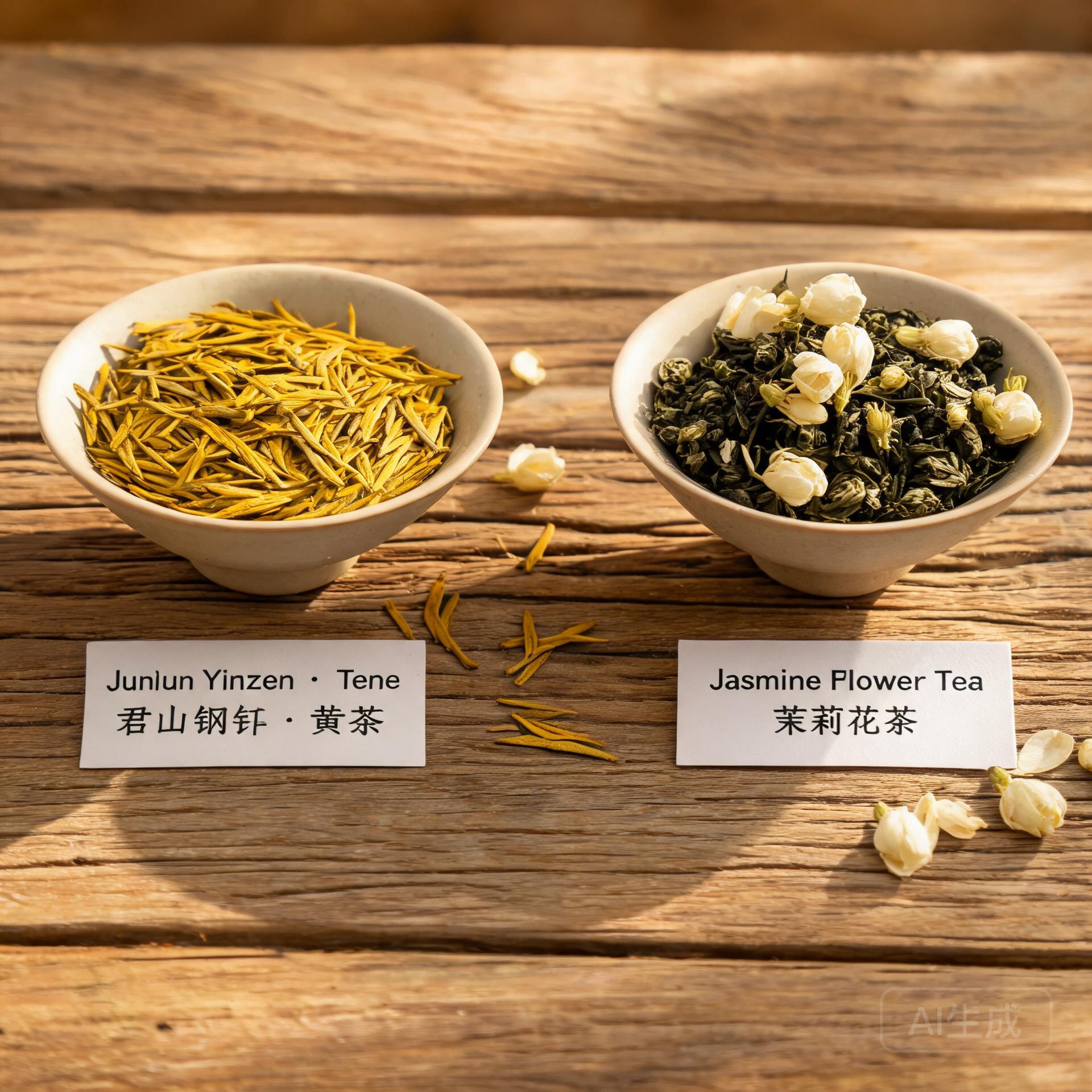
Bud teas such as Junshan Yinzhen are treated as their own product within the category.
Safety figures are not in this document, since GB 2762 and GB 2763 cover contaminants and residues.
Labelling has separate rules, which control what a package may say about process and origin.
The standard number is often printed on the package, and it identifies the document used.
You can look it up in the public national standards library without paying anything.
The document is short compared with the oolong or dark tea ones, which reflects how small the category is.
What they do not cover
What the standard cannot tell you is whether the damping was done properly, which is the whole point.
The process is described in words, and there is no measurement that confirms it actually happened.
So a tea can comply with the yellow tea standard and still taste like an ordinary green tea.
Grade does not capture it either, since grading is mostly about the appearance of the buds.
Origin is outside the general standard, except where a geographical indication document applies.
Terms like first flush and hand made are trade language and carry no standard meaning.
Brewing advice on a package is the seller’s view, not something the standard requires.
Nothing in a standard covers how the tea was stored after it left the producer’s warehouse.
Organic certification comes from a separate system and is not part of the product standard.
Compliance rules out the worst, and the rest is a question you answer with hot water.
Grades in practice
Yellow tea grades run from a special grade downwards, and the differences are described in appearance first.
Fat buds, plenty of down and an even yellow-green colour are what move a sample upward.
The measurable figures behind those grades barely change, because they are floors rather than aims.
Grading is done within a lot, so it ranks one batch against itself and nothing beyond it.
The producer assigns the grade, and for a category this small there is very little scrutiny.
Because yellow tea is scarce and expensive, the printed grade is worth treating with suspicion.
A high grade usually means tidier buds rather than a sweeter or longer finish in the cup.
Tea sold loose by weight often carries no grade at all, which is neither good nor bad news.
Comparing grades across two producers is meaningless, since each was grading its own material.
Read the grade, then brew it next to a green tea and see whether the difference is really there.
A grade printed on a box of yellow tea is a claim about appearance, and very little else is being promised.
Safety versus quality
Safety and quality are separate in yellow tea, and the gap between them is unusually wide.
Mandatory limits sit in GB 2762 for contaminants and in GB 2763 for pesticide residues.
The GB/T standard is recommended, so a producer may skip it without breaking any rule.
A safe and compliant yellow tea can still be a green tea in disguise, which is the real risk here.
Moisture is worth checking, since yellow tea is delicate and does not keep as well as compressed tea.
A named producer and a harvest date on the package are more useful than any printed grade.
Sellers who can describe the damping step are usually selling the real thing rather than a lookalike.
Home test kits are not dependable, so do not let one settle a question of safety for you.
Ask for a batch test report instead, which any serious seller should be able to produce.
Check safety once through the paperwork, and judge quality by tasting the tea against a green one.