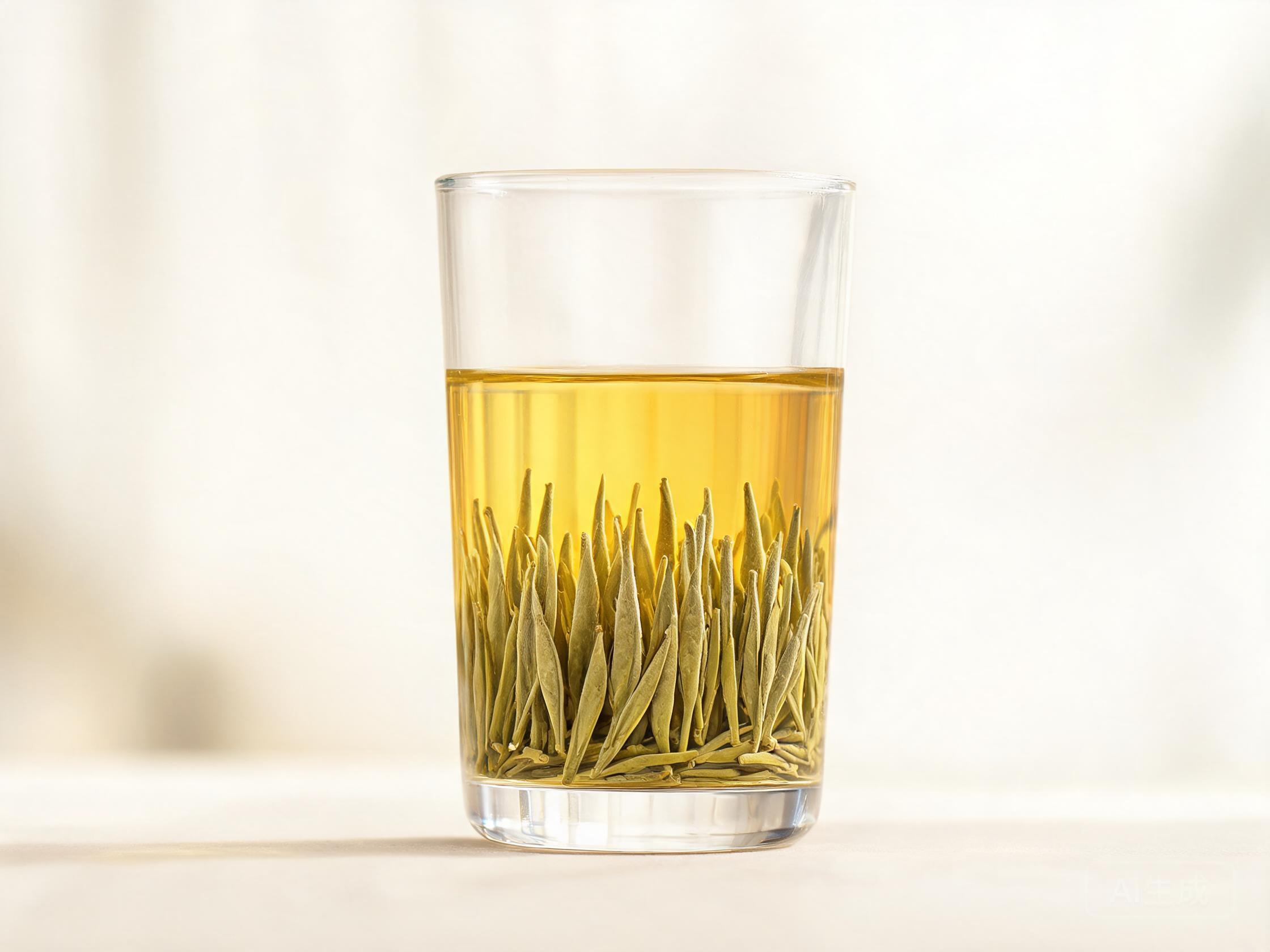
The most celebrated
Yellow tea is the smallest of the seven categories, and its top list is short for that reason.
Junshan Yinzhen(君山银针)from Hunan is a single bud, and it is the name on every list.
Mengding Huangya(蒙顶黄芽)from Sichuan is a tender bud with a sweeter, rounder profile.
Huoshan Huangya(霍山黄芽)from Anhui uses a bud with a leaf and tastes the most green of the three.
All three are famous less for volume than for surviving at all.
Men huan(闷黄), the yellowing step, is slow, watched by hand, and uneconomic at scale.
The leaf is wrapped or piled while damp and warm until it turns yellow and loses its grass edge.
An hour too long and it turns sour, and an hour too short and it stays green.
That window is the whole craft, and it is why most producers abandoned the category.
Output is tiny, so a name can be famous nationally while almost nobody has drunk it.
Huoshan also sells a larger leaf grade, Huangda(黄大茶), which tastes of roast and grain.
It rarely appears on famous lists, and it is the one that travels best on price.
Why they top the lists
The yellow tea names on lists got there by defining what the category means.
Junshan Yinzhen set the bud standard, and every yellow bud tea is compared with it.
Mengding carries the older claim, since Sichuan was making yellow tea for tribute long before the others.
That tribute history is why it survives in print even in years when production drops.
Fame here is not the same as availability, and the famous names are the hardest to buy honestly.
A famous label at a low price is the clearest warning sign in the whole category.
Real Junshan Yinzhen is grown on one island in Dongting Lake, and the growing area is small.
Any leaf sold under the name from outside that area is a different tea entirely.
Prices follow scarcity rather than drinking quality, and the two separate quickly.
An unlabelled yellow tea from Anhui can beat a famous one that has been badly stored.
Fame tells you what to try first, and it does not tell you what to buy second.
Learn the archetype once, then follow the maker rather than the place name.
List fatigue
Lists of famous yellow teas disagree, mostly because the category shrank faster than the lists did.
Older lists include names that are no longer made at all.
Mengding Huangya nearly disappeared and was rebuilt afterwards from written records.
A list written before that rebuilding and one written after it read differently.
Some compilers count the large leaf grade, and others leave it out for lacking a bud.
Whether a roasted leaf belongs beside a bud tea is an argument about category, not quality.
New names appear too, since producers in Guizhou and Guangdong have started yellowing again.
None of them have the history to make a traditional list, and several are better than what does.
The churn is a sign the category is alive rather than a sign the lists are broken.
Read lists as a map of what has existed, and drink to find what is good now.
A short list is easier to test, and 3 names is a week of drinking.
That is the one advantage of a tiny category, and it is worth using.
Trying them without overspending
Yellow tea is expensive per gram, so buy small and brew carefully.
A 25 g pouch is enough for several sessions and costs far less than a full tin.
Brew it at about 85 °C in a glass, because watching the bud stand upright is half the point.
Junshan Yinzhen is the one that performs the standing trick, and it needs a tall narrow glass.
Use roughly 3 g in 150 ml and give the first infusion about 2 minutes.
Try one sample at 80 °C and one at 85 °C, and the warmer cup loses the sweetness first.
Yellow tea forgives more than green tea does, and it rarely turns bitter on a long steep.
That tolerance makes it a poor teacher, so watch the aroma instead of waiting for bitterness.
The smell should be sweet corn and faint sugar, never hay and never sour.
Compare two famous names side by side once, and that teaches more than a dozen solo cups.
Pay for the education first and the prestige second, and distrust any famous name sold cheap.
Store it like a green tea, sealed and cold, since it does not age the way white tea does.