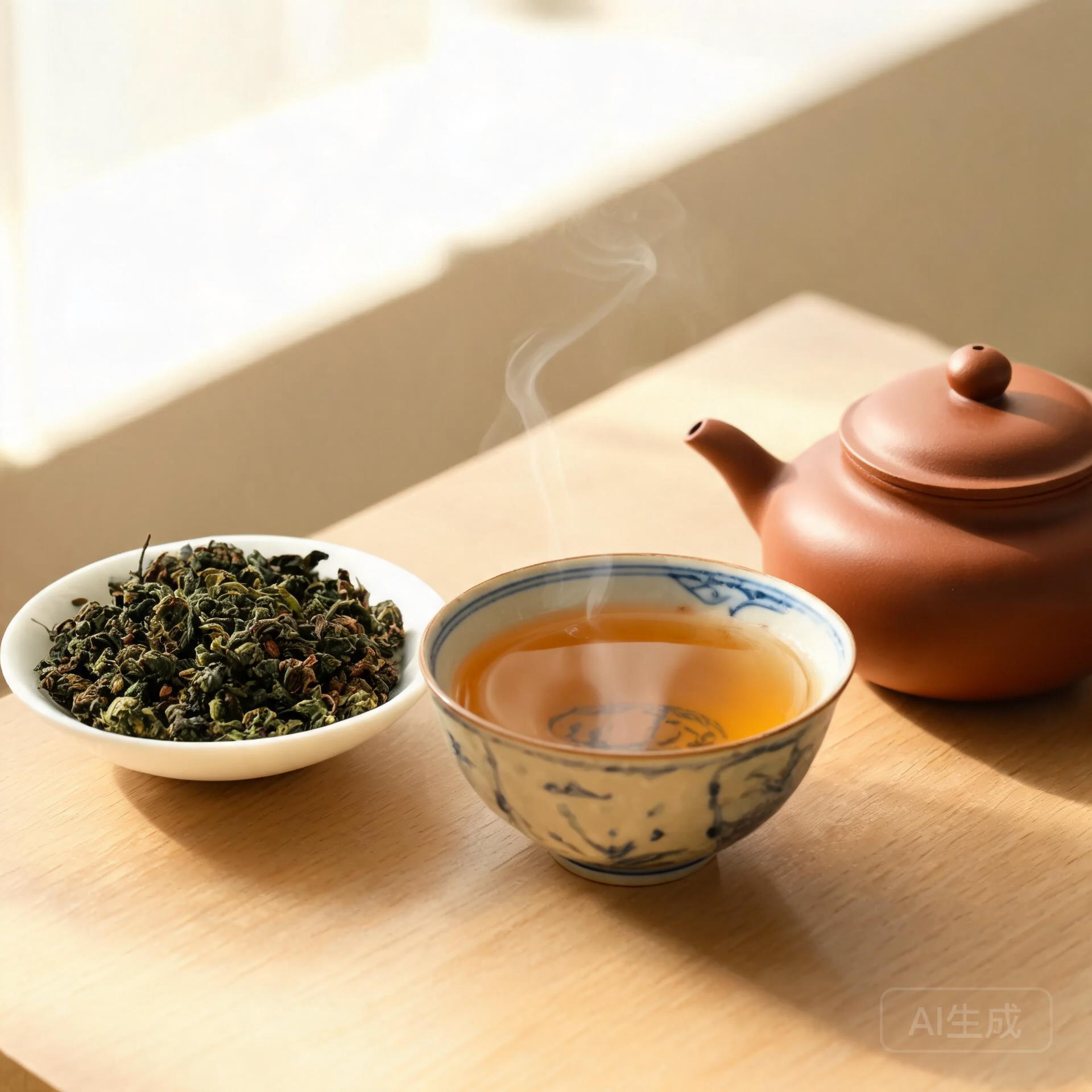
What to look at
Four things tell you most of what you need to know about an oolong: the dry leaf, the aroma, the liquor and the wet leaf.
Start with the dry leaf. It should be whole and evenly coloured, and in a ball-rolled tea the pellets should be tight and heavy for their size.
Broken leaf in a tea sold as whole leaf means rough handling between the garden and the tin, and it brews unevenly.
The dry aroma should match the style. A light oolong smells floral and green, and a roasted one smells of dried fruit and charcoal.
A roast with nothing underneath it is the warning sign. The roast should sit on top of an aroma rather than replace one.
The liquor should be bright rather than dull, and the colour should suit the style: pale gold for a light tea, amber to dark brown for a heavy roast.
Clarity matters more than depth of colour. A murky cup points to dust, rough handling or a tea that has been stored badly.
Then the mouthfeel. A good oolong has some weight and a sweet finish, and a poor one is thin and dries the mouth.
Finally the wet leaf. After brewing it should open into whole leaves, and fragments mean it was broken before it was packed.
The order of inspection
Work in one direction, from dry leaf to cup, and do not skip steps. Each one catches a fault the others miss.
Look first. Ten seconds with the dry leaf in good light tells you about evenness, wholeness and whether the colour suits the style.
Smell the dry leaf next, from about 10cm away rather than with your nose in the pile.
Then brew. Use a fixed dose of 5 to 7 grams per 150ml and boiling water, whatever style you are judging.
Smell the wet leaf straight after pouring. This is where a light oolong shows its top note, and it fades within a minute.
Judge the liquor before you taste it: colour, clarity, and any film or sediment on the surface.
Taste it, then wait. Aftertaste in a good oolong arrives a few seconds after you swallow and lasts a minute or more.
Brew it again, at least four times. A tea that is gone by the third steep was never going to be good.
Finish by spreading the wet leaf out and looking at it. Whole, pliable, evenly coloured leaves are the last piece of evidence.
Red flags
The faults are consistent across every step, and learning them is quicker than learning what good looks like.
On the nose: must, damp cardboard, anything chemical, and smoke in a tea that should not be smoked.
A sour note on the dry leaf usually means the tea was stored damp, and it does not come out with brewing.
In the cup: dull or murky liquor, a surface film, and sediment that settles quickly.
On the palate: harshness that does not resolve, a flat middle with no sweetness, and a drying finish that is not the same as astringency.
In the wet leaf: fragments rather than whole leaves, uneven colour, and leaf that has gone soft and slimy.
A single one of these proves nothing. Two or three together mean the tea is not what it says it is.
The commonest fault of all is simply age. A light oolong that has lost its aroma is not defective, but it is not fresh either.
Be careful with roast as a disguise. Heavy roasting is how a tired or poor leaf gets sold, and underneath it there is often nothing.
Keep a baseline
Everything above gets easier with a reference, and a reference is the best money you can spend on this category.
Buy one oolong you know is good, from a shop that will tell you where it came from, and drink it properly several times.
Pay attention to how it smells at each stage and how many steeps it lasts. Those two things are what you are calibrating.
Then use it. When a new tea tastes thinner or fades sooner, you will know it, and you will know why.
Keep the baseline fresh. A light oolong kept for a year is no longer the tea you calibrated on.
A roasted oolong lasts longer as a reference, which is another reason to choose one for the job.
Write one line after each session rather than relying on memory. After six months the notes are worth more than the tea.
Buy a second reference at some point, from a different producer, so that you know what house style means.
Checklists and grades help, but the instrument that actually decides is a palate trained on honest leaf.