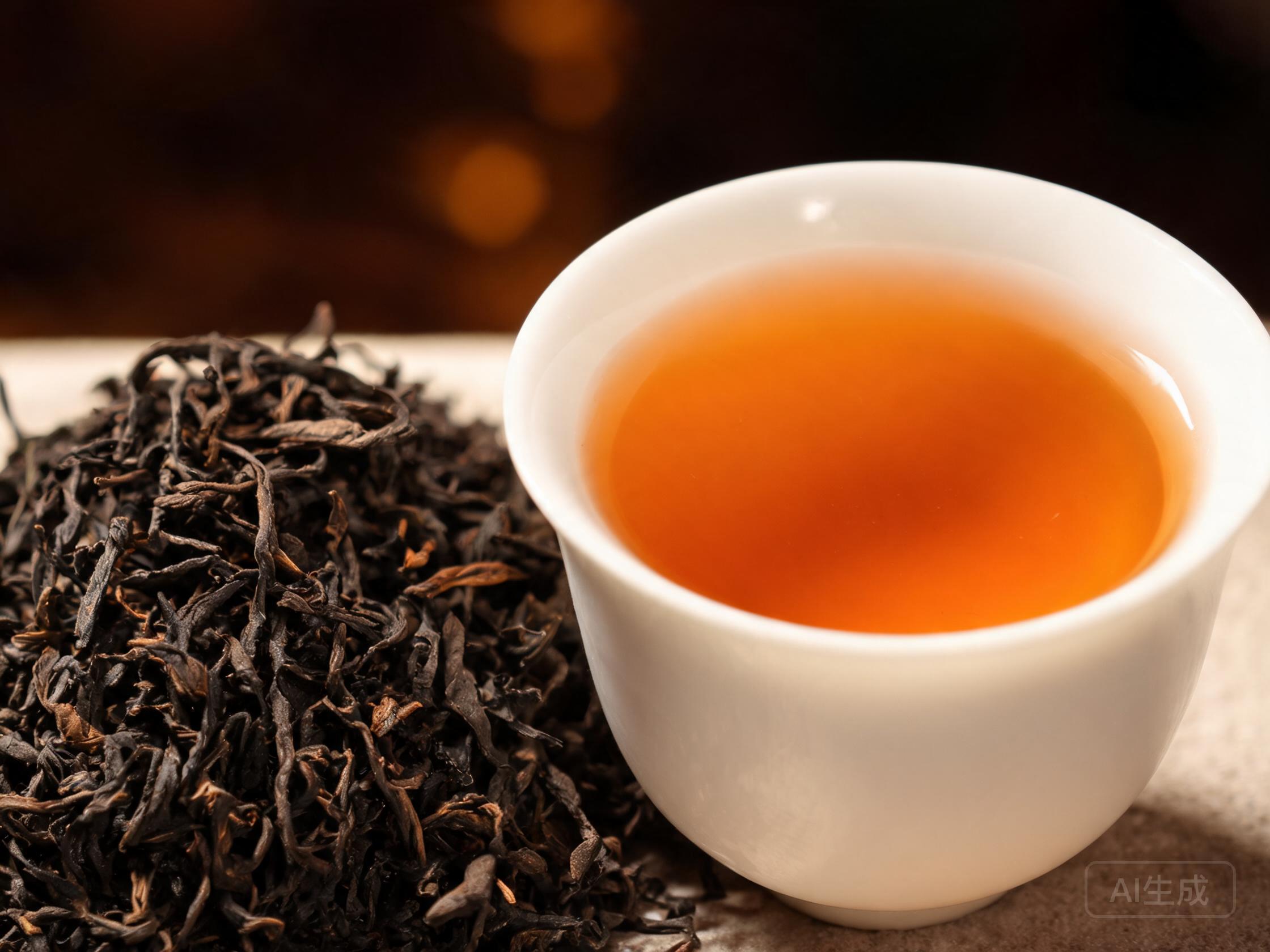
What to look at
Red tea is judged on leaf grade, aroma, liquor strength, and how it behaves with milk if you take it that way.
Start with the leaf. Whole grades are large and wiry, broken grades are small and even, and each should be consistent within itself.
Golden tips in a Chinese red tea are a real grade marker, and a tea sold on them should have visible ones.
The dry aroma should be sweet and malty, or fruity for a Darjeeling, and it should never smell dusty.
A flat smell on a red tea usually means age rather than anything wrong with the leaf itself.
The liquor should be bright and clear, from amber to deep red depending on the tea, and never muddy.
Strength matters, but so does what sits behind it. A strong tea that is only bitter has no sweetness under it.
Taste it black first even if you will drink it with milk, because milk hides a great deal.
Then add milk to a second cup. A tea that disappears entirely in milk is too thin for the job.
Two cups from the same pot, one black and one with milk, is the whole test for a breakfast tea.
The order of inspection
The order is the same as anywhere else: dry leaf, dry aroma, wet aroma, liquor, taste, wet leaf.
Look at the leaf first and check that the particle size is even, since mixed sizes brew unevenly.
Smell the dry leaf, then brew at 4 grams per 150ml with water at 100 degrees for four minutes.
Smell the wet leaf straight after pouring. This is where a Darjeeling shows its muscatel note, or fails to.
Look at the liquor before drinking. Brightness is the first thing to check and haze is the first fault.
Taste it black and wait ten seconds. The aftertaste is where a good red tea separates from an ordinary one.
Then taste it with milk if that is how you will drink it, because that is the only test that matters for you.
Brew it twice. Red tea lacks the endurance of an oolong, but a good one still gives two solid cups.
Finish with the wet leaf, which should be a uniform coppery brown rather than a mix of colours.
Four minutes is the standard steep. Two minutes gives a thin cup and six gives a harsh one, so fix the time.
Red flags
Red tea has fewer ways to go wrong than most categories, and the ones it has are easy to spot.
Dust and fannings in a tea sold as whole leaf is the commonest one, and it shows as a bitter, flat cup.
A dull, flat smell means the tea is old. Red tea keeps, but after about two years the top note goes.
A murky liquor means dust or poor sorting rather than strength, and the two get confused constantly.
Harshness that never turns sweet is the fault to watch for on the palate.
A tea that tastes of nothing at all once milk is added is too weak, whatever it did black.
Smoke in a tea not sold as smoked means it was dried over a fire badly, or stored beside one.
Even, suspiciously uniform black leaf with no tips at all is often a low grade dressed up.
As always, one flag means caution and several mean no.
Keep a baseline
Buy one everyday blend you like and one single origin you like, and keep both in the house.
The blend is your consistency check. It should taste the same in every bag, and when it does not, something changed.
The single origin is your quality check, and it is the one to taste new purchases against.
Brew them the same way each time, with the same dose and the same water, or the comparison means nothing.
Keep a note of the price per gram, because value is part of the judgement with red tea.
Replace the blend twice a year so that it stays fresh and the reference stays valid.
Try a new single origin each season, tasted blind against your reference if you can manage it.
After a year of that you will know what you are willing to pay for and what you are not.
That knowledge beats any grading chart, because it is calibrated to your own taste.
A 250 gram bag at 4 grams a cup is about 60 cups, which is two months of daily drinking and long enough to form a view.