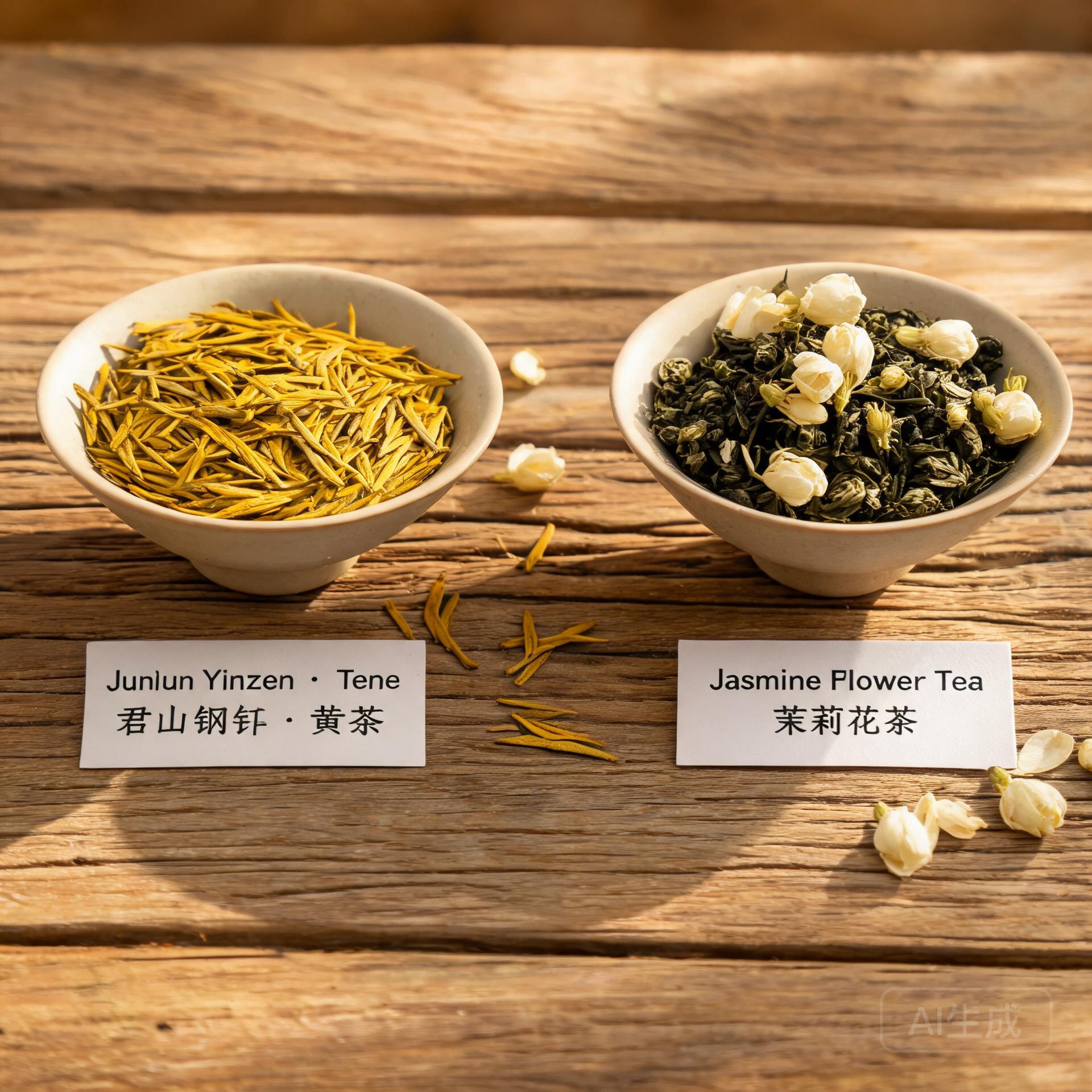
The short answer
For yellow tea the answer is new, and it is the most one-sided answer in any category.
Yellow tea is made from early pickings and treated much like a green tea, and it fades on the same timescale.
It is at its best within about six months of production and noticeably flatter after a year.
There is no tradition of ageing it and no market for old examples.
The piling step, men huang (闷黄), removes the grassy edge of a green tea and makes it rounder, not more durable.
It does not create the kind of structure that develops over decades.
So anything sold as aged yellow tea is a mistake at best and a fraud at worst.
Buy the current spring picking, drink it within the year, and buy again next spring.
The one thing worth keeping is a reference sample, held for a year, to compare against the next harvest.
There is no version of this where waiting helps.
Why age matters differently
Yellow tea sits between green and oolong in how it is made, and it behaves like a green tea in storage.
The leaf is not heavily oxidised and not fermented at all, so there is nothing running in the background.
What is there is a set of delicate aromatic compounds created by the piling, and they are the first thing to go.
The damp piling changes the tea, but it happens in the factory rather than in your cupboard.
Compare that with dark tea, where microbes work for decades, and the difference is obvious.
Compare it with white tea, where slow oxidation gradually changes the leaf, and yellow tea has less of it to change.
The leaf is also expensive and made in small quantities, so there has never been a surplus to age.
That is why no aged yellow tea market exists, and why claims about it should be treated as invented.
What people sometimes call aged yellow tea is a green tea that has gone dull.
The honest summary: the tea is made to be drunk in its first year, and it does not improve.
How to tell
Ask for the picking date, and be suspicious if the answer is a packing date or merely a season.
Look at the colour. Fresh yellow tea is a clean yellow-green, and old leaf goes brownish.
Smell it. Fresh smells of corn, chestnut or warm hay, and old smells of nothing or of cardboard.
Grassiness means the piling did not happen, which is a different fault but equally disqualifying.
Look at the liquor, which should be a pale, bright yellow and goes dull and brown with age.
Taste it. The rounded, slightly sweet finish is what you are paying for, and it is the first thing to fade.
Brew it two or three times. Old yellow tea gives up even less than fresh yellow tea does.
A gift tin with no date is the standard way this category gets sold past its best.
If a seller describes a yellow tea as aged and charges more for it, the age is the problem.
Buy from a specialist who can name the garden, and the date question usually answers itself.
Storage caveat
Treat yellow tea exactly as you would a good green tea, because in storage terms that is what it is.
Sealed, opaque and cold, ideally at 0 to 5 degrees, and opened as little as possible.
Buy 25 or 50 grams at a time rather than a larger bag you will not finish.
A 50 gram bag at 3 grams a cup is about 16 sessions, which is two or three weeks of a morning habit.
Do not keep it in the fridge door, where the temperature swings every time you open it.
Let a cold bag come back to room temperature before opening it, or you will condense moisture onto the leaf.
Keep it away from anything with a smell, because it is as absorbent as a green tea.
Write the purchase date on the bag and drink it within six months.
There is no storage method that improves it, only methods that slow the loss.
If you are keeping it for a special occasion, drink it now and buy more next spring instead.