Green Tea
Green tea is the most widely consumed tea in China, known for its fresh taste, vibrant color, and numerous health benefits.
Green Tea Quick Facts
Sub-Categories
Explore specific topics within Green Tea
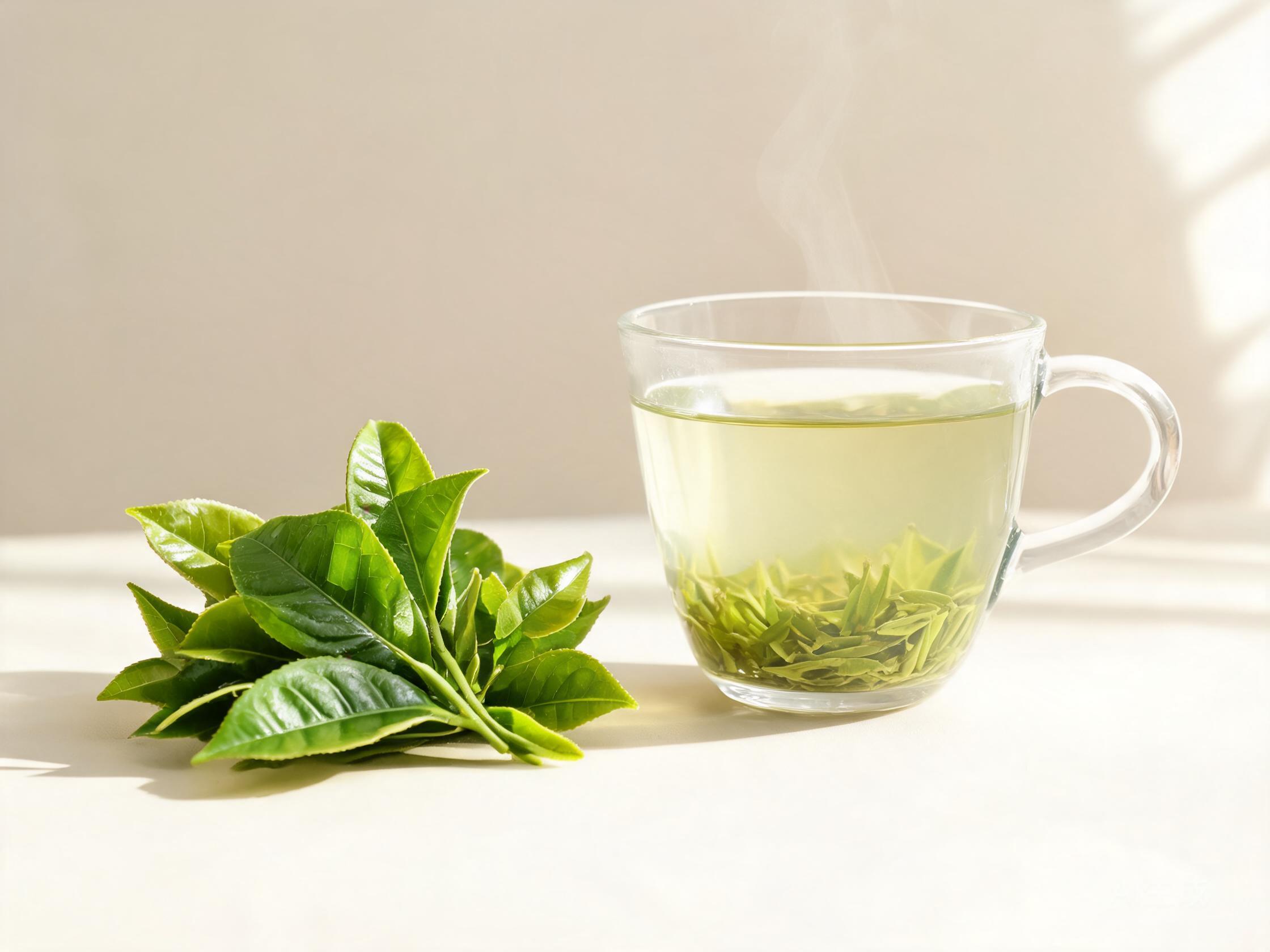
Green tea (绿茶, lǜchà) is the largest category in Chinese tea and the one most widely drunk inside the country. It is defined by a single rule: the leaf is not allowed to oxidize. Within hours of picking, it is heated — pan-fired in a hot wok, or steamed — to destroy the enzymes that would turn the leaf brown. Everything that follows, the fresh grassiness, the green liquor, the short shelf life, comes from that decision.
How Chinese green tea is made
Picking is rarely a single pass. Most famous green teas take a bud and one or two leaves, and the finest take the bud alone. After picking, the leaf goes through fixation (杀青 shā qīng) to stop oxidation, then rolling (揉捻 róu niǎn) to shape it and release aroma, then drying. The method of fixation matters more than anything else. Pan-firing gives a nutty, roasting edge; steaming preserves a raw, marine greenness. Chinese green teas are overwhelmingly pan-fired, which is why they taste roasted rather than grassy compared with Japanese sencha.
The ten famous green teas
Chinese tea writing uses the phrase 十大名茶 — ten famous teas — and the list changes depending on who is counting. Longjing from West Lake sits at the top by consensus. Around it are Biluochun from Dongting in Jiangsu, Huangshan Maofeng from Anhui, Lu'an Guapian, Taiping Houkui, Xinyang Maojian from Henan, Duyun Maojian from Guizhou, Enshi Yulu from Hubei, Mengding Ganlu from Sichuan, and Anji White Tea — which is green tea despite the name, a debate this encyclopedia covers separately.
What decides quality
Green tea is judged on freshness above all else. Unlike pu-erh, it does not improve with age; it declines. A bag of Longjing is at its best within six months of harvest, and by the second spring it is a different, flatter tea. Buy in spring, store cold, and drink it within the year. Appearance matters too: flat leaves for Longjing, tight spiral curls for Biluochun, needle shapes for Enshi Yulu. The liquor should be pale to light green, never yellow-brown, which signals oxidation.
Brewing
Green tea is delicate and burns easily. Water at 75–85°C, not boiling. A three-gram portion to 150ml, steeped for thirty seconds to a minute in a glass or a gaiwan. Because the leaves are unoxidized and thin, they release quickly and then exhaust themselves. Two or three infusions is normal; more than that is water.
Where to start
If you are new to green tea, start with a spring Longjing — it is the reference point the rest are measured against. From there, Biluochun shows you how different a rolled leaf can be, and Huangshan Maofeng shows the roasted side of the category. The articles below go through each of these by origin, processing, grade and price.
This section is maintained by Encyclopedia Tea. Entries are added as gaps are filled.