Where and how it is made
Reprocessed tea production splits in two, and the halves barely overlap at all.
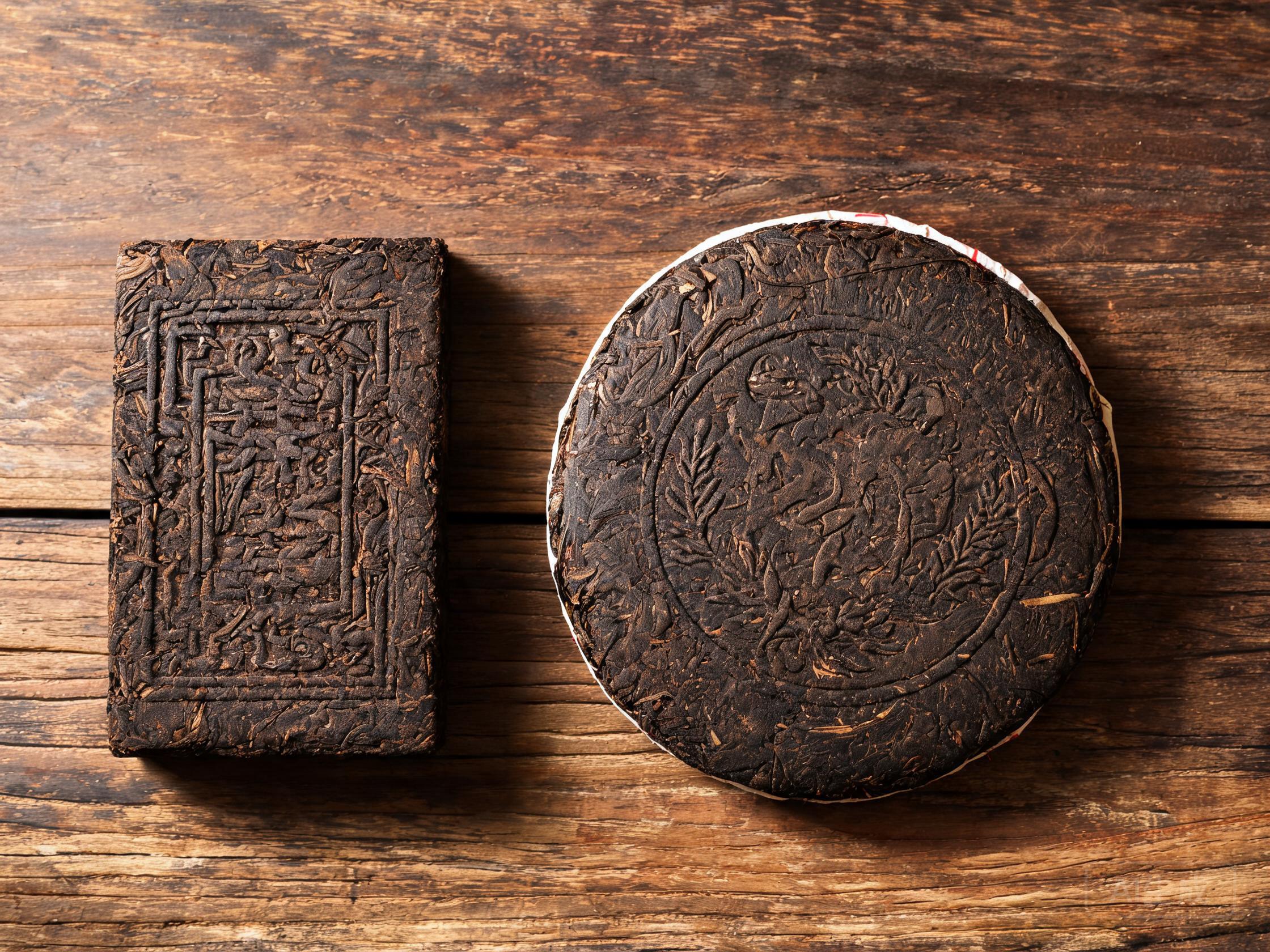
Scenting layers flowers over a finished base leaf, and pressing reshapes a finished tea into a cake, brick or tuo(欱).
Scented production is dominated by jasmine, with osmanthus and rose a long way behind.
Hengxian county in Guangxi is the largest jasmine area by volume.
Fuzhou in Fujian holds the older reputation and the protected craft status.
Sichuan produces a third share, mostly for buyers inside China.
Compressed production centres on Yunnan, where most pu-erh is pressed.
White tea is pressed there too, and that is a much more recent development.
The two halves share almost no equipment, no skills and no customers.
Scenting is seasonal work tied to the flower harvest, which runs through summer.
Pressing can happen at any time of year, and usually does.
That seasonality is why scented tea has a natural best-before date and compressed tea does not.
It also explains how one category name ends up covering two businesses with nothing in common.
Read the label to find out which half you are in before doing anything else.
Concentration
Both halves are geographically concentrated, and for different reasons.
Jasmine scenting needs flowers and leaf in the same place at the same time.
That is why the trade settled in the few counties that grow jasmine at scale.
Hengxian alone supplies a very large share of the flowers used in Chinese scented tea.
A cold or wet summer there moves the price of jasmine tea everywhere.
Fuzhou keeps its position through reputation and protected status rather than through volume.
Buyers outside China rarely see the distinction, since both ship under similar names.
Pressing is concentrated for a different reason, which is that the raw material is regional.
Pu-erh leaf comes from Yunnan, and pressing happens near where that leaf is grown.
That is a material constraint rather than a historical accident.
Concentration protects technique here, and it also means one bad season is felt widely.
For a buyer the useful consequence is that both halves can be traced.
Ask which county the flowers came from, or where the cake was pressed.
Commodity versus premium
The gap between the two tiers is unusually wide in both halves of this category.
Commodity jasmine is a cheap base leaf scented once or twice, or sprayed with essence.
It is what most of the world has actually drunk, and it is why jasmine has a poor reputation abroad.
Premium jasmine uses a decent green base and many rounds of real flowers.
The difference is not subtle, and it is visible in the dry leaf before any water is added.
Compressed tea has the same split, between plantation leaf pressed in bulk and single garden cakes.
The commodity end sells by weight, and the premium end sells by name, year and storage.
Packaging does not distinguish them, and in the compressed half it actively confuses the matter.
A cake in elaborate wrapping is more often a commodity product than a craft one.
That inversion is worth remembering before buying any of this as a gift.
Buy 25 g of the premium version and 25 g of the cheapest one from the same seller.
Then taste them side by side, which costs very little and settles the question permanently.
Most buyers land on the middle of the range and stay there happily.
What to watch
The useful signal is the spread between everyday and collectible grades.
In scented tea that spread is mostly about how many rounds of real flowers went in.
In compressed tea it is about the leaf, the year, and where the cake has been since.
Watch the season next, since jasmine tea is at its best within months of being scented.
Buy it in the year it was made, and drink it within 6 months.
Brew 3 g in a 150 ml vessel at 90 °C for about 60 seconds.
Smell the dry leaf first, and expect the scent to survive 3 infusions.
For compressed tea, watch the storage history rather than the wrapper.
Ask where it was kept, and prefer a seller who answers without hesitating.
Then buy one cake and open it once a year, which is the only real education available.
The category pages here split scented from compressed, and each half has its own rules.
What not to watch is the round count printed on the box, since it cannot be verified.
Treat that number as advertising, and let the cup decide instead.