How the name came
Reprocessed tea is named for an operation rather than for a plant or a place.
The category word means the base tea was made first and then worked on again.
That second stage is either scenting or compressing, and the name reflects which one.
It is the only category defined by what happens after the tea is already finished.
The sub-names come from the additive or from the final shape.
Jasmine, osmanthus(桂花)and rose name the flower that was layered into the leaf.
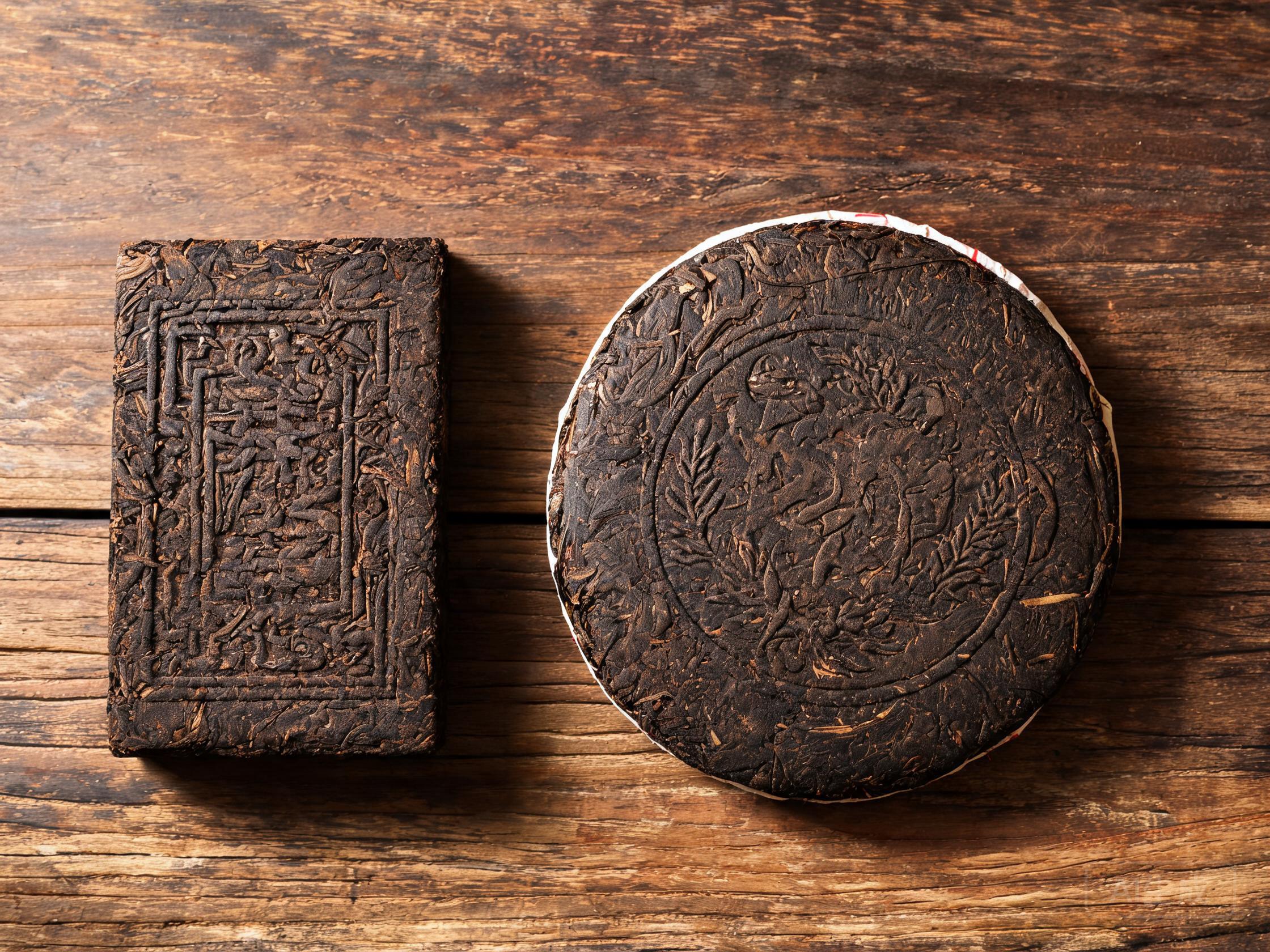
Cake, brick and tuo(欱)name the form the tea was pressed into.
Those two families of names behave differently, and it is worth keeping them apart.
A flower name tells you about aroma, which fades.
A shape name tells you about storage, which does not.
Scented tea is bought fresh and drunk quickly, since the name describes a smell.
Compressed tea is bought to keep, and the name describes a package.
The same category word covers both, which is why the label so often misleads.
Working out which half you are in is the first thing to do with any of these teas.
Name as map
A label in this category has three parts, and each of them can be read.
The base tea comes first or is stated separately: green, white or dark.
That tells you what the leaf was before anything else was done to it.
A jasmine tea on a green base drinks like a green tea with a smell attached to it.
The same flowers on a white base give a softer and sweeter cup.
Most inexpensive jasmine uses a green base, and most of what is exported does too.
The second part is the process: how many rounds of scenting, or how the tea was pressed.
Scenting rounds are counted, and a higher count means more flowers and more cost.
Counts above 6 or 7 rounds are rare and should raise the price noticeably.
Compression is described by weight and by whether the cake was pressed loose or tight.
A tightly pressed cake ages more slowly than a loosely pressed one.
The third part is the year, and it means opposite things in the two halves.
On a scented tea a recent year is good, and on a cake an older one usually is.
When names mislead
Names in this category are borrowed constantly, because the barrier to entry is low.
Scenting a cheap base with essence costs very little and can be sold under any flower name.
The label rarely distinguishes flowers from essence, and no rule forces it to.
Smell is the check: flowers give a soft scent and essence gives a sharp one.
A second problem is the round count, which is printed with no way to verify it.
A tea labelled as scented 9 times may have been sprayed once.
There is no practical test for the number, so treat it as a claim and nothing more.
Compression has the parallel problem in the form of invented age.
A cake sold as aged may have been kept hot and humid to darken it quickly.
That produces a flat, musty cup that no amount of further ageing will repair.
The third problem is origin names on compressed tea, which are notoriously loose.
A region on a wrapper is a claim about where the leaf grew, and it is very hard to check.
Buy the seller before you buy the cake, since the seller is the part you can verify.
Using names well
Decode the label into base, process and year before doing anything else.
Then decide which of the two halves you are in, because the rules differ completely.
For a scented tea, buy the current year and drink it within 6 months.
Brew 3 g in a 150 ml vessel at 90 °C for about 60 seconds.
Smell the dry leaf first, and expect the scent to survive 3 steeps.
If it does not, the name was doing more work than the tea was.
For a compressed tea, the name matters less than the storage history behind it.
Ask where it was kept and for how long, and prefer a seller who answers plainly.
Then buy one cake rather than several, and open it once a year.
A single cake watched over 5 years teaches more than a shelf full of them.
The category pages here split scented from compressed, which is the useful distinction.
Names inside each half are consistent enough to learn in an afternoon.
What they cannot tell you is whether this particular batch was stored properly.