- Why the Chinese Call It Red Tea
- The Four Steps, and the One That Matters
- What Oxidation Actually Builds
- Orthodox vs CTC
- A Working Map of Black Teas
- Reading Leaf Grades Without Being Fooled
- How Blends Work, and What Breakfast Tea Actually Is
- Brewing Numbers That Hold Up
- Storage and Shelf Life
- What the Research Does and Does Not Show
- Buying Without Wasting Money
- Where to Go Next
- Practical Takeaway
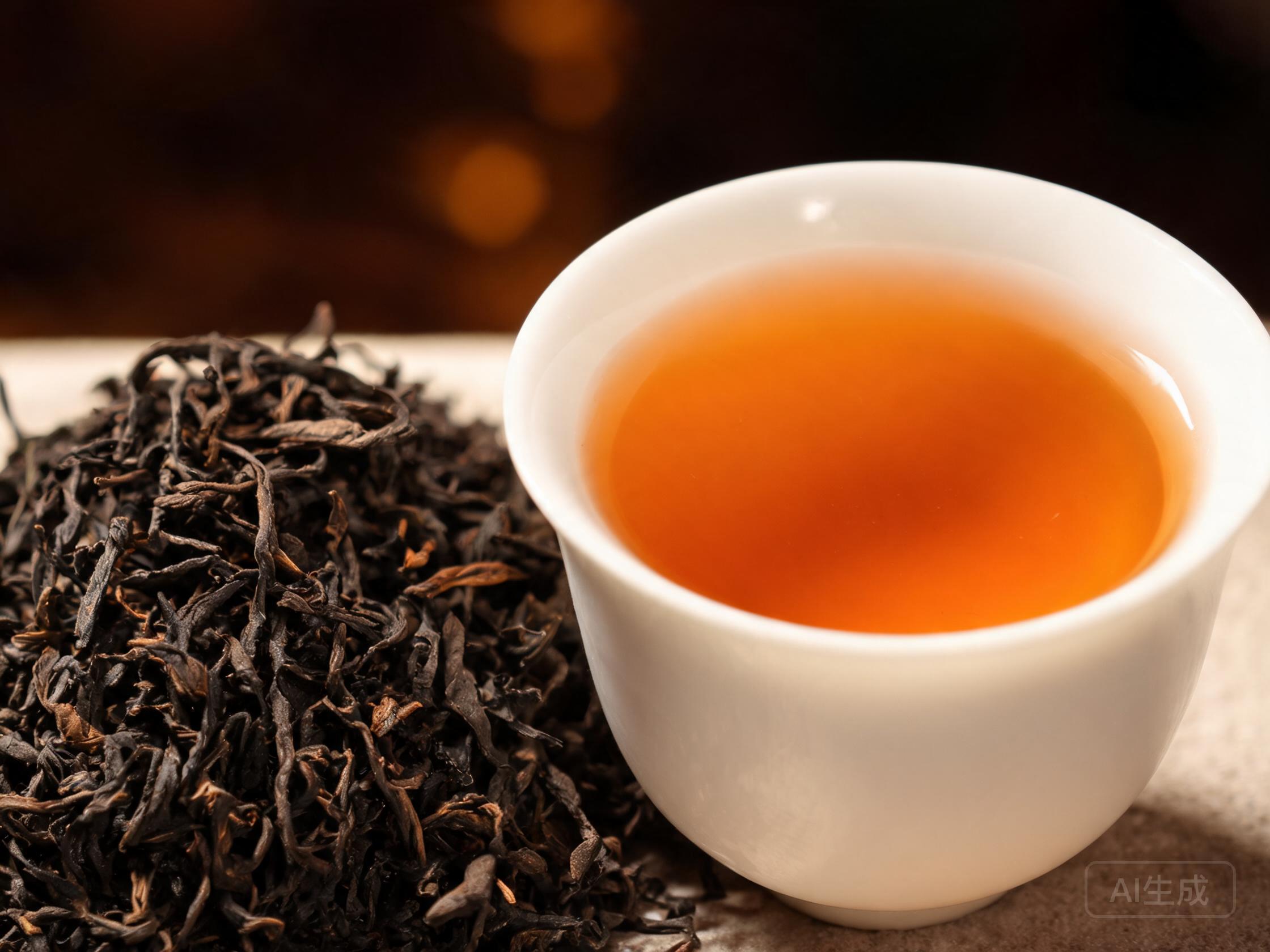
Ask for black tea in China and you will be handed something the Chinese call hung cha (红茶), red tea. The name refers to the colour of the liquor, not the leaf, and it is the more accurate of the two labels. The dry leaf is near-black, but a properly brewed cup is a clear reddish amber, and that colour is the whole point of the category. It is also, for once, honest about what happened to the leaf.
Almost everything distinctive about black tea comes from one controlled step: letting the leaf oxidise until the catechins in it have been rebuilt into larger molecules that dissolve red-brown and taste brisk rather than astringent. Get that step right and the tea is sweet, malty and structured. Get it wrong and you have something that tastes like wet cardboard no matter how it is brewed.
Why the Chinese Call It Red Tea
The naming split happened for a mundane reason. When Chinese tea first reached Europe in the 17th century, buyers described the dry leaf, which is dark. Chinese producers described the brewed liquor, which is red. Both stuck, and English ended up with "black tea" while the domestic trade kept 红茶. The same leaf sometimes causes confusion in the other direction: what English speakers call red tea is usually rooibos, which is not tea at all.
The Four Steps, and the One That Matters
Chinese black tea follows a short chain: withering, rolling, oxidising, drying. Only the third step is unique to it.
- Withering (wei diao, 萎凋). Fresh leaf carries roughly 75 to 78% water. Spread thin for 6 to 12 hours, it drops to somewhere near 60%. The leaf goes limp and becomes possible to roll without shattering.
- Rolling (rou nian, 揉捻). Anywhere from 30 to 90 minutes of rolling breaks cell walls and brings the enzymes into contact with the catechins they will act on. Shape is decided here too: twisted strips, or cut and curled granules.
- Oxidising (fa jiao, 发酵). The leaf rests in a warm, very humid room, typically 24 to 28 °C at 90% relative humidity or above, for somewhere between two and five hours. This is the step that separates black tea from every other category.
- Drying (mao huo then zu huo, 毛火 and 足火). First firing around 110 to 120 °C knocks the moisture back sharply, then a second pass at 80 to 90 °C brings it down to roughly 5%. Heat stops the enzymes for good.
A note on vocabulary: the trade calls step three fermentation, and has done for a century. No microbe is involved. It is enzymatic oxidation, the same chemistry that browns a cut apple. The word survives because it is convenient, but it misleads people into thinking black tea is a fermented food in the yoghurt sense, which it is not.
What Oxidation Actually Builds
During oxidation, catechins link together into two families of larger molecules. Theaflavins are the smaller ones, and they are what makes a cup bright, brisk and golden at the edge. Thearubigins are larger and poorly characterised even now; they carry most of the red-brown colour and much of the body. A black tea usually ends up with theaflavins at well under 2% of dry weight and thearubigins somewhere around 10 to 20%.
The ratio is the practical thing to know. Push oxidation a long way and thearubigins dominate: dark, thick, malty, low brightness. Stop earlier and theaflavins are more prominent: lighter, sharper, more citrus and flower. Neither is better, which is why a Darjeeling first flush and an Assam breakfast tea can both be excellent while tasting nothing alike.
Orthodox vs CTC
There are two broad ways of making black tea, and they are built for different drinks.
Orthodox processing rolls the leaf so the whole leaf survives in some form. It takes longer, costs more in labour, and produces the layered, slowly unfolding teas that reward multiple infusions. Most single-origin and speciality black teas are orthodox.
CTC (crush, tear, curl) pushes withered leaf through toothed rollers that cut it into small, hard granules. It gives up nuance for speed and strength: CTC teas extract in two or three minutes, produce a dark strong liquor, and hold up to milk and sugar. Most teabags, most of Kenya's output, and most breakfast blends are CTC or a blend containing it. If a tea is described only as "strong" or "good with milk," it is probably CTC.
A Working Map of Black Teas
| Tea | Origin | Character | One detail worth knowing |
|---|---|---|---|
| Lapsang Souchong (正山小种) | Tongmu, Wuyi Mountains, Fujian | Unsmoked: sweet, longan and pine. Smoked: tarry, campfire | Usually dated to the late 16th or early 17th century, which would make it the earliest black tea. The smoked version is dried over pine wood; the unsmoked version is a different and arguably more interesting tea. |
| Jin Junmei (金骏眉) | Tongmu, Fujian | Thick, sweet, cocoa and dried flower | Developed in 2005 from bud-only picking in the same village as Lapsang Souchong. Bud counts are often quoted in the tens of thousands per 500 g, which is why it is expensive and widely faked. |
| Keemun (祁门红茶) | Qimen, Anhui | Sweet, faintly smoky, dried rose and honey | The most internationally known Chinese black tea and a standard component of English Breakfast blends. Its aroma is distinctive enough to have its own descriptor: "Keemun scent." |
| Dian Hong (滇红) | Yunnan | Malty, sweet potato, honey, sometimes peppery | Made from the large-leaf variety Camellia sinensis var. assamica. Grades with heavy golden tips are the most prized and tend to be the sweetest. |
| Assam | Brahmaputra valley, India | Malty, brisk, strong | Low elevation, high rainfall, same assamica variety as Dian Hong. The backbone of most breakfast blends. |
| Darjeeling | West Bengal, India, 600 to 2000 m | First flush green and floral; second flush muscatel grape | Protected as a geographical indication. Second flush, picked around May and June, is the one people mean by muscatel. |
| Ceylon | Sri Lanka | Varies sharply by elevation and season | High-grown above about 1200 m is bright and citrusy; Uva, picked in the July to August "Uva season," is the most aromatic of the year. |
| Kenyan | Kericho, Nandi and other highland counties | Bright, brisk, coppery, very strong | Grown at 1500 to 2700 m and almost entirely CTC. It sets the strength standard for mass-market blends worldwide. |
Reading Leaf Grades Without Being Fooled
Indian and Sri Lankan black teas are sold with letter grades that look like quality scores but are mostly about leaf size. OP (orange pekoe) is a long, wiry leaf. BOP (broken orange pekoe) is smaller and stronger. F in front, as in FTGFOP, means "flowery," referring to the presence of tips. D means dust, and is used in teabags.
Two things follow. "Orange" has nothing to do with oranges or flavour; it is most likely a nod to the Dutch House of Orange. And a long string of letters does not guarantee the tea is good, only that it is whole-leaf and tip-heavy. A well-made BOP often drinks better than a tired FTGFOP.
How Blends Work, and What Breakfast Tea Actually Is
A surprising amount of the world's black tea is sold under a name that describes nothing legally enforceable. English Breakfast is not a place, a cultivar or a grade. It is a blender's recipe, and every company has its own.
That said, most recipes are assembled from a small set of components, and knowing them makes the shelf much easier to read:
- Assam supplies body and malt. It is the base of almost every strong breakfast blend.
- Ceylon supplies brightness and a clean finish, and keeps a heavy blend from tasting dull.
- Keemun supplies aroma and a faint smoky sweetness. It is the traditional third component of a classic English Breakfast and the main reason "Russian Carousel" blends taste the way they do.
- Kenyan CTC supplies colour and strength cheaply, and is why many supermarket blends brew darker than they used to.
Irish Breakfast is typically the same idea with more Assam and more strength. Earl Grey is black tea scented with bergamot, normally oil pressed from the peel of the bergamot orange grown in Calabria; cheaper versions use synthetic bergamot flavouring, which is why some taste like perfume and others like tea. Lady Grey is the same with other citrus peel and cornflower added.
Blending exists for a practical reason: a single garden's output changes with the weather, the flush and the week. A blend is engineered so that a box bought in January tastes like the box bought in July. That consistency is worth having, but it also means a blend will rarely have the distinctive character of a good single-origin tea. Drink both.
Brewing Numbers That Hold Up
Black tea is the most forgiving category, which is also why it is so often brewed carelessly.
| Style | Water | Leaf per 240 ml | Time | Notes |
|---|---|---|---|---|
| Western, whole leaf | 90 to 95 °C | 2.5 to 3 g | 3 to 4 min | Longer than 5 minutes and it turns bitter and flat |
| Western, broken or CTC | 95 to 100 °C | 2 to 2.5 g | 2 to 3 min | Extracts fast; built for milk |
| Gongfu, Chinese black | 90 to 95 °C | 5 g per 100 ml | 10 to 20 s | Six or more infusions from good material |
| Darjeeling first flush | 85 to 90 °C | 2.5 g | 2 to 3 min | Less oxidised than most; treat it gently |
| Iced | 95 °C, double strength | 5 g per 240 ml | 3 to 4 min | Brew hot and pour over ice; cold-brew needs 6 to 12 hours |
Black tea tolerates hard water better than green tea does, but it is not immune. If your water leaves heavy scale, the liquor will look dull and taste flat, and a thin white film may appear on the surface as it cools. That film is not a defect; it is theaflavins and caffeine binding as the tea cools, and it is a sign of a strong cup rather than a bad one.
Storage and Shelf Life
Black tea is far more stable than green tea, which is why it travelled. Kept airtight, cool, dry and away from light and spice cupboards, most black teas hold their character for 18 months to three years. They do not improve with age in the way white or dark tea does; they simply fade more slowly.
The failure mode is not dramatic. Old black tea goes flat and dusty, loses its aroma, and drinks thin. There is no version of it that becomes interesting. Full guidance is in practical home storage methods and the storage environment reference values.
What the Research Does and Does Not Show
A 240 ml cup of black tea typically carries 40 to 70 mg of caffeine, more than green tea and roughly half to two thirds of a cup of drip coffee. The compounds studied alongside caffeine are the theaflavins and thearubigins described above, and the honest position is the same one that applies to green tea: population studies show associations, controlled trials show modest and inconsistent effects, and no tea is a treatment for anything.
Two practical points are better supported. Tea polyphenols can reduce absorption of non-heme iron when drunk with meals, which matters if you are iron deficient. And there is a long-running argument about whether adding milk blunts black tea's antioxidant effect; the studies point in different directions and none of them is decisive, so drink it the way you like it.
Buying Without Wasting Money
- Look for a specific garden, region or grade, not just "black tea" or "English Breakfast." A named origin makes the tea checkable.
- Treat cheap Jin Junmei as a red flag. Genuine bud-only material from Tongmu is expensive for structural reasons; most cheap versions are a different tea with a famous name attached.
- Decide whether you want milk in it. If you do, buy for strength and body, and a CTC or broken grade will serve you better and cost less than a delicate whole-leaf Darjeeling.
- Check the leaf. Whole-leaf teas should have recognisable leaf. If everything is uniform dust, you are paying for a grade that was designed for teabags.
- Buy in season for Darjeeling. First flush arrives around March and April, second flush around May and June. A Darjeeling without a flush or a year on the packet is a compromise.
More in common buying traps and the practical buying process.
Where to Go Next
For the chemistry and the machinery, read the step-by-step processing breakdown and the critical quality-determining process points. For where things grow and why it matters, the producing regions overview and the effect of altitude on quality are the most useful. If you want to know what you already have, start with six-factor sensory evaluation and authenticity identification.
Black tea is what full oxidation tastes like, and every other category is defined by how far short of it they stop. Oolong is deliberately partial, green tea stops the process before it starts, white tea never triggers it, yellow tea reaches a similar colour by a non-oxidative route, and pu-erh skips oxidation for fermentation entirely.
Practical Takeaway
Black tea is the category where the leaf is taken furthest from its fresh state and then expected to taste good anyway. Buy something with a name on it, use water that is genuinely hot rather than hand-hot, and stop the steep before five minutes. If you take milk, buy for strength rather than delicacy, and stop worrying about whether milk ruins it.