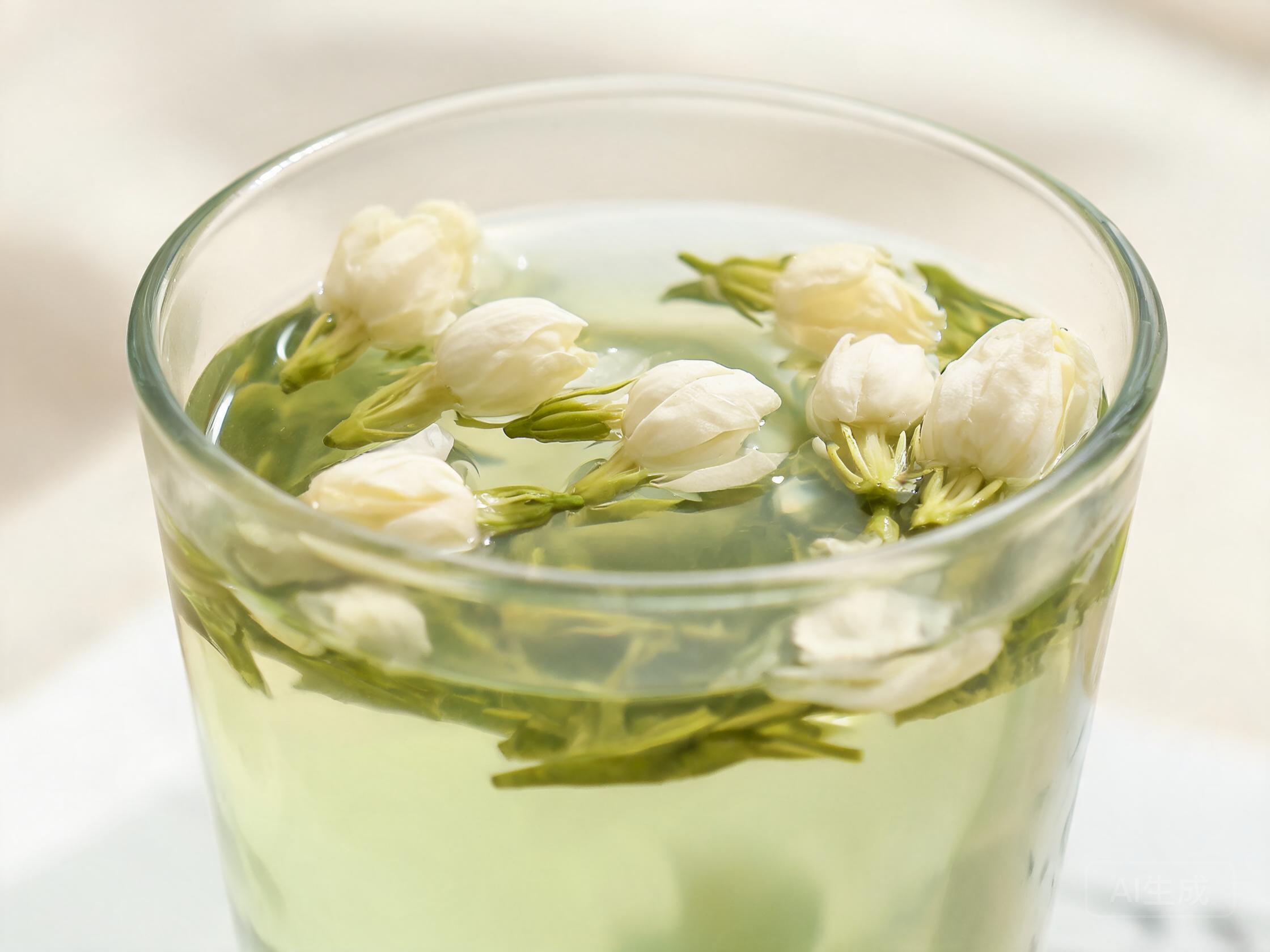
Where it sits among teas
Reprocessed tea is the odd one out in the six family system.
The other five are defined by how far the leaf oxidised, and this one is defined by what happened next.
A base tea is made completely first, and only then is a second stage applied to it.
That second stage is either scenting with flowers or pressing into a shape.
Neither one changes the oxidation class of the leaf underneath.
So this category cuts across the others rather than sitting beside them.
Jasmine tea is usually a green base, which means it brews like a green tea.
An aged white cake is a white base, and it behaves like an aged white.
Compressed pu-erh is a dark tea base, and everything about that category still applies.
What the second stage adds is aroma in one case and storage behaviour in the other.
Scenting adds a smell that fades within a year or two.
Compression slows down ageing and makes the tea easy to move and stack.
Both are practical reasons, which is the honest answer to why the category exists at all.
It is a category of logistics and flavouring rather than of chemistry.
The family logic
Because this category sits on top of the others, the base tea is the first thing to identify.
That one question predicts more about the cup than anything else on the label.
A green base gives a fresh, slightly astringent cup with a smell layered over it.
A white base gives a soft one, and it will also age if it has been pressed.
A dark base gives an earthy one that changes over years in storage.
The second stage then modifies that behaviour rather than replacing it.
Scenting sits on the surface of the cup, and it is the first thing to disappear.
Compression changes the pace of everything else, usually by slowing it down.
A pressed cake of white tea ages differently from the same leaf left loose.
Tight compression slows it and loose compression speeds it up, and both are legitimate choices.
This is why one category name covers teas with almost nothing in common in the cup.
Two reprocessed teas can be less alike than a green and a red tea are.
Identify the base, and most of the confusion disappears.
Neighbours and overlaps
The overlaps here are not with neighbouring families but with the base categories themselves.
A jasmine green is still a green tea, and it should be brewed as one.
That means water at 90 °C and about 3 g for 150 ml, which is a green tea dose.
Treating it as something separate and boiling it will ruin the cup.
A compressed white is still a white, and it should be judged on age and storage.
The cake shape is a package, not a process that changed the leaf very much.
A pu-erh cake is still a dark tea, and everything about post-fermentation still applies to it.
Labels go wrong when the second stage is treated as though it replaced the first.
A jasmine tea sold without naming its base is hiding the most important fact on the tin.
A cake sold without a pressing year is doing exactly the same thing.
Both omissions are common, and both are easy to spot once you know to look for them.
Ask what the base is, and ask when the second stage happened.
Two questions, and they settle most of what a label leaves out.
Why the system helps
The six family system is a map of oxidation, and this category is a second layer on top of it.
Holding both layers at once is the practical skill worth having.
Read the base first, then read what was done to it, and the cup becomes predictable.
For a scented tea that means buying fresh and drinking it within 6 months.
Brew 3 g in a 150 ml vessel at 90 °C and stop after 3 infusions.
For a compressed tea it means buying on storage history rather than on shape.
Ask where the cake was kept, and ask for how many years.
Then buy one cake and open it once a year, which is the only way to learn the pattern.
The category splits cleanly in two once you apply this, and each half has its own rules.
Scented tea behaves like a fresh tea, and compressed tea behaves like an ageing one.
The pages here treat those two halves separately, and they should be read separately.
The system will not tell you which to buy, but it tells you which questions to ask.
That is most of what a taxonomy is actually for.