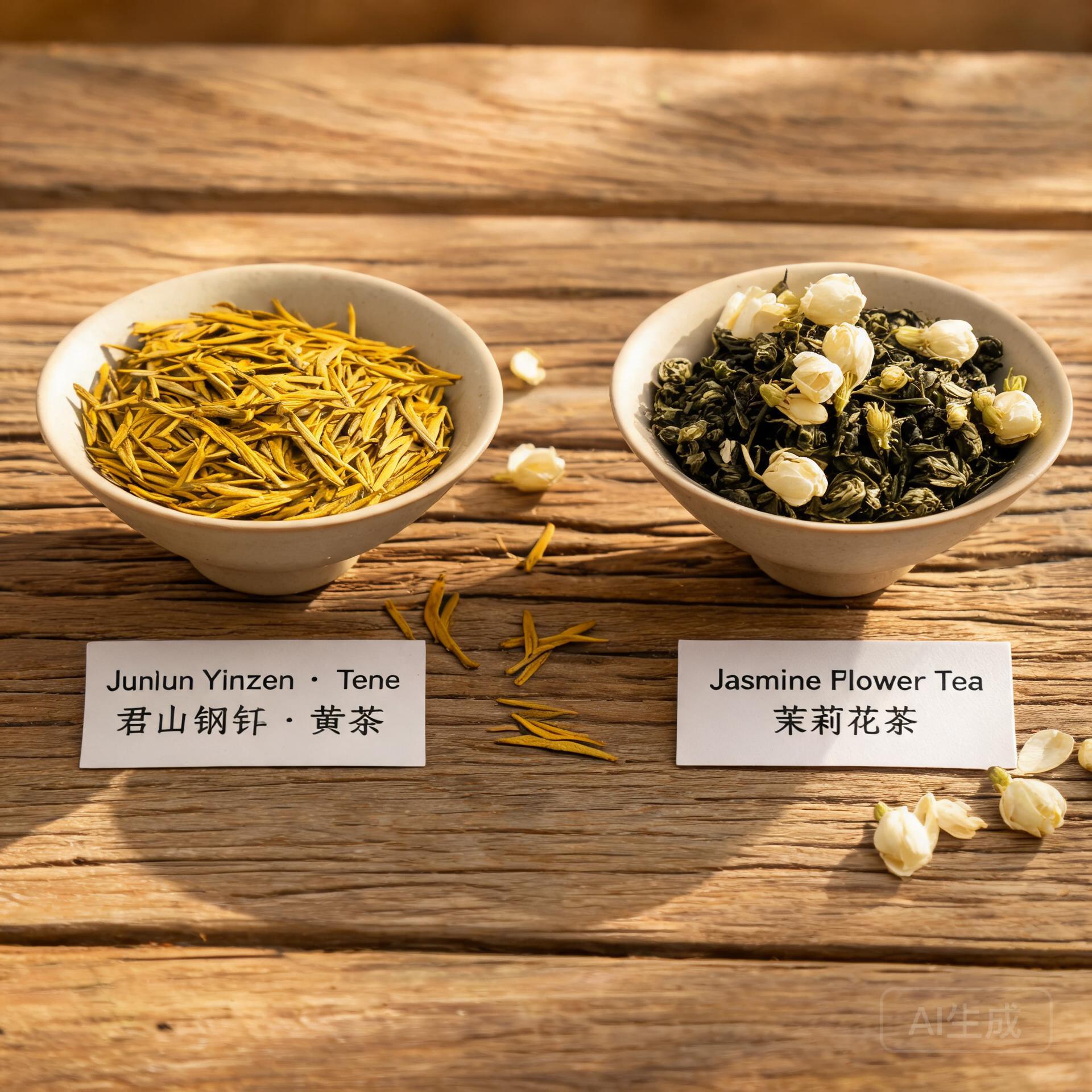
Does Reprocessed tea age?
Reprocessed tea is a category with two very different halves, and they age in opposite directions. Scented teas, above all jasmine, lose their scent. Compressed teas, which include pu-erh bricks and fu brick, are made to age. The label on the tin does not tell you which you have, so you have to know which type you bought.
Treating a jasmine tea like an ageing project will leave you with a dull, scentless base leaf. Treating a fu brick like a delicate flower will stop it from doing the thing it was made to do. They need opposite handling.
This is a quirk of how Chinese tea is classified. Reprocessed means the tea was made and then worked on again, whether by scenting it with flowers or by pressing it into a shape. Those two processes have nothing in common except that they happen after the tea is finished.
So the first question to ask of any reprocessed tea is not how to store it. It is whether it was scented or pressed, because the two answers lead in opposite directions and there is no middle case.
If it ages: store for the long run
Compressed dark teas need air, but not much, and they need stable humidity around 60 to 70 percent. Wrapped in paper and left in a box or a breathable cabinet, they will continue to change for years. The wrapper matters: keep it, because it is part of the storage environment.
What they do not need is a sealed plastic bag. Sealing a cake shut stops the microbial activity that drives the change, and in a humid room it traps moisture against the leaf. A cake in a drawer in a dry apartment will simply sit there, which is safe but slow.
The target is slow and steady rather than fast. If a brick smells strongly sour after a year, it has been too wet. If it smells exactly the same as the day you bought it, the room has been too dry, and you should either accept a slower timeline or move it somewhere more humid.
If it does not: drink it
Scented tea is the opposite case. The jasmine aroma in a traditional jasmine tea comes from repeated scenting with fresh flowers, and those aromatic compounds are volatile. Within about a year, even in a sealed tin, the top note flattens and what is left is the base green tea.
That is not a defect, it is how the product works. Buy jasmine tea in quantities you will finish in six to twelve months, keep it sealed and away from light, and do not expect it to improve. The same applies to other flower-scented teas.
The number of scenting rounds, usually between three and nine for good jasmine tea, tells you how much aroma there is to lose. A tea scented seven times has more depth and holds it longer than a tea scented once and finished with jasmine oil. Neither improves with age.
A simple smell test
Smell the dry leaf before deciding anything. Scented tea should smell strongly and cleanly of its flower. If that scent is already faint, the tea is old and no storage will restore it.
For compressed tea, the check is physical as well as olfactory. Press it, look for bloom, and trust a musty smell over any age claim. A brick that smells clean and earthy is fine. A brick that smells sour or like a damp cellar is not.
One more check that is specific to fu brick. The white or yellow specks inside it are the result of intentional fermentation with a fungus, and they are normal. Fuzzy coloured growth on the outside of the brick is not the same thing, and that brick should go.
A starter timeline
If you want to age compressed tea, start with one brick or cake of something you already like drinking now. Note the date and where you bought it, then leave it alone for a year before you open it again.
For scented tea, the useful habit is the opposite one. Date the tin when you buy it and plan to finish it within the year. Both of these are easier to follow than any rule about temperature, and both matter more.
Expect the compressed tea to change noticeably in three to five years and the scented tea to be finished long before that. If neither of those timelines appeals to you, reprocessed tea may simply be the wrong category to buy in bulk.