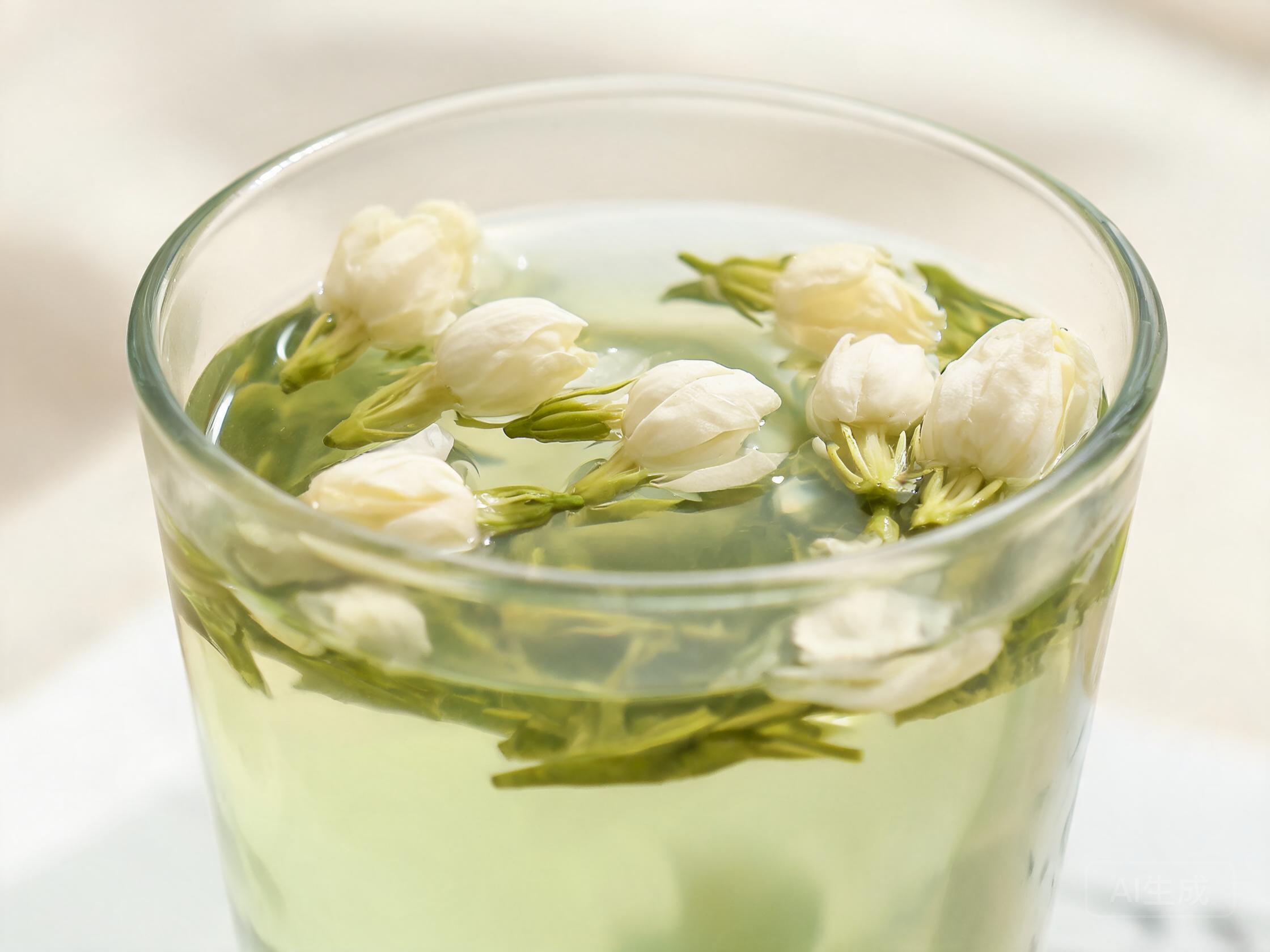
How regions differ
Reprocessed tea is the one category where craft is a supply chain rather than a single piece of land.
Hengxian in Guangxi grows most of the jasmine used in Chinese tea, and it also makes the finished product.
The base leaf is green tea brought in from elsewhere, and the flowers are picked locally in the afternoon.
Fuzhou was the old centre of jasmine scenting, and a few producers there still work in the traditional way.
Yunnan supplies a different base, mostly dark tea destined to be compressed and aged.
Xinhui in Guangdong supplies the tangerine peel used for gan pu tea, filled with Yunnan material.
Guilin sends osmanthus, and Pingyin in Shandong sends rose, both scented into green or red bases.
Each of those is a partnership between two producing regions, and neither one owns the result.
That is why the craft question here is about coordination rather than terroir.
Timing matters more than soil, since flowers open on their own schedule and the leaf has to be ready.
A tea made from good leaf and late flowers fails, and one from ordinary leaf and perfect flowers succeeds.
Why the same tea diverges
The base is the first variable, and it is chosen for how much aroma it can carry.
A green base is absorbent and mild, which is why jasmine is almost always scented onto green tea.
A dark base is already strongly flavoured, and it is used when the tea is meant to be aged afterwards.
Flower quality is the second variable, and it depends on the hour the buds were picked.
Buds picked before noon are closed, and they open during the night to release their scent then.
Buds picked open have already spent part of their aroma, and the finished tea smells weaker.
The ratio is the third variable, and traditional work uses 30 to 40 kilos of flower per 100 kilos of leaf.
Cheap production cuts that ratio hard, and the difference is obvious by the second infusion.
Rounds matter too, since 3 rounds and 9 rounds produce two entirely different products.
Drying between rounds is where craft shows, because too much heat drives the aroma back out.
Compression adds a final variable for aged products, deciding how fast the cake will mature.
Learning the signatures
Smell the dry tea first, and judge whether the aroma smells like the flower or like a spray.
Real jasmine is soft and slightly sweet, and it does not hit the back of the nose.
A sharp perfumed note usually means added flavouring, which is common at the bottom of the market.
Count the flowers in the dry leaf, though many producers now remove them after scenting.
Brew 5 grams at 90°C and read the fourth infusion, which is the honest test of a scented tea.
Well scented tea still smells of jasmine there, and cheaply scented tea has nothing left by then.
The base should still taste like tea underneath, and a good one supports the flower rather than hiding.
For gan pu, look at the peel, since Xinhui peel has visible oil glands and a clean citrus smell.
A dark brittle peel from an unknown source is the commonest substitution in that product.
Compressed aged products should smell clean of cellar, and any damp note is a storage failure.
Region is harder to taste here than anywhere else, so lean on the aroma test and the vendor’s answers.
Tradition versus trend
Tradition in this category is scenting with real flowers over several nights, and it is expensive.
The trend is toward chamber scenting and toward essential oil, and both are cheaper by a wide margin.
Chamber scenting can be well done, and it produces a clean tea with a shorter life in the cup.
Added oil is a different matter, and it is usually a sign of a weak base underneath.
The boom in gan pu tea since 2015 is the clearest case of trend reshaping a regional craft.
Demand pulled Xinhui peel prices up sharply, and peel from other districts now moves under the name.
Sun dried peel and oven dried peel are both sold, and only the sun dried version ages as claimed.
You cannot tell them apart reliably once the fruit is filled, which makes the seller the only control.
Traditional Fuzhou jasmine has largely lost to Hengxian on cost, and the skills there are thinning.
Ask how many rounds of scenting were used, and ask how much flower per kilo of leaf.
Those two answers tell you more about the tea than any origin name printed on the packet.