Where hands still matter
Scenting is the last large scale hand process left in tea, and it is worth understanding why.
Flowers are picked by hand in the afternoon, because a machine cannot tell a bud from an open bloom.
The leaf and flowers are mixed by hand, in layers, and heaped on the floor of the scenting room.
Someone watches the heap through the night, because it heats as the flowers open.
Turning it, called opening, is done by hand with shovels, sometimes at 2 or 3 in the morning.
Sieving out the spent flowers the next morning is another hand job, and so is the final lifting.
Machines exist for all of this, and large producers use chambers with controlled temperature.
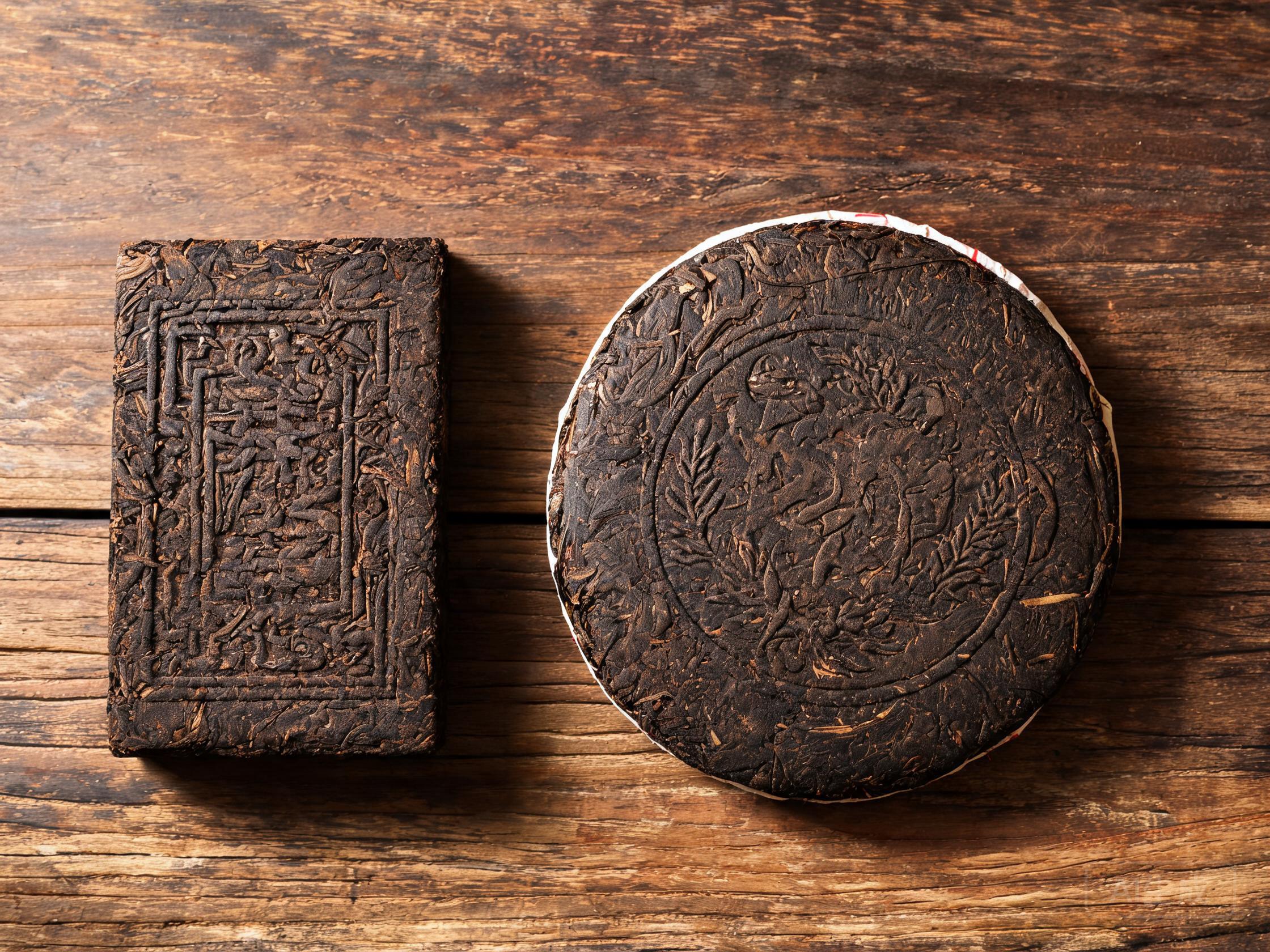
Compression is a machine job almost everywhere, and hand pressing survives mainly as a demonstration.
Wrapping a cake by hand is normal, since it is a finishing step rather than a making step.
So the hand work here is concentrated in the scenting room, and almost nowhere else.
A tea pressed by machine can still be a traditional jasmine tea in every way that matters.
The honest split
The split follows the same rule as everywhere: selection and judgement to hands, repetition to machines.
Picking flowers is selection, and no machine has replaced it at any scale.
Watching the heap is judgement, because the moment to turn it depends on the temperature inside.
A chamber with probes can do this, and it does it more reliably than a tired worker at 3am.
What the chamber cannot do is smell the heap, which is how the decision has always been made.
Mixing and sieving are mechanical in large plants, and the result is cleaner if less nuanced.
Pressing is a machine job, and a hydraulic press gives a more consistent cake than a stone weight.
Hand pressing with a stone mould is slower and produces a slightly looser cake.
That looser compression does change how a cake ages, which is why some buyers look for it.
Drying and packing are mechanical everywhere, and there is no craft argument about either.
So the honest split is the scenting room, and everything after it is a factory.
What you can taste
The clearest difference between chamber scented and traditionally scented tea is how long the aroma lasts.
Traditionally scented tea carries the smell in the leaf, and it is still there at the fourth infusion.
Chamber scented tea often smells stronger in the bag and gives out much faster in the cup.
That is the practical test, and it is easier to run than any claim on a label.
Hand pressed cakes are looser, and they mature faster because more air moves through them.
Machine pressed cakes are tighter and slower, which suits buyers intending to hold them for decades.
Neither is better, and the choice depends on how long you intend to keep the cake.
A very tight cake can stay almost unchanged for 20 years, which frustrates people wanting progress.
A loose one matures faster and dries out faster, and it is the riskier of the two.
Most buyers never notice the difference, because most cakes are drunk within a few years of purchase.
Where you will notice it is in the cup, and only if you drink both side by side.
Buying implication
Hand scented is a meaningful claim in a way that hand made usually is not.
It refers to a specific process with specific costs, and a producer who did it will say so.
Ask how many rounds of scenting the tea received, since 3 and 9 are very different products.
Ask how much flower was used per kilo of leaf, which is the cost that gets quietly cut.
Both answers are more informative than anything about hands, and both are easy to ask.
For compressed tea, ask whether it was stone pressed, and then decide whether you care.
If you plan to drink it within 5 years, the compression method barely matters at all.
Holding it for 20 years is different, since the press matters a great deal and tighter is safer.
Be careful with very old cakes sold as hand pressed, since the claim is hard to verify afterwards.
What you can verify is the material, so break the cake or look at the leaf before paying.
The process claims are worth asking about, and the leaf is worth checking yourself.