The one step
The defining step for reprocessed tea is scenting, xun hua(窨花), and it is unlike anything else in tea.
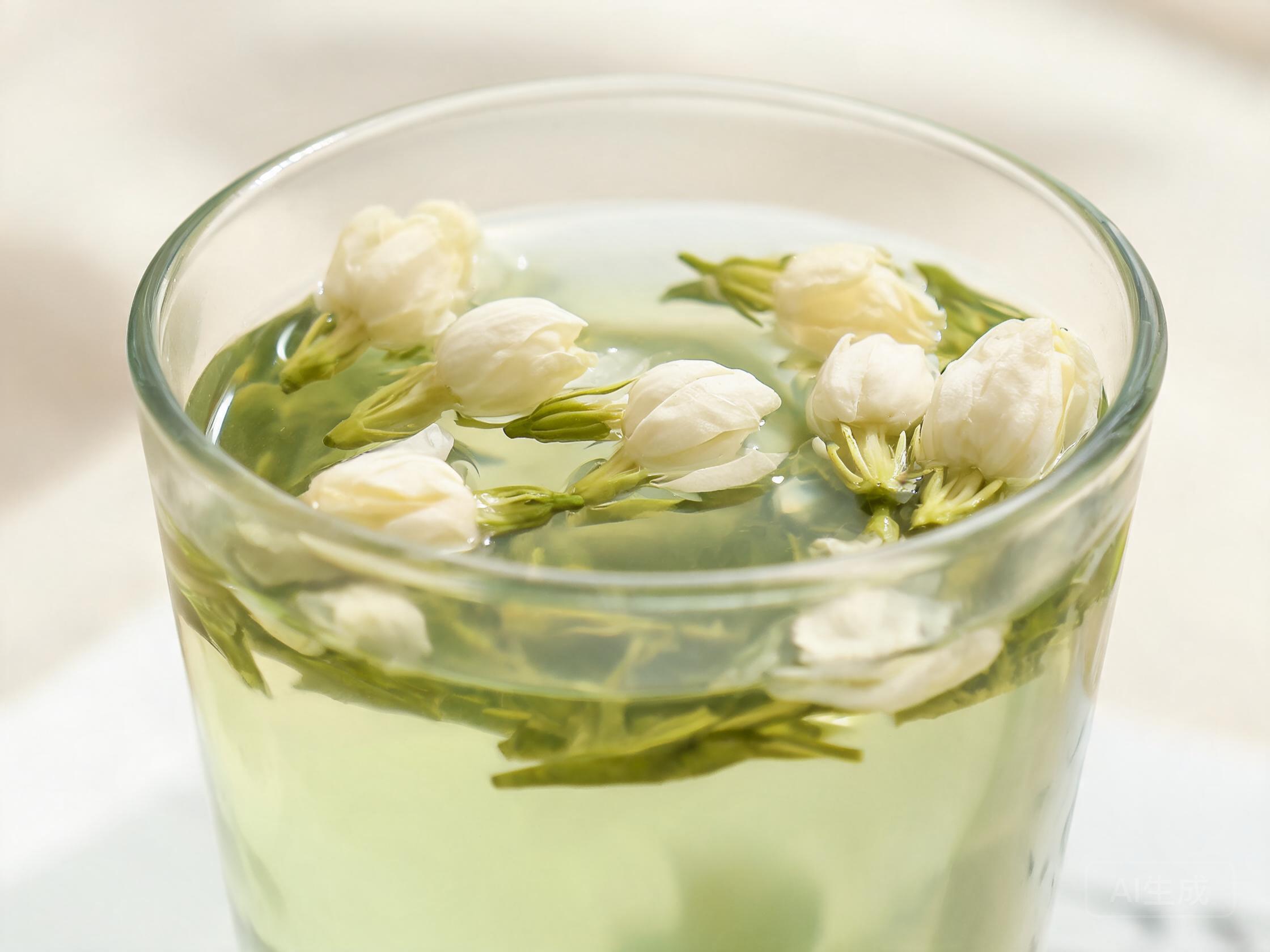
Finished tea is mixed with fresh flowers and left together overnight while the flowers open.
The leaf absorbs the aroma the flowers release, and the spent flowers are sieved out the next morning.
The tea is dried, and then the whole process is repeated with a fresh batch of flowers.
Traditional jasmine work runs 3 to 9 rounds, and each round takes a full night.
What makes it unusual is that it is the only step in tea that adds something from outside the leaf.
Every other category develops its character from the leaf itself, however that leaf is treated.
Scenting borrows the aroma of another plant, and the base tea is chosen for how well it receives it.
Most scenting uses jasmine, though osmanthus, rose, gardenia and tangerine peel all appear in the category.
Compression is often added afterwards for the aged products, and it is a separate step entirely.
The scenting is the category, and without it there would only be the base tea underneath.
Why it defines the tea
Scenting defines this category because it is the only reason the base tea was made in the first place.
Jasmine tea is green tea that has been chosen, dried and held specifically to carry flower aroma.
The base is deliberately made mild and slightly coarse, since a delicate tea would be wasted in the process.
That is the opposite of the logic in every other category, where the leaf itself is the point.
It also means the category is really a partnership between two crops grown in different places.
Hengxian in Guangxi grows the flowers, and the base leaf often arrives from another province entirely.
The craft is therefore coordination as much as processing, which no other category requires.
The result is also the only tea whose aroma can be judged by how long it lasts rather than what it is.
A properly scented tea still smells of flowers at the fourth infusion, and a badly scented one does not.
That test has no equivalent elsewhere, because no other tea has an aroma held in rather than grown in.
So the step defines both the category and the way it has to be judged.
What it takes
What scenting takes is timing above all, because the flowers set a schedule nobody can change.
Jasmine buds are picked in the afternoon while still closed, and they open a few hours after dark.
The scent is released then, over perhaps 4 to 6 hours, and after that the flowers are spent.
The leaf has to be mixed and heaped before that window, which means preparing it the same day.
Heap temperature is the next requirement, and it climbs on its own as the flowers open.
It is held between 40°C and 48°C by turning the heap, sometimes several times during the night.
Above 50°C the flowers cook, and the heap smells stewed rather than floral.
Too cool and they never open, and the round achieves almost nothing.
The base has to be dry enough to absorb, and most producers dry it to 4 or 5 per cent first.
Each round adds moisture, so the tea has to be dried again before the next one begins.
Drying too hot drives out what was just gained, which is where much industrial scenting loses ground.
A caveat
Scenting cannot rescue a poor base, though it is very good at hiding one for a while.
A weak or stale base tea will take up aroma, and it will smell right in the bag.
By the second infusion the flower has gone and what is left underneath is thin and papery.
That is the commonest disappointment in this category, and it is a material problem rather than a process one.
Cheap producers also cut the flower ratio, which produces the same result by a different route.
Traditional work uses 30 to 40 kilos of flower per 100 kilos of leaf, and cutting it to 10 is routine.
Added essential oil is the shortcut that hides the weakest material, and it is easy to detect.
Oil sits on the surface of the leaf and comes out all at once, then disappears completely.
Real scenting releases gradually, which is why the fourth infusion test works so well.
Buyers should also check the base by brewing the tea past the point where the flower has gone.
What is left at the fifth infusion is the actual tea, and that is what was paid for.