The steps
Reprocessed tea begins with a finished tea, so the process is a second pass rather than a first one.
For jasmine tea the base is usually a baked green tea, dried and rested before anything happens.
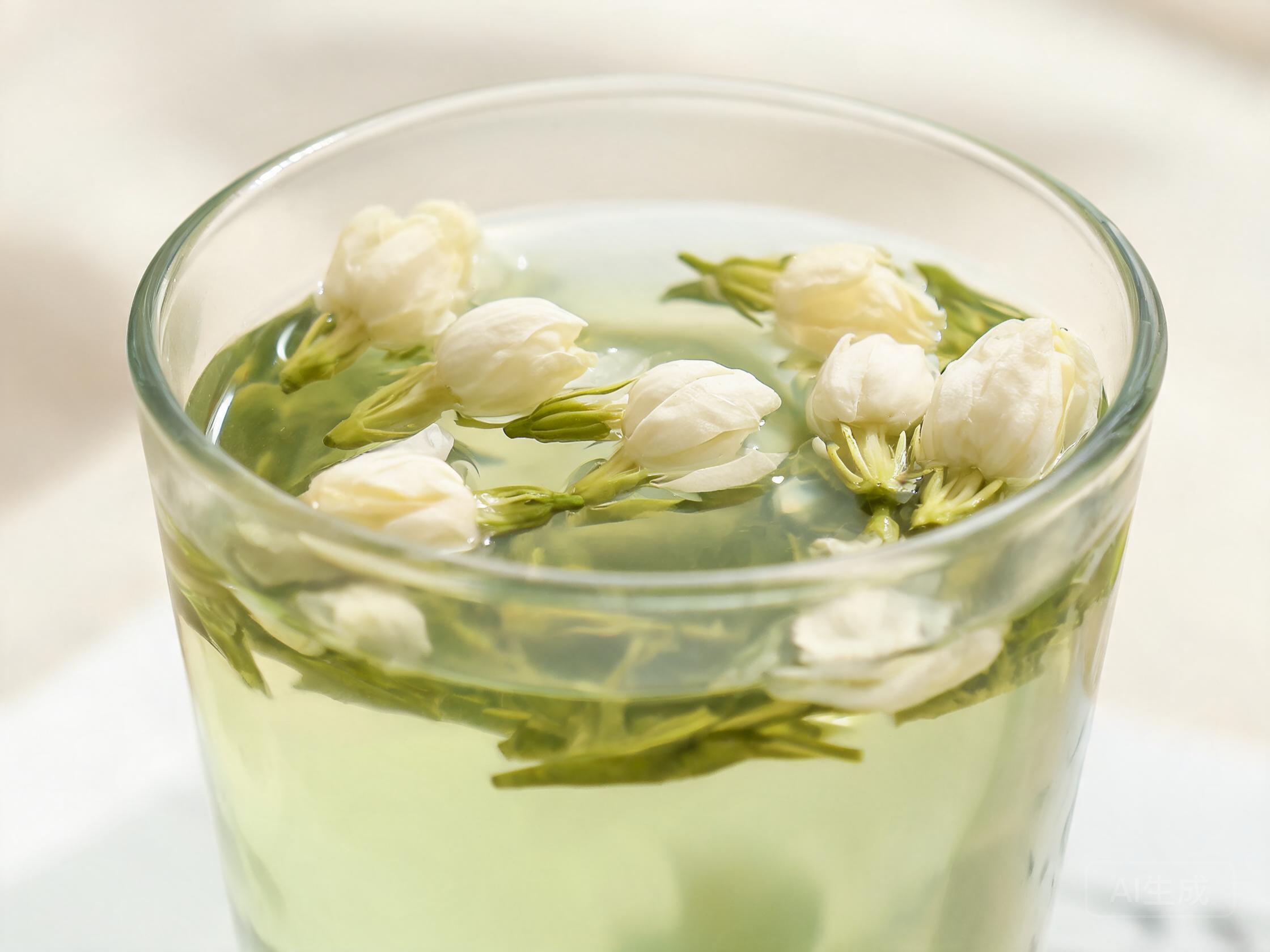
Fresh jasmine blossoms are layered with the leaf in the evening, when the flowers open.
The mixture is heaped and left overnight, and the leaf takes up moisture and scent together.
Spent flowers are sieved out in the morning, and the leaf is dried again.
That is one scenting round, and a good tea gets 3 to 9 of them.
A final round with a small amount of the best flower is called lifting, and it sharpens the aroma.
For compressed tea the base is steamed soft, pressed into shape, then dried slowly.
Ageing follows pressing, and for some types it runs for decades rather than years.
Two very different processes share one name, and they only have the base in common.
If a seller describes both in the same breath, they have probably not made either of them.
Order matters
The order is set by moisture, which governs almost everything in this category.
The base must be finished first, because scenting a leaf that is still being made achieves nothing.
The base also has to be dry enough to absorb, since wet leaf cannot take up more moisture.
Flowers are added in the evening because that is when they release their scent.
Drying has to follow each round, or the leaf keeps the moisture and turns sour overnight.
Sieving the flowers out before drying matters too, since spent blooms rot quickly in the heap.
Lifting comes last for the same reason a cook seasons at the end, to leave aroma on the surface.
For compressed tea, steaming comes before pressing, because dry leaf will not hold a shape.
Drying comes after pressing, and ageing after drying, since a wet cake would simply mould.
Every ordering here is about controlling water, and the sequence follows from that alone.
Water is both the carrier of the scent and the thing most likely to spoil the batch.
Where it can go wrong
Most faults in scented tea come down to temperature in the heap, which nobody sees happening.
If the heap gets too hot the flowers cook, and the tea picks up a stale, sweetish smell.
Turning the heap, called opening, is how that is prevented, and skipping it is the usual mistake.
Drying too weakly between rounds leaves moisture in the leaf, and the tea sours within weeks.
Drying too hard drives the aroma straight back out, which wastes the round entirely.
Using flowers that have already opened gives less scent, and buds that never open give none.
Too much lifting makes the smell sharp and obvious, and it disappears after one infusion.
For compressed tea, pressing too wet is the classic error, because mould establishes inside the cake.
Pressing too dry gives a cake that crumbles and never matures, since nothing moves inside it.
Both faults take years to show, which is why cheap cakes are often sold young.
Buy a young compressed cake from someone who will still be there in ten years, or leave it.
Scale and consistency
Scenting is labour intensive at any scale, since flowers are picked by hand in the afternoon.
A large producer can run dozens of heaps a night, and the skill is in watching all of them.
Temperature probes in the heap have replaced some of the guesswork, which helps consistency.
Mechanised scenting exists, using chambers rather than heaps, and the result is cleaner but flatter.
The amount of flower used is the variable most often quietly reduced, since it is the largest cost.
Pressing scales easily, because it is a machine job, and hydraulic presses give a consistent cake.
Drying and ageing are where scale helps most, since both need space and time more than skill.
A big producer can hold stock for years, while a small one has to sell as soon as it is made.
That is why aged compressed tea is largely a large producer’s product, whatever the label implies.
Consistency here means the same tea every year, which buyers want and connoisseurs do not.