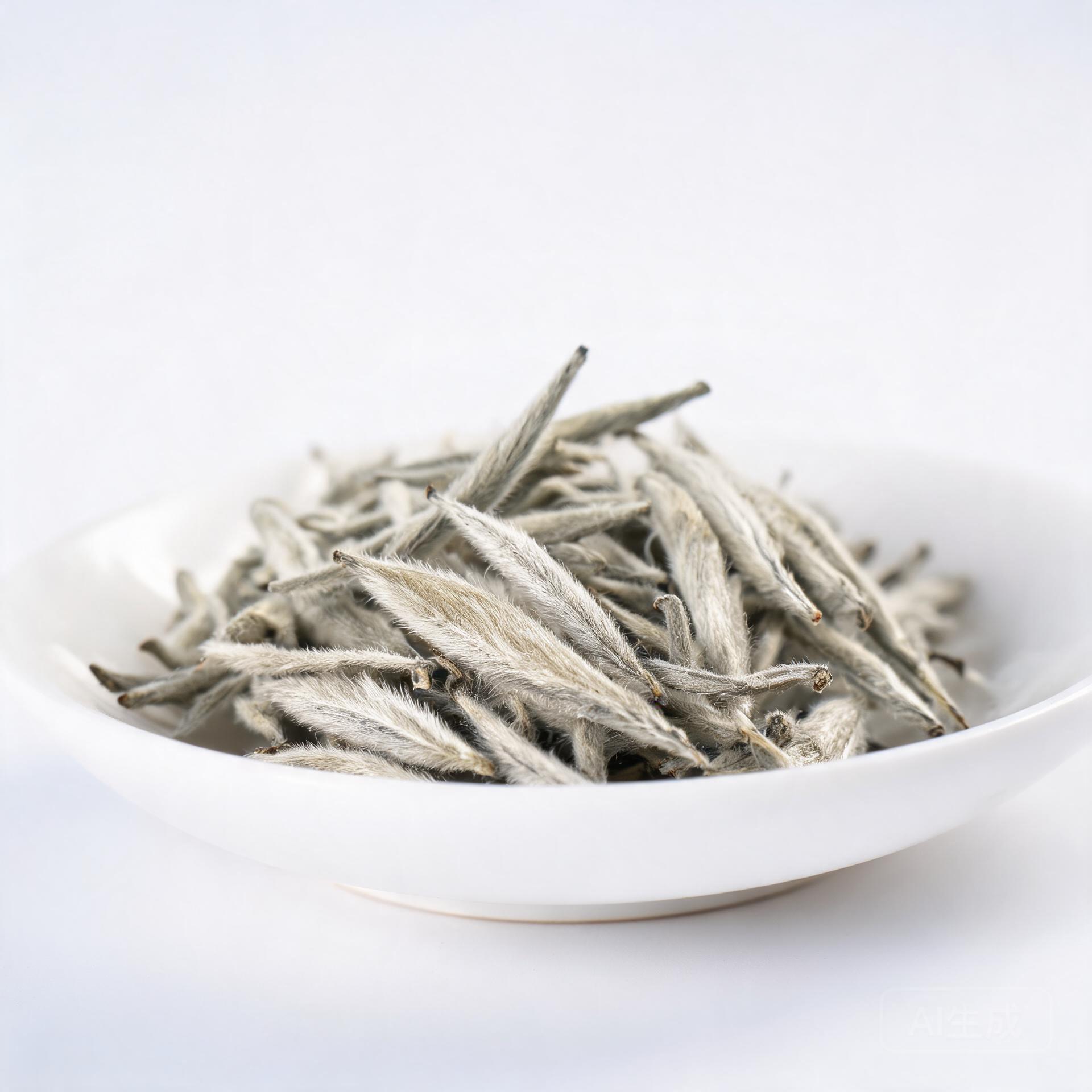
The one step
The defining step for white tea is withering, wei diao(萎凋), and it is the only step that matters.
Fresh leaf is spread thin on bamboo racks and left to lose water slowly in the open air.
No heat is applied at first, and nothing is done to the leaf beyond turning it occasionally.
The withering runs for 36 to 72 hours depending on the weather and the grade.
During that time the leaf softens, the grass smell fades, and the aroma begins to form.
What makes it unusual is that there is no fixing step to stop the process.
In green tea a hot pan kills the enzymes within minutes, and in white tea nothing does.
The leaf simply dries out while the enzymes are still working, and the change is gradual.
Water leaves the leaf over a day or more rather than in a few minutes of heat.
That slow drying is what produces the soft sweetness white tea is known for.
Drying at the end finishes the job, but by then the tea has already been decided.
Why it defines the tea
Withering defines white tea because it is all the category has.
Green tea is defined by fixing, red tea by oxidation, and oolong by shaking.
White tea has none of those, and what it has instead is a long controlled drying.
That is why the category gets described as the least processed, which is true but misleading.
Fewer steps does not mean less attention, and withering takes longer than any other single step in tea.
It is also why white tea is more exposed to weather than any other category.
A green tea maker can fix leaf in a few minutes whatever the sky is doing.
A white tea maker cannot dry 100 kilos of wet leaf on a humid afternoon.
The result of getting it wrong is not a weaker white tea, it is a different thing entirely.
Under-withered leaf is a green tea, and over-withered leaf has begun to ferment.
So the step is not one step among several, it is the boundary of the category.
What it takes
What withering takes is space, patience, and constant attention to conditions nobody fully controls.
The first requirement is thin spreading, since a deep layer generates heat and begins to ferment.
Most workshops keep the layer to 2 or 3 centimetres on racks with air moving underneath.
The second is airflow, and a still room on a humid day is the most dangerous situation in this craft.
The third is timing, since the leaf has to be turned before the underside stays wet too long.
Turning is done by hand at the top grades, because the buds are fragile and the down rubs off easily.
A maker checks the leaf by feel rather than by moisture meter, though most now use both.
The leaf is ready when the stem bends without snapping and the smell is sweet rather than green.
Push it a few hours further and the sweetness starts to turn into something fermented.
Pull it a few hours early and the tea keeps a raw edge that never fully disappears.
The window is narrower than the description suggests, which is why good white tea is not cheap.
A caveat
Withering cannot rescue poor leaf, and in white tea that limitation is unusually visible.
The finished tea is judged almost entirely on bud ratio, aroma and sweetness.
None of those can be added by process, since there is no step afterwards that changes the character.
A Shou Mei pluck of open leaf and stem will not wither into Silver Needle however carefully it is handled.
Leaf picked after the bud has opened has already lost the down that gives the tea its name.
Leaf from a poor cultivar, or from a garden planted on unsuitable ground, stays thin in the cup.
Rain during picking is the other fixed limit, since wet leaf cannot be spread and will go sour.
Producers respond by moving the leaf indoors and using heated troughs, which is a compromise.
That is why a wet spring produces a smaller crop of top grade white tea and a larger one of everything else.
Buyers should read the grade rather than the process description, because the grade states what the leaf was.
Withering reveals the material, and in this category there is nowhere for it to hide.