The steps
Yellow tea follows the green tea process with one step inserted, and that step is the whole category.
Leaf is plucked, fixed to stop the enzymes, and rolled lightly or not at all.
Then comes yellowing, called men huang(闷黄), where the hot leaf is covered and held damp.
It may be wrapped in paper, piled under cloth, or simply heaped in a warm room.
The hold runs for hours, and in some styles for 2 or 3 days.
Temperatures sit around 40 to 50°C, warm enough to drive the change and cool enough not to cook.
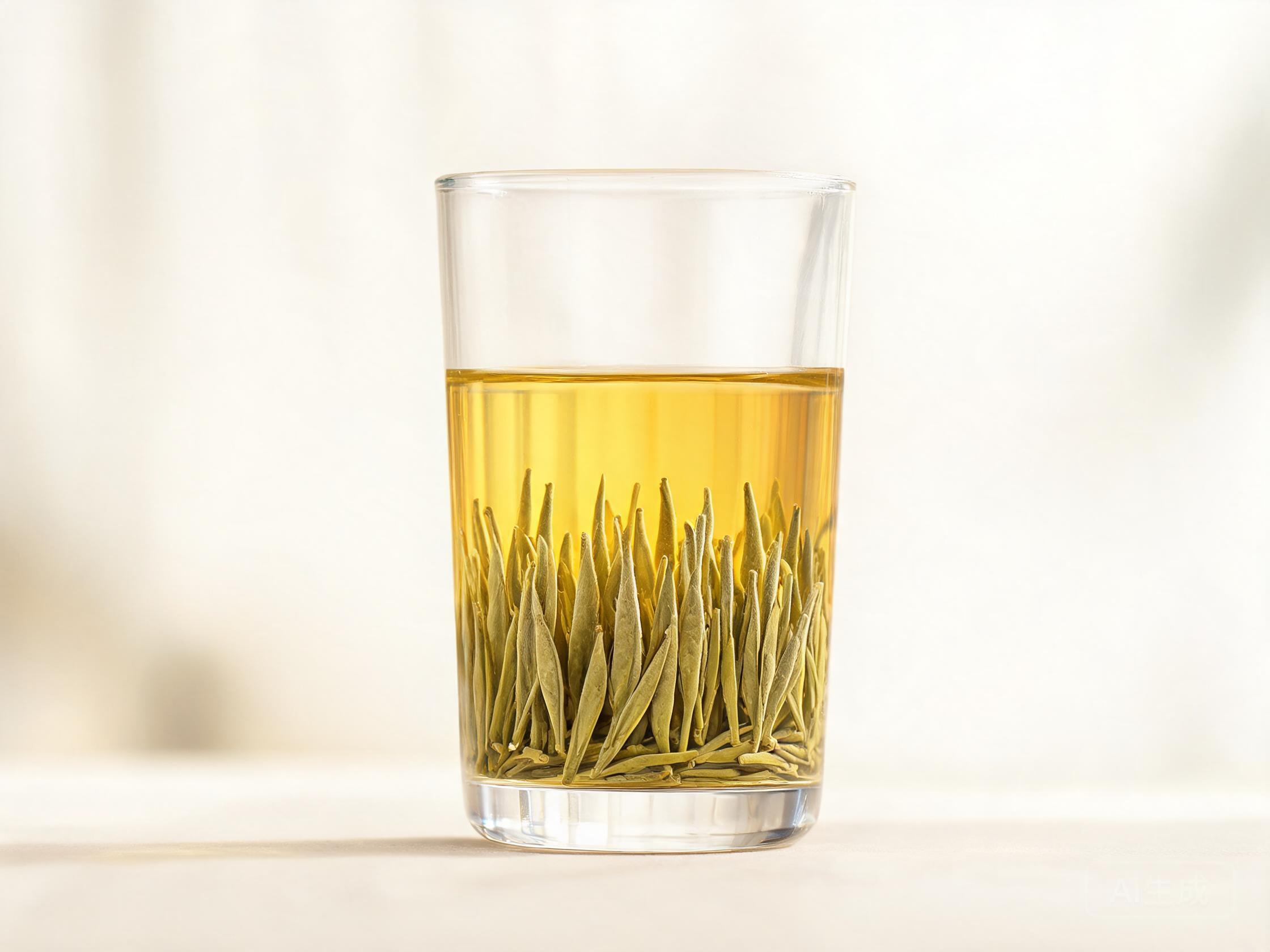
The leaf turns from green to yellow, and the grassy edge softens into something sweeter.
Some styles are yellowed twice, with a light rolling between the two holds.
Drying comes last, and it has to be gentle, because the moisture is now part of the result.
Six steps, one of which does all the work that gives the category its name.
Everything before the hold is ordinary green tea making, and everything after it is only drying.
Order matters
The position of the yellowing step is fixed, and moving it destroys the point of the process.
It has to come after fixing, because fixing is what makes the leaf ready to change.
A fixed leaf has softened and stopped its enzyme activity, so what follows is not fermentation.
It has to come before drying, because the change needs water inside the leaf to happen.
Yellow a dry leaf and nothing occurs at all, which is the simplest way to waste a batch.
Rolling before yellowing opens the leaf and lets the damp work evenly through it.
Rolling after yellowing would tear leaf that has already softened, and the result is uneven.
Drying last locks in the colour and the sweetness, and doing it early stops the change midway.
So the order is: stop the enzymes, add heat and damp, wait, then remove the water.
Each of those four moves depends on the one before it having already happened.
Get the hold right and the rest of the process barely matters, which is a strange thing to admit.
Where it can go wrong
The window is narrow in both directions, and yellow tea punishes anyone who misses it.
Fix too hot and the leaf is effectively finished early, and it will not yellow properly.
The result is a green tea with a yellow label, which is a common and rarely admitted fault.
Yellow for too short a time and the tea keeps its grassy edge and pale colour.
Hold it too long and the leaf sours, since it is warm and wet for hours on end.
Uneven heap temperature gives a mixed batch, with some leaf yellowed and some still green.
Too much leaf in the heap causes that, because the outside cooks before the centre warms.
Drying too fast at the end sets a hard, toasted note over the top of everything.
Drying too slowly lets the damp leaf spoil at the edges, which shows as a dull grey colour.
A maker checks by smell and by hand several times an hour during the hold.
It cannot be timed in advance, because every batch of leaf holds on to its water differently.
Scale and consistency
Yellow tea is made in small quantities almost everywhere, and that is not an accident.
The hold ties up floor space and labour for hours, and the volumes do not justify mechanising it.
Most producers work in batches of a few dozen kilos at most, often far less than that.
Scaling up makes the temperature problem worse, since a bigger heap is harder to keep even.
That single constraint is why the category never grew the way green tea did.
Where scale has been attempted, the result is usually an under-yellowed tea sold as yellow.
Consistency suffers accordingly, and two batches from one producer can differ noticeably.
Large producers who make it treat it as a small side line, made by hand by a few people.
Buyers should expect variation and should be suspicious of a cheap, uniform yellow tea.
This is the one category where small scale is not a marketing claim but a technical necessity.
Anyone selling large volumes of it cheaply is selling a tea that was never really yellowed.