How regions differ
Yellow tea is made in a handful of small districts, and the list has barely changed in a century.
Mengding in Sichuan produces Meng Ding Huang Ya from single buds picked before the spring rain.
The hold there is short and gentle, and the finished tea is sweet with almost no grassiness.
Junshan Yinzhen comes from an island in Dongting Lake in Hunan, and it is also a bud only tea.
The island gives a humid microclimate, and the buds are packed and held while still warm from fixing.
Huoshan in Anhui makes Huang Ya and Huang Da Cha, the latter from far coarser material.
Huang Da Cha is the exception in this category, being made from open leaf rather than buds.
Pingyang in Zhejiang produces Huang Tang, which is yellowed longer and tastes rounder than the bud teas.
Guangdong makes Da Ye Qing from broad leaf material, and it sits closest to green tea of any of them.
Everything else sold as yellow tea is usually green tea that skipped the hold entirely.
The districts are small, the volumes are tiny, and the method is what makes them worth naming.
Why the same tea diverges
The yellowing hold is the step that defines this category, and every region runs it differently.
Some hold the leaf warm and wrapped for 6 to 8 hours, and others go for 2 or 3 days.
A long hold develops sweetness and removes the raw edge, and it also risks souring the leaf.
Temperature during the hold is the first variable, and most makers work between 35°C and 45°C.
Moisture is the second, since leaf held too wet will sour long before it sweetens.
Wrapping in cloth or paper keeps the heat in, and it is why the traditional method uses cloth at all.
Leaf type is the third variable, and Junshan and Mengding are both working from a bud grade.
A bud holds water differently from an open leaf, which is why Huang Da Cha needs a different hold.
Fixing temperature beforehand matters too, since it decides how much enzyme activity is left.
Drying afterwards is gentle everywhere, and a hard final drying would undo the whole hold.
Get any one of these wrong and the tea is a green tea, the commonest outcome in the trade.
Learning the signatures
The first test is whether the tea tastes like a green tea at all, and most of what is sold does.
A properly yellowed tea has lost the grassy edge and gained a soft sweetness and a rounder smell.
Look at the colour of the liquor, which should be a warm yellow rather than the green of a green tea.
The dry leaf in a bud grade is even and pale gold, and it should never look grey.
A grey leaf means the hold went wrong or the drying was too hot, and neither can be fixed later.
Brew 4 grams at 85°C and give it a full 3 minutes, since yellow tea needs more time than people expect.
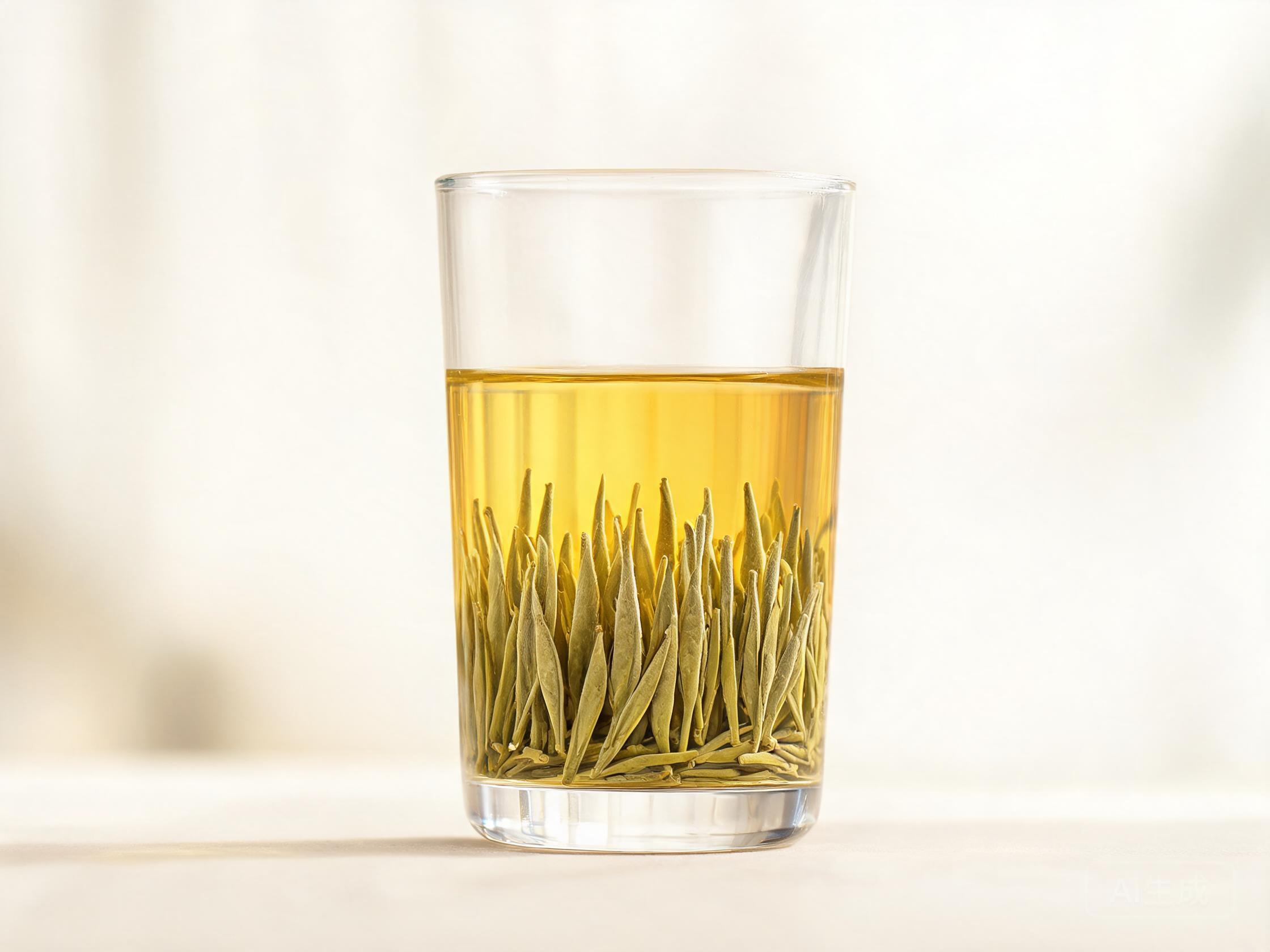
Junshan Yinzhen is delicate and slightly sweet, and the buds stand upright in the glass when brewed.
Mengding is sweeter and fuller, with a corn like note that sounds odd and tastes clearly right.
Huang Da Cha is the outlier, tasting toasty and strong from its coarse leaf and longer firing.
Pingyang Huang Tang sits between them, rounder than the bud teas and less toasty than Huang Da Cha.
Taste one of these beside a green tea of similar grade, and the category should be obvious.
Tradition versus trend
Yellow tea nearly disappeared in the late 20th century, and the revival is recent and uneven.
The method is slow and labour heavy, and it competes badly with green tea for the same spring leaf.
A producer can sell the same bud as green tea in one day, or hold it for 2 days and sell it as yellow.
That decision is economic, and it goes the wrong way whenever green tea prices are high.
The revival has brought new names and new claims, and the standards have not kept up with them.
Machine yellowing exists, and it produces tea that is yellower in colour but not in flavour.
The reliable test is still sweetness, and no machine has produced the sweetness of a proper hold.
Junshan Yinzhen is the most counterfeited name in the category, since the island’s output is genuinely small.
Bud tea from Hunan is sold under that name freely, and some of it is well made in its own right.
Ask when the tea was made, since most yellow tea is best within a year or two of production.
Pay for a named producer and a recent date, and ignore the district if the cup tastes green.