How regions differ
White tea looks like the simplest craft in tea, and its regions still manage to disagree with each other.
Fuding in northern Fujian is the reference point, producing Silver Needle and Bai Mudan from the Fuding Da Bai cultivar.
The style there is sun withering, with leaf spread thin on bamboo racks and turned by hand.
Zhenghe, inland and slightly higher, uses its own Zhenghe Da Bai cultivar and a longer withering.
The finished leaf is darker and the liquor a little thicker than the Fuding equivalent.
Jianyang works with a smaller leaf population and produces much of the country’s Gong Mei.
Yunnan makes a different thing entirely from broad leaf assamica, sold as yue guang bai(月光白).
Its dry leaf is dark on one side and pale on the other, which no Fujian white tea shows.
Outside China, white style tea is made in Sri Lanka, India and Kenya, mostly from assamica.
Those are competent teas with a different aroma, and they are not what the Chinese names describe.
So the regional question in white tea is really about cultivar, and only then about method.
Why the same tea diverges
Cultivar is the first cause, since a bud from a large leaf bush is not a bud from a small leaf bush.
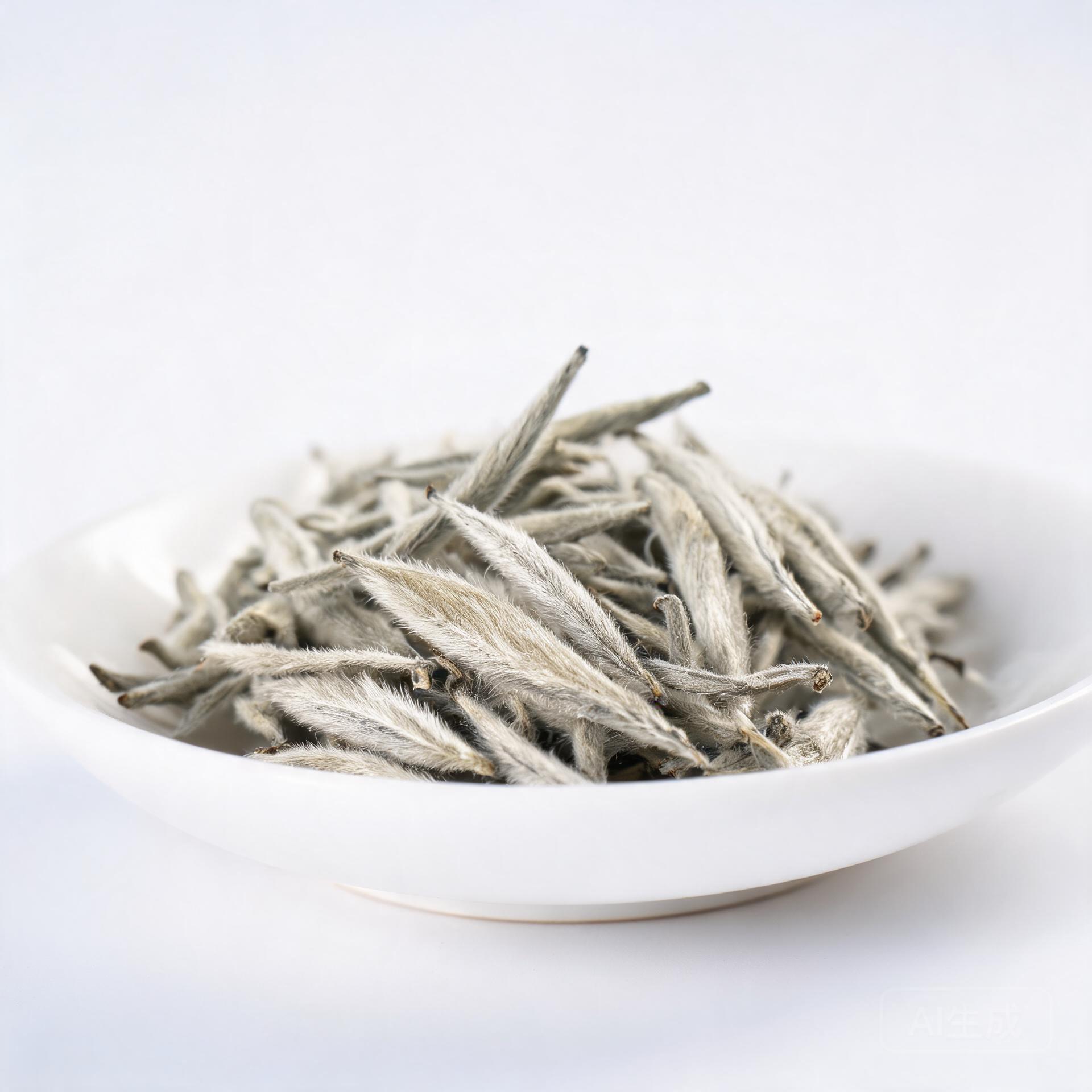
Fuding Da Bai has heavy white down, which is where Silver Needle gets its name and much of its sweetness.
Zhenghe Da Bai carries less down and more body, which shows as a thicker mouthfeel in the cup.
Yunnan assamica is larger again, and it brings a darker liquor and a slightly wild aroma.
Withering comes next, and it is the step every region handles differently.
Sun withering is fast and weather dependent, and it gives the bright floral note Fuding is known for.
Indoor withering is slower and safer in humid weather, and it produces a rounder but less aromatic tea.
Some makers stack the leaf part way through, which pushes it a little toward oxidation.
Drying temperature is the third variable, and a dryer at 60°C gives a different tea from one at 80°C.
Grade then cuts across everything, since Silver Needle and Shou Mei from one district taste nothing alike.
Two variables of this size are enough to make one category look like three different drinks.
Learning the signatures
Look at the down first, since it separates the Fujian cultivars from anything made in Yunnan.
A fat bud covered in silver down is Fuding, and the aroma should be sweet hay and melon.
Zhenghe leaf is a little darker, and the aroma leans toward dried flower rather than fresh.
Yunnan material is unmistakable: big leaves, a dark upperside, and a faint wild sweetness underneath.
Shou Mei and Gong Mei are mostly open leaf and stem, and region matters far less for them.
Smell the wet leaf after 30 seconds, because that is where a poor withering shows itself.
A green or grassy edge means the withering was cut short, whatever the district claims.
Brew 5 grams at 90°C and read the sweetness, which is the primary quality in young white tea.
Fuding bud tea tastes clean and sweet with a light floral top note, and it rarely has much body.
Zhenghe gives more texture and a longer finish, which some drinkers prefer once they notice it.
Aged material narrows all of this, since 5 or 6 years of storage flattens most regional difference.
Tradition versus trend
White tea has changed more in 15 years than in the previous century, and the change is commercial.
Aged white tea was a local habit before it became a national market, and prices followed the demand.
Cakes are now the standard form for ageing, and loose leaf is sold mostly for drinking young.
That shift favors Yunnan material, since large leaf compresses and ages in a way small leaf does not.
Traditionalists point out that white tea was never meant to be compressed, and they have a point.
The counter argument is practical, since cake stores in a fraction of the space that loose bud needs.
Sun withering is the other battleground, and genuine sun withered tea is now a premium claim.
Much of what is sold that way spent part of its withering indoors, because rain makes sun impossible.
You cannot prove it from the finished leaf, which is why the claim is made so freely.
What you can check is dryness, and any white tea stored above 10 per cent moisture will go sour.
Buy from someone who will say how the leaf was withered, and be wary of those who will not.