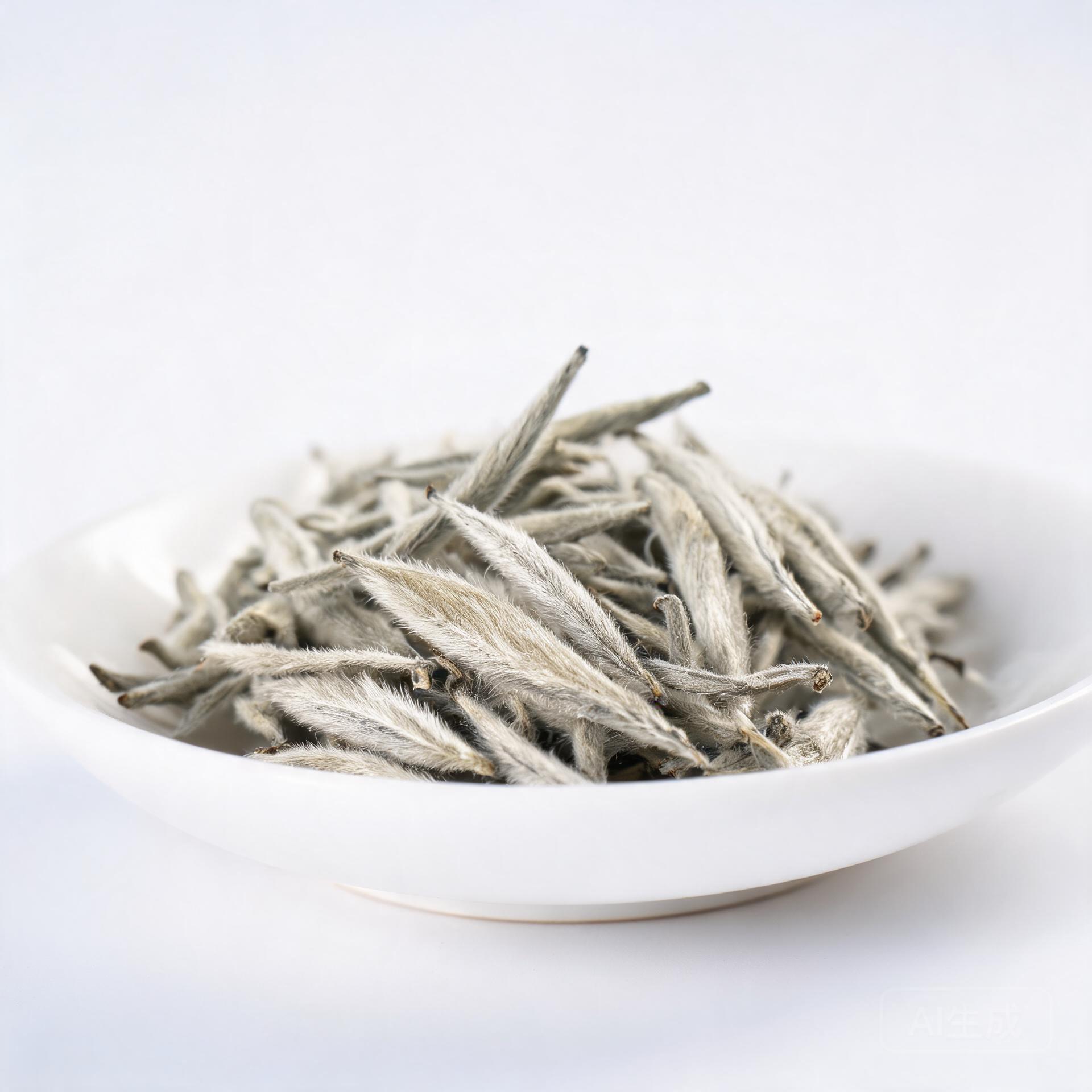
The steps
White tea is the shortest process in tea: pick, wither, dry, then sort and pack.
There is no fixing and no rolling, which is what separates it from every other category.
Bud-heavy leaf is spread thinly and left to wither, outdoors in sun when the weather allows.
Indoor withering on racks follows, and the two together run 36 to 48 hours.
The leaf is not turned or disturbed much, since handling it rubs the down off the buds.
Drying is slow and gentle, often below 60°C, to take the moisture out without cooking the leaf.
Sorting removes leaf, stem and anything broken, and it is done by hand at the top grades.
Aged white tea adds one more step after all of that, which is years of controlled storage.
Compressed white tea is steamed and pressed after drying, then returned to storage.
Four steps, none of them dramatic, and the result depends entirely on how well they were judged.
Nothing is added at any point, and that absence is the claim the whole category rests on.
Order matters
The order here is really one rule: do as little as possible, and do it in the right order.
Withering has to come first because it is the only step that changes the leaf chemically.
Water leaves slowly over a day or two, and enzymes in the leaf keep working while it goes.
Fixing would stop that work instantly, which is why white tea has no fixing step at all.
Rolling would break the buds and squeeze out juice, and white tea is defined by not doing that.
Drying must follow withering rather than replace it, since heat applied early sets a raw green note.
Sorting comes last because it is cosmetic, and there is no point tidying leaf that is not finished.
Storage, where it applies, comes after everything, since compressing or storing wet leaf invites mould.
Each step is subtractive, taking water out or taking material away, and nothing is added.
Reverse any part of that order and the tea simply stops being white tea.
It is also why a rushed white tea tastes like hay, whatever grade is printed on the bag.
Where it can go wrong
Because so little is done, every step is exposed, and mistakes cannot be hidden afterwards.
Under-withered leaf keeps too much water and turns sour, or worse, grows mould in storage.
Over-withered leaf gives a flat, hay-like tea with none of the sweetness the category is known for.
Rain during withering is the classic disaster, since wet leaf in a warm room ferments badly.
Drying too hot produces a fired note that tastes like a green tea rather than a white one.
Drying too slowly in humid weather lets the leaf go grey, which shows in both colour and taste.
Piling the leaf too thickly during withering heats it, and the centre of the pile spoils.
Handling it too much rubs the down off the buds, which is a visible loss of grade.
None of these can be corrected later, because there is no step strong enough to do the correcting.
The simplicity that makes white tea attractive is also what makes it easy to ruin.
Scale and consistency
White tea looks like the easiest category to scale, and it is one of the hardest.
Withering needs both space and time, and each of those costs money at any real volume.
A factory can build withering troughs with controlled airflow, which removes the dependence on weather.
That is the main gain of scale, since sun withering stops whenever it rains.
What scale loses is the judgement of a person who can smell when the leaf is ready.
Large producers still sort by hand, because no machine separates buds from leaf well enough.
Blending matters less here than in other categories, since a single lot is more often sold alone.
Compression is where scale helps most, because pressing is a mechanical job anyway.
Aged white tea favours scale in one way, since storing a tonne is easier than storing a kilo.
The process is short at every size, and the difference is how carefully it is watched.
A small maker watching one room can still beat a factory, and often does at the top grades.