What the name covers
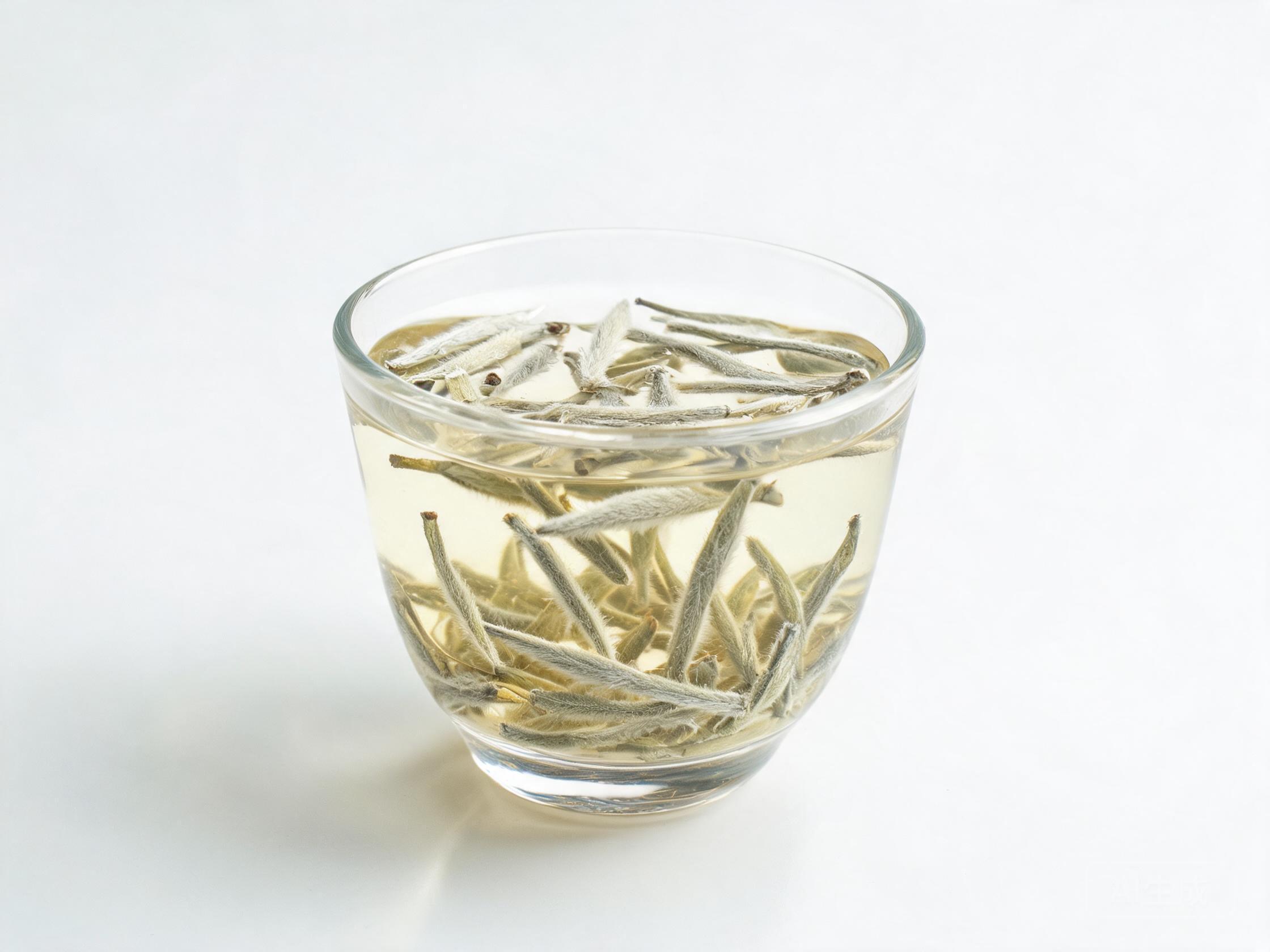
Bai Hao Yinzhen(白毫银针)means white hair silver needle, and the name describes the dry leaf.
It is a bud only tea, picked before the leaf beneath the bud has opened.
Nothing else in the white tea category is made entirely from buds.
That single detail is what sets it apart from Bai Mudan(白牡丹)and Shou Mei(寿眉).
The buds are fat, and they are covered in the fine white down the name refers to.
Two origins matter, and they are both in Fujian.
Fuding(福鼎)produces the version most people mean, and it is the lighter of the two.
Zhenghe(政和)produces a slightly darker and fuller version from a different cultivar.
Both are legitimate, and neither should be sold as the other.
The picking window is short, and it falls in the early spring before the season warms.
A late picking produces open leaf, and that leaf goes into a lower grade instead.
So the grade depends on the day it was picked as much as on the garden.
Anyone paying for this tea is paying for a window of a few weeks.
How it is made
The making is short, and that is the whole character of the category.
The buds are withered, and then they are dried.
There is no rolling, no shaping and no heating beyond what the drying needs.
The withering is the step that decides the quality, and it is slow.
Traditional practice spreads the buds thinly and lets them sit in sun and shade.
Indoor withering is used when the weather will not allow sun, and it takes longer.
The buds are turned by hand, and the turning keeps them from drying unevenly.
Drying stops the process, and it is done gently to keep the down intact.
A batch dried too fast stays green, and it will taste grassy rather than sweet.
Over dried, it turns dull and the aroma disappears entirely.
The finished bud should be grey green to silver, and it should smell faintly sweet.
It should not smell of hay, and it should not smell of nothing at all.
Everything the drinker tastes later was decided in those two steps.
How it tastes and how it changes
A fresh Silver Needle is delicate, and delicate is not the same as weak.
The aroma is of fresh hay, melon and a light floral sweetness.
The taste is mild, with very little astringency and a clean finish.
The liquor is a pale yellow, and it looks almost too light for the price.
That paleness is correct, and a dark liquor means the leaf was mishandled.
This is a tea that changes with age, and the change is worth waiting for.
After three years the grassy note recedes and a honey note takes its place.
After a decade the cup turns towards dried fruit and a faint medicinal note.
Ageing only works in dry, sealed and dark storage, and damp ruins it.
A musty cake or pouch is spoiled rather than aged, and it should be discarded.
Loose buds age more slowly than compressed, since less surface is exposed.
Anyone buying for age should buy more than they need, since the tea improves.
Someone buying for the fresh taste should drink it within a year or two.
Buying and brewing it
The dry buds should be uniform, plump and covered in silver down.
Broken buds, open leaf and dark pieces all point to a lower grade.
A green looking batch was under withered, and it will taste thin and grassy.
A brown looking batch was over dried, and the aroma will be flat.
Price follows grade closely here, and a cheap Silver Needle is usually not one.
Brew 3 g in 150 ml at 85 °C, and give the first steep about 60 seconds.
Water that is hotter than that flattens the aroma and pulls out bitterness.
The buds give 4 to 5 infusions, and the second is usually the sweetest.
A lower temperature and a longer steep suits anyone who finds it too light.
Cold brewing works well, and 6 g in a litre overnight gives a mild sweet cup.
Glass or porcelain suits it better than a heavy pot, since the leaf is the point.
Store it sealed and away from light, and it will hold for a couple of years.
Beyond the grade and the water temperature, there is very little to get wrong.