Scale today
Dark tea is a substantial modern category built on post-fermentation.
Pu-erh in Yunnan is the largest part of it, and it spans two quite different products.
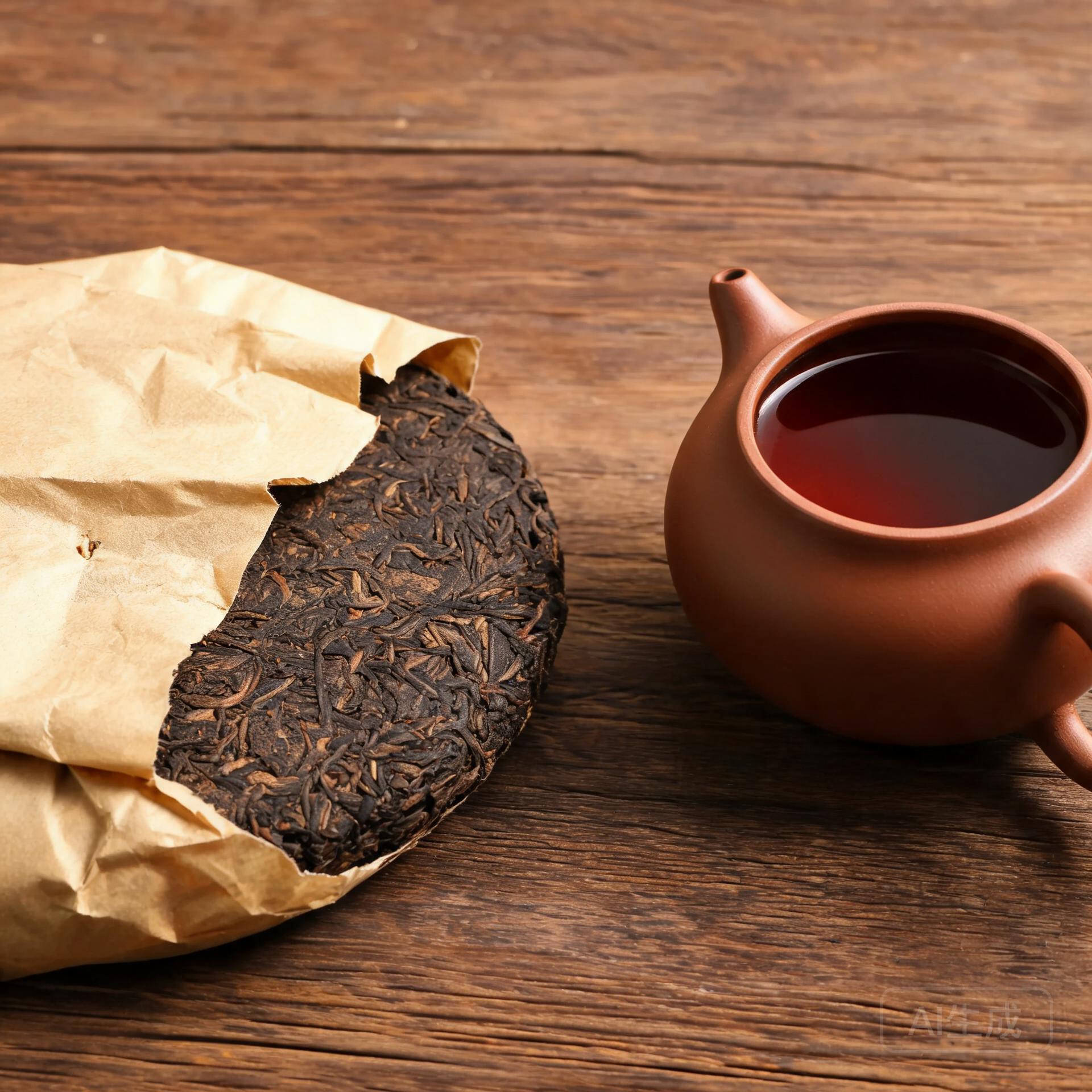
Sheng pu-erh is pressed and left to age naturally, which takes years.
Shou pu-erh is fermented quickly in wet piles and sold much sooner.
That second method was developed in the 1970s, and it changed the industry completely.
It made pu-erh available at scale for the first time, and it created the modern market.
Alongside it sits a large plantation economy covering much of southern Yunnan.
Anhua dark tea in Hunan and Liubao in Guangxi are smaller but long established.
Sichuan and Hubei produce brick tea for minority regions, which is a captive market.
All of it runs on domestic demand rather than on export.
The collector trade is the visible part abroad, and it is not the largest part.
Most dark tea is drunk rather than stored, and that is worth remembering.
The industry is bigger, duller and more stable than its reputation suggests.
The reputation comes from the small part that gets traded rather than drunk.
What shapes the modern trade
Output today rides on domestic drinking habits and on a collector market layered on top.
The domestic side is steady: brick tea, daily shou pu-erh, and regional staples.
It behaves like a food market rather than like a luxury one.
The collector side is the opposite, and it runs on age and scarcity stories.
Prices there have moved sharply more than once, and they move independently of quality.
A famous mountain name can add more to a price than the leaf itself justifies.
That market also sets expectations for everything else in the category.
Producers respond to it, which is why naming and packaging have grown so elaborate.
Storage is the other structural force, since a cake is not finished when it is pressed.
Merchants hold stock for years, and their warehouses decide what the tea becomes.
A dry warehouse in Kunming and a humid one in Guangdong produce genuinely different tea.
Both have their advocates, and the difference is real rather than a matter of preference.
Anyone buying aged cake is buying a warehouse as much as a leaf.
Industrial versus craft
Mechanisation lifted volume and consistency here, and it pressed the small workshops too.
Controlled fermentation made shou pu-erh reproducible at scale for the first time.
That is a genuine achievement, and it supplies most of the tea people actually drink.
What it does not do is produce the cakes that collectors chase.
Those come from specific gardens, specific years and specific presses.
The craft end is small by volume and dominates almost all of the writing about the category.
That imbalance distorts what a new buyer sees, and it does so in both directions.
The industrial version is better than its reputation, and the craft version is more variable.
A badly stored craft cake is worse than a well made industrial one, and that happens often.
Telling them apart is a matter of taste rather than of label.
Brew 8 g in a 120 ml pot with boiling water and rinse the leaf once.
A good cup is thick and clean, with a sweet finish after 10 infusions.
A musty one is a storage failure, and no name on the wrapper repairs it.
Reading the market
The useful signal is not tonnage but where a tea sits between commodity and craft.
That position predicts price, availability, and how much the maker’s hand still matters.
For dark tea the answer depends on whether you are drinking or collecting.
If you are drinking, the commodity tier is where almost all of the value sits.
Buy young shou pu-erh from a producer you can name, and keep it yourself for a few years.
If you are collecting, understand that you are buying a market as well as a tea.
Prices in it have fallen as sharply as they have risen, and more than once.
Buy 100 g of anything before committing to a whole cake.
Brew it at 8 g in a 120 ml pot, and judge it across 3 sessions rather than one.
Ask where it was stored, and treat a vague answer as a negative one.
The regional pages here cover Yunnan, Hunan, Guangxi and Sichuan separately.
What the market will not tell you is whether the cup in front of you is any good.
Ten infusions will tell you that, and they cost an afternoon.