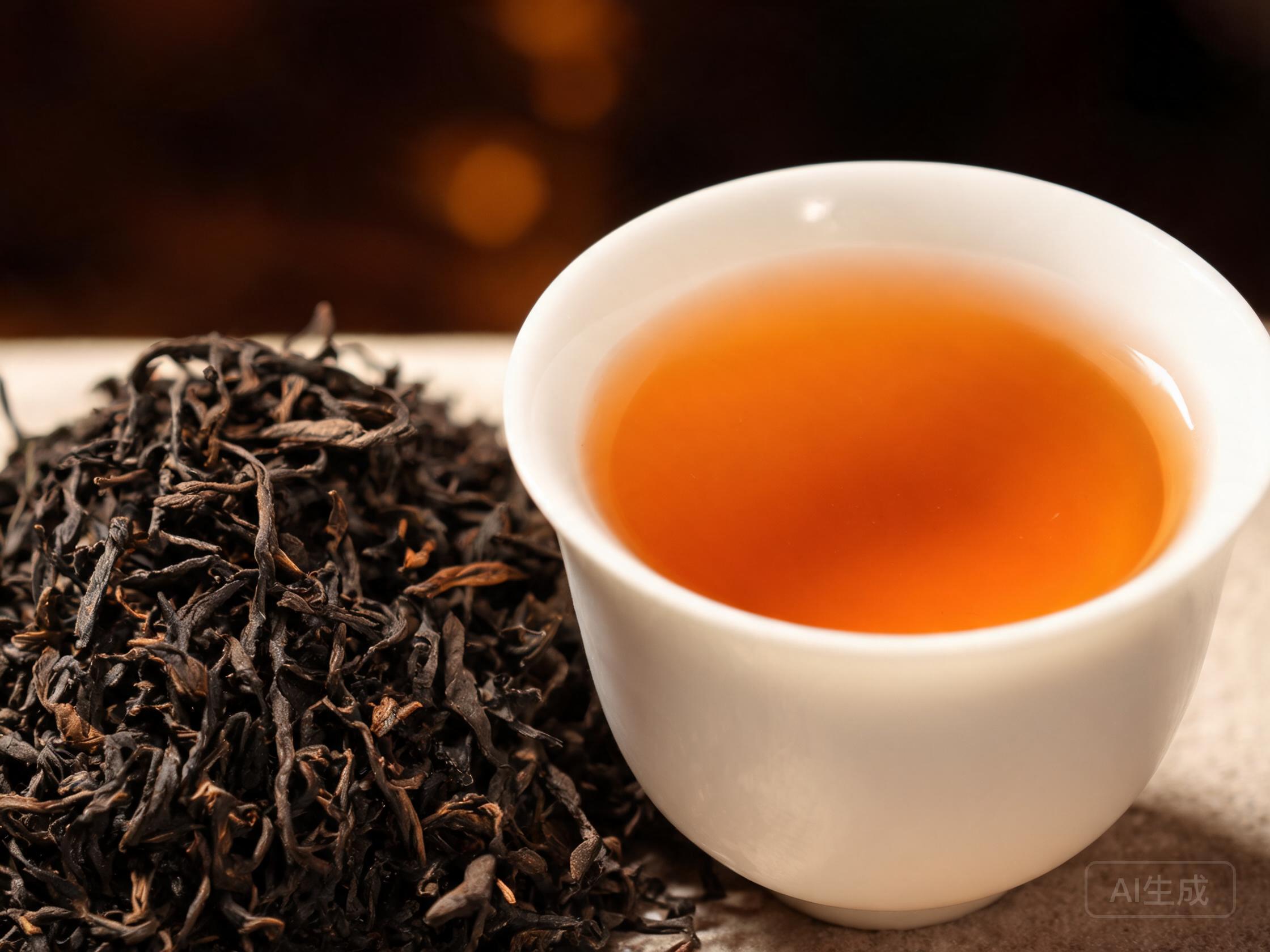
Where it sits among teas
Chinese tea is usually sorted into six families, and the sorting is done by process rather than by leaf.
Red tea sits at the far end of that ladder, past white, yellow and oolong, and just short of dark tea.
The order runs from no oxidation through partial oxidation to complete oxidation, and then to a microbial step that comes after it.
Green tea is fixed with heat straight after picking, so the reaction stops before it has started.
White tea is dried with minimal handling, so a little oxidation happens and almost nothing else does.
Yellow tea adds a slow non-enzymatic hold, which changes colour and softness without running the oxidative enzymes.
Oolong rolls the leaf and then halts the reaction partway, which is why that family covers such a wide range.
Red tea is the family that lets the reaction finish, and that one decision defines it.
Dark tea goes further and hands the leaf to microbes, which is a different kind of change altogether.
Placed on that ladder, red tea is the fullest expression of enzymatic oxidation and the last stop before fermentation.
It describes what happened to the leaf, and that description predicts a great deal about the cup.
The family logic
The logic behind the six families is simple once the enzymes are understood.
Fresh leaf carries enzymes that will brown the catechins as soon as the cells are broken and nothing stops them.
Every family is a different answer to the same question: how far should that reaction be allowed to run?
Green tea answers by stopping it immediately, within hours of picking.
Red tea answers by removing the stopping step altogether, so the reaction is allowed to complete.
That is why a red tea process has no kill-green stage, and it is the clearest structural difference in the whole system.
The Chinese name makes the same point from the other end, since hong cha(红茶)describes the liquor rather than the leaf.
English settled on black tea by describing the dry leaf, which is dark before it is ever brewed.
Both labels are correct about a different object, and the split dates to the 17th century trade.
One consequence is that English red tea usually means rooibos, which is not a tea at all.
What the sorting does not do is say anything about quality, and a badly made red tea is still a badly made tea.
Neighbours and overlaps
The nearest neighbour is oolong, and the two differ by where the reaction was stopped.
Oolong is fixed partway through, so it keeps the green aromatics and adds some of the red ones.
Red tea lets the reaction run out, which is why the green edge is gone and the cup tastes brisk instead.
The practical result is that oolong needs careful timing while red tea mostly needs warmth and humidity.
The oxidising step runs at 24 to 28 °C and above 90 per cent humidity for 2 to 5 hours, which is not delicate work.
Dark tea is the other neighbour, and the confusion between the two is common.
It is oxidised first and then changed by microbes, so the two steps are stacked rather than alternative.
Red tea has no microbial stage at all, which is why its flavour is stable and its storage is simple.
White tea overlaps in the opposite direction, since it is often the same leaf with no rolling.
Without rolling the cells stay intact and very little oxidation happens, so one cultivar can produce two unrelated drinks.
There is also a split inside the family, between whole-leaf orthodox tea and the cut granule style.
Orthodox leaf is rolled into strips and keeps its grade visible, while the granule style is built for even extraction in a bag.
Why the system helps
The value of knowing where red tea sits is that the position predicts things a buyer would otherwise learn by trial.
Because the catechins have already been rebuilt, a red tea is hard to make bitter, so water at a full boil is safe.
A green tea at that temperature turns harsh, and the difference follows directly from where the reaction stopped.
The same chemistry makes the leaf less sensitive to air than a green tea, so it keeps longer without special handling.
A sealed tin in a dark cupboard is enough, and the fuss about refrigeration belongs to the greener families.
The fuller body also explains why this category takes milk and sugar without falling apart, which no green tea does.
It explains why red tea is the base of most blends, since a strong cup survives the addition of other flavours.
What the position predicts just as clearly is what is lost, and that is the fresh green aroma that oxidation consumes.
None of this makes one family better than another, and the ladder is not a ladder of quality.
It is a way of reading a packet: the position tells you how to brew it, how to keep it, and what to expect.
Brew 5 g in 300 ml at a full boil for about 3 minutes, and the position will show up in the cup.