The pattern
Yellow tea is small enough that its regional pattern is easy to state and easy to miss.
Three names carry the category, and all three are bud teas made in different provinces.
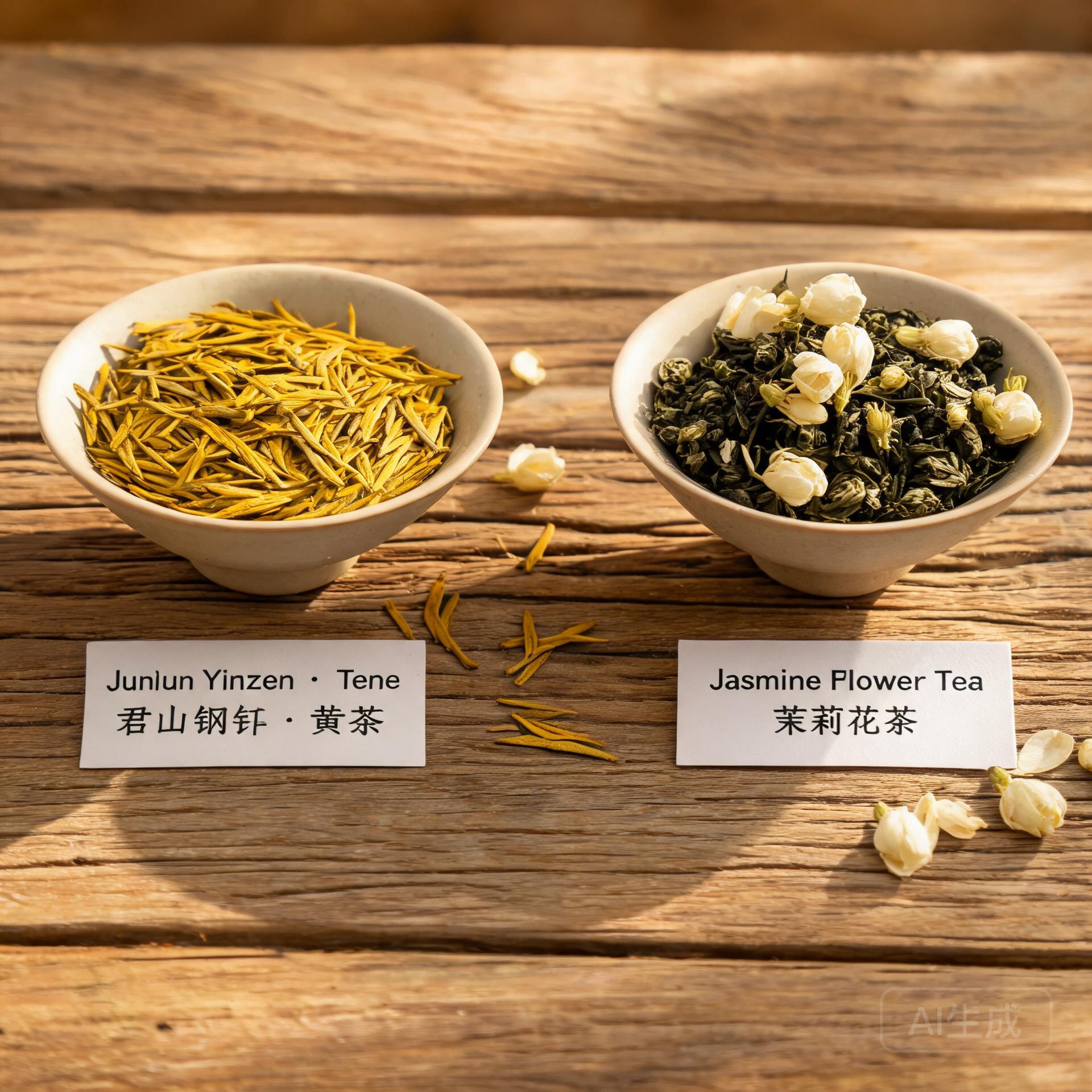
Junshan Yinzhen comes from an island in Hunan and is the sweetest of the three.
Mengding Huangya comes from Sichuan and is rounder, with a faint chestnut note.
Huoshan Huangya comes from Anhui, further north, and it is the freshest and greenest of them.
The gaps between them are narrower than in any other category, and the method is part of why.
Men huang(闷黄), the yellowing step, does more to the cup than the county ever does.
Two teas from one county can sit further apart than two from different provinces.
That is unusual, and it makes regional shopping in yellow tea largely pointless.
Freshness varies more than anything, and yellow tea loses its sweetness faster than green tea does.
Buy on the harvest and on the yellowing, and let the region be a footnote.
Most of the category is drunk inside the province that grew it, which is why these names travel badly.
What drives it
The yellowing step comes first, and it is the defining one.
Leaf is held damp and warm after fixation so that it changes slowly without becoming red tea.
Held too briefly the tea tastes green, and held too long it turns flat and slightly sour.
That window is the whole skill of the category, and it is easy to get wrong.
Bud size is the second driver, since all three classic names are made from buds.
A larger bud carries more sweetness, and a damaged one loses it in storage.
Cultivar is the third driver, and each county grows bushes suited to its own climate.
Elevation acts through the picking date rather than through flavour, much as it does in white tea.
Mengding sits around 1,000 m and picks early, while Huoshan picks later because it is cooler.
Climate matters mostly for how quickly the tea has to be moved and sold.
Skill, bud and cultivar, and the skill is the part that fails first.
Learning the map
Learn yellow tea by tasting the step rather than by memorising counties.
The test is simple, and it is whether the cup tastes green or not.
A proper yellow tea has no grassy edge, and a sweet corn note stands in its place.
Once you can taste that difference, the county names stop carrying much information.
Start with one Junshan Yinzhen and one Huoshan Huangya, since those two sit furthest apart.
One is sweet and soft, the other fresher and greener, and the contrast comes through clearly.
Add Mengding last, because it sits between them and is the hardest one to place.
Buy all three from a seller who can name the harvest, since the year matters more than the place.
Yellow tea from last season is a different drink from this season’s, whatever the packet claims.
If a seller cannot tell you the harvest, assume the worst and buy a small amount.
Treat regional claims here as decoration until the taste test says otherwise.
Tasting across regions
Taste yellow tea cooler and gentler than you would taste red or dark tea.
Use 5 grams in a 100 ml vessel at about 85 °C, since bud tea scorches easily.
Steep the first infusion for 30 seconds and keep the later ones short.
Smell the wet leaf for a sweet corn note, which is the signature of a properly yellowed tea.
Grassiness means the step was skipped, and a dull flat sweetness means it ran too long.
In the cup Junshan is the sweetest, Mengding the roundest, and Huoshan the freshest.
Take each one to the 4th infusion, where the sweetness has dropped and any green edge becomes obvious.
Compare two samples at a time, because the differences are small and the palate tires quickly.
Keep the water the same and the timing the same, or the session proves nothing.
Buy in small quantities whatever the result, since yellow tea does not keep as well as people assume.
A regional difference you have to be told about is not a difference worth paying for.
Freshness outranks county here, and a recent Huoshan will beat a tired Junshan every time.