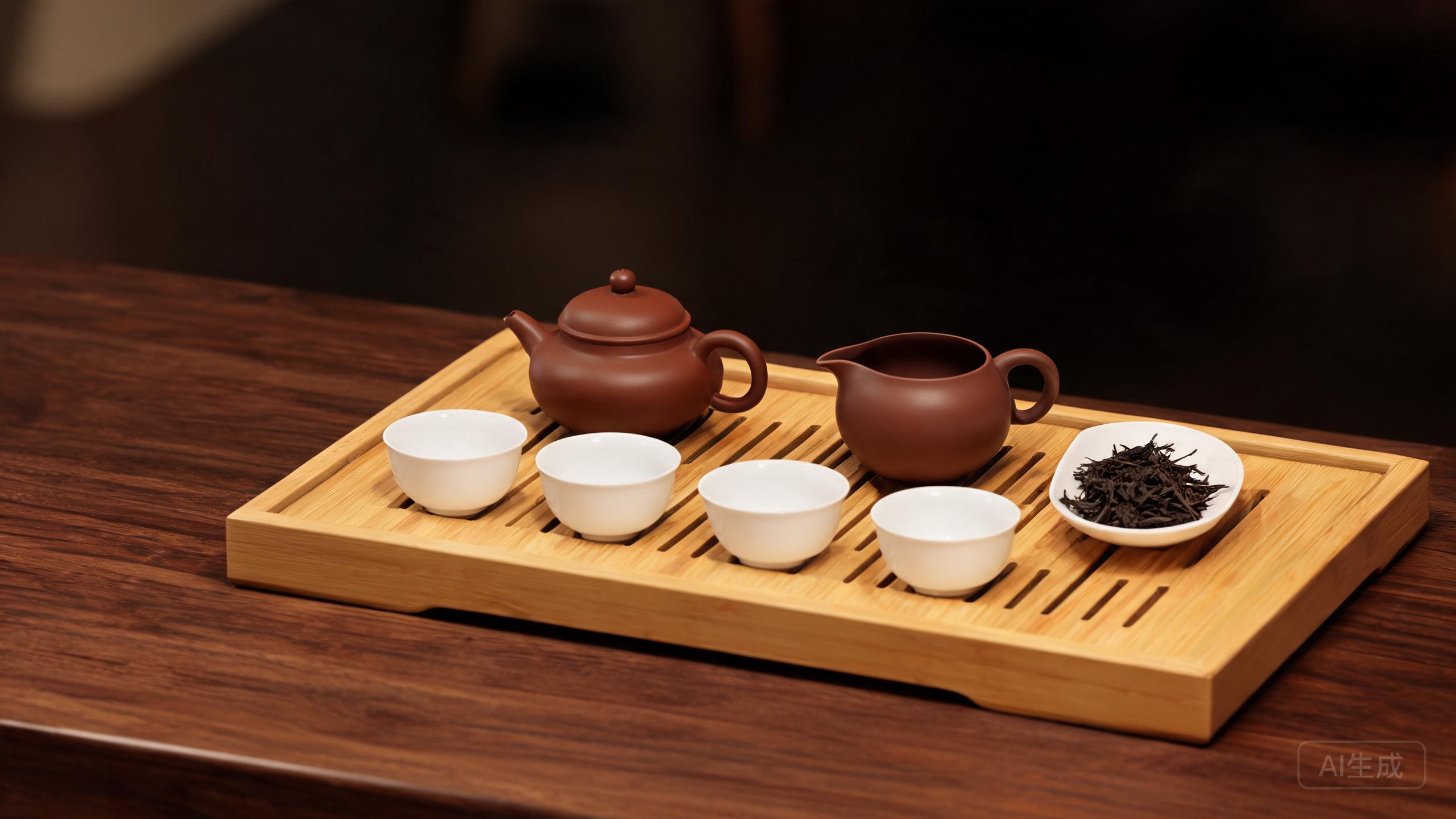
The ratio that matters
The ratio that matters for yellow tea is about one gram to 50 millilitres, the same as for green tea. That is 3 grams in a 150 millilitre cup, or 5 grams in a 100 millilitre gaiwan.
Yellow tea sits between green and white in how it behaves, and the ratio reflects that. It is more open and less dense than a rolled green, so a spoonful weighs a little less than you would expect from the same volume of green.
Because it is lightly oxidized through the men huang step, it is slightly more tolerant than green tea of a heavier dose. You can push to 4 grams in 150 millilitres without the harshness a green tea would show.
Gongfu brewing at one gram to 20 millilitres works well and is probably the better method here, because it lets you taste the change across several short steeps rather than committing to one long one. It also spreads the cost of an expensive tea across six or seven cups instead of one.
Too little leaf produces a cup with no body, and with a tea this delicate that is a real loss. Yellow tea’s signature is a soft, corn-like sweetness, and it needs enough material in the cup to register at all.
Too much leaf is genuinely hard to do with yellow tea. It is low in the compounds that read as harsh, so an over-dosed cup tends to be thick and slightly cloying rather than bitter.
Time by the clock
Time by the clock for yellow tea is two to three minutes Western style, and 30 to 45 seconds for the first gongfu infusion.
The men huang step leaves the leaf softer and more open than a green tea, which means it hydrates and extracts a little faster. A recipe copied directly from green tea will give you a slightly over-brewed cup.
Temperature sits at 80 to 85 degrees, hotter than most green tea but cooler than white. That range is narrow for a reason: below 80 the sweetness does not come out, and above 85 the delicate notes flatten.
For multiple infusions, add 20 to 30 seconds each time. Three to four infusions is realistic, and the second is often the best, once the leaf has fully opened.
Over-steeping yellow tea does not produce bitterness so much as a loss of definition. The cup goes from sweet and distinctive to generically mellow, which is easy to mistake for a mild tea rather than a brewing error.
Under-steeping is the more likely fault, because people who know it is delicate pull it too early. If the cup tastes like warm water with a hint of something, give it another minute before concluding the tea is thin.
A simple starting recipe
A simple starting recipe: 3 grams of leaf, 150 millilitres of water at 85 degrees, steeped for two minutes. Strain fully and taste before changing anything.
For the second infusion, add 30 seconds and keep the temperature the same. For the third, add another 30. Junshan Yinzhen will usually give you three good steeps and a fourth that is worth having.
If the cup tastes thin, add half a gram of leaf rather than extending the time. If it tastes flat and slightly cooked, drop the temperature to 80 degrees.
Gongfu version: 5 grams in a 100 millilitre gaiwan at 85 degrees, starting at 30 seconds and adding 15 seconds per steep. This is the better way to taste an expensive yellow tea, because it spreads the cost across six or seven cups.
Two things to avoid. Do not use boiling water, which destroys the sweetness that defines the category. And do not judge the tea on the first thirty seconds, because yellow tea opens slowly and the first steep is often the least interesting.
Given what yellow tea costs, it is worth weighing the leaf rather than spooning it. The difference between 3 and 4 grams is the difference between a good cup and an excellent one, and a scale settles it in seconds.
Yellow tea is also the category where a cheap thermometer earns its keep. The usable window is about five degrees wide, and that is narrower than instinct can hit reliably.
Treat it like a green tea with slightly more patience, and it will not let you down.