The map
Yellow tea has two cores, and the category is smaller than any other in Chinese tea.
Mengding mountain in Sichuan is one, above Mingshan near Ya’an.
It sits at 800 m to 1,400 m in one of the rainiest areas in the country, and the leaf grows slowly.
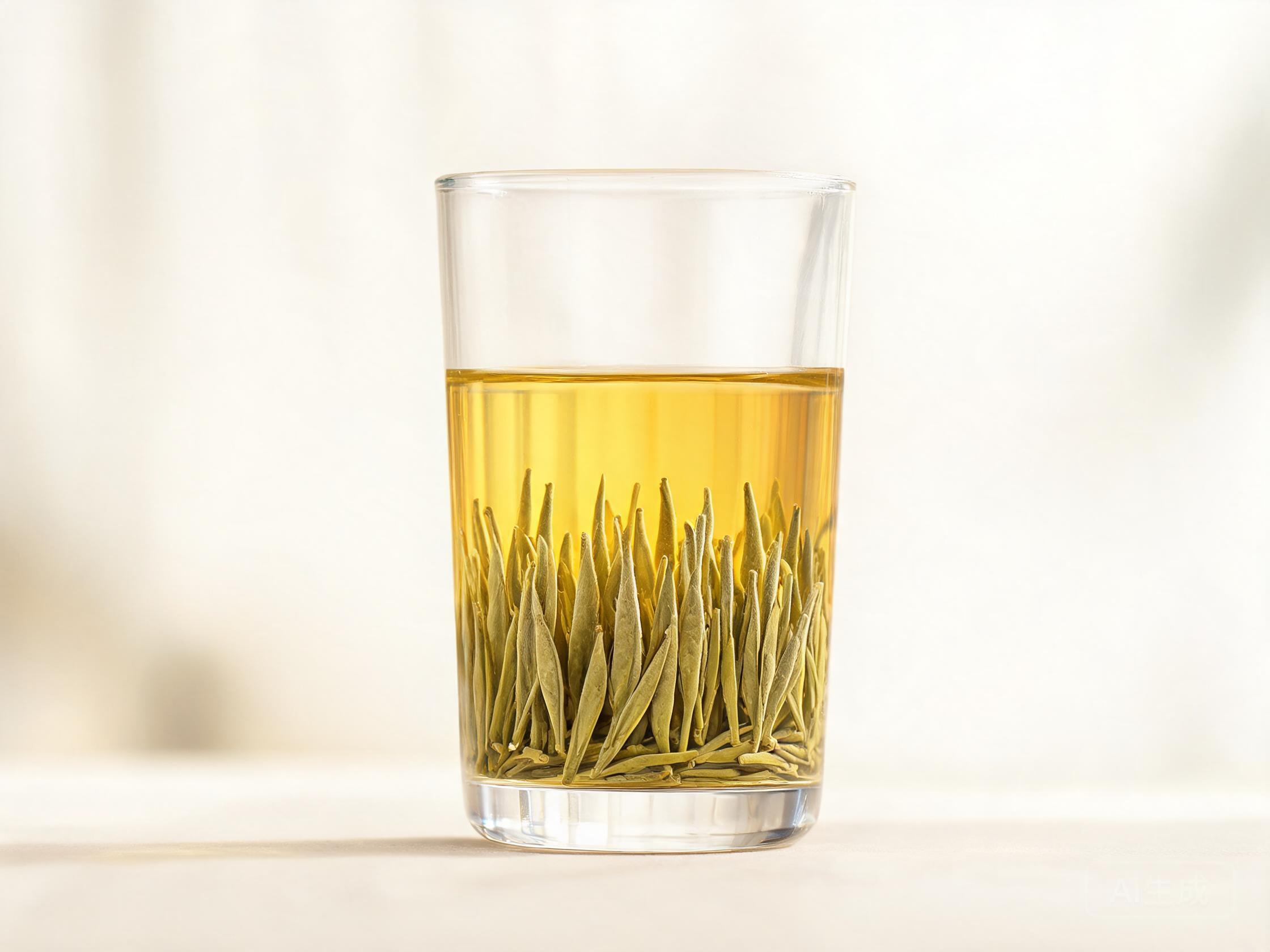
Meng Ding Huang Ya is made from single buds picked before the spring rains, and it is the reference tea.
Junshan is the other, an island in Dongting Lake near Yueyang in Hunan.
The island is under 1 square kilometre, and its gardens are surrounded by water on every side.
Junshan Yinzhen is also a bud tea, and the buds are held while still warm from fixing.
The two cores are more than 1,000 km apart and share no climate, soil or cultivar.
What they share is the yellowing hold, which is the only thing that makes either of them yellow tea.
Huoshan in Anhui is a third name that produces both a bud tea and a coarse one.
Production everywhere else is negligible, and most of what is sold as yellow tea was never held.
Tradition behind each
The tradition in each core is short compared with most tea, and both were nearly lost in living memory.
Mengding has the longer history, and the mountain is one of the oldest recorded tea sites in Sichuan.
Its reputation rests on tribute tea rather than on volume, and the output has always been small.
Junshan’s history is tied to the lake, and the island’s humidity is what makes the hold possible there.
The method survived in both places because it suited the material, not because anyone protected it.
By the late 20th century both had shrunk to almost nothing, since green tea was easier to sell.
The revival since the 2000s has restored the names, and it has also brought imitations with them.
Huoshan’s tradition is slightly different, since its Huang Da Cha is made from coarse leaf rather than buds.
That tea was a working drink rather than a tribute one, and it is the honest coarse end of the category.
Neither core developed a trade route, since almost everything produced was consumed inside China.
That is part of why the names are unknown outside the country, and why they are easy to misuse.
Why they matter to you
The core names matter to a buyer because they are among the few small origin claims in tea.
Junshan’s island genuinely cannot produce much, so a cheap Junshan Yinzhen is almost certainly not one.
That makes the name a usable signal, which is rare, and it is worth paying attention to.
Mengding is a larger area and the name is less precise, so it carries less weight on its own.
Ask which garden or which part of the mountain, and the answer tells you how much the seller knows.
What matters more than either name is whether the hold was done, and that is checkable.
Brew the tea beside a green tea of similar grade and the difference should be obvious.
If it is not, the tea is a green tea with a yellow label, whatever the packet says.
That test costs one session and it protects against the commonest fraud in the category.
Freshness matters too, since most yellow tea is best within a year or two of production.
A dated tea from a named core is worth more than an undated one from a famous name.
Beyond the core
Beyond the two cores, yellow tea is made in a few places and mislabelled in many more.
Huoshan in Anhui is the most substantial, and its Huang Da Cha is a genuine and different tea.
Pingyang in Zhejiang makes Huang Tang, which is yellowed longer and tastes rounder than the bud teas.
Guangdong’s Da Ye Qing is made from broad leaf and sits closest to green tea of any of them.
Those are small but real, and they are worth trying once the two cores are familiar.
Everything else is where the problem is, and the problem is large.
Any green tea can be given a short warm hold and sold with a yellow name attached.
The colour can be produced by machines, and the sweetness cannot, which is why the cup is the only test.
Machine yellowing produces tea that looks right and tastes like weak green tea.
Buyers should also be wary of old stock, since the category does not improve with age.
The two cores are worth paying for, and everything outside them should be bought on the cup alone.