The trap to know
The trap with yellow tea is the simplest and the most expensive: much of what is sold as yellow tea is not yellow tea.
Yellow tea is the rarest of the seven categories and production is tiny. Demand from outside China has grown far faster than supply.
The usual substitute is a lightly oxidised green tea, sometimes with a yellowing step too short to do anything.
It is hard to spot on the dry leaf and easy to spot in the cup, once you know what to look for.
Price is the first signal. Real yellow tea is not cheap, and a bargain is almost always a green tea in disguise.
The rest of this is about the three checks that separate the real thing from the substitute.
The second trap is buying yellow tea that has been badly made rather than faked, which produces a tea that is simply disappointing.
Men huang is difficult to get right. Too short and the tea stays green, too long and it turns sour, and both outcomes reach the market.
Check the grade claim
There are only a handful of genuine yellow teas, and knowing their names is more useful than knowing grade terms.
Junshan Yinzhen from Hunan is bud only and the most famous. Huoshan Huangya from Anhui is the other one you will reliably see.
Meng Ding Huang Ya from Sichuan and Pingyang Huang Tang also exist, and both are produced in small quantities.
Anything sold simply as yellow tea, with no origin and no named style, should be treated as unproven.
Men huang is the step that makes the tea yellow, and a seller who cannot explain it probably did not make it.
Ask for the picking year. Yellow tea fades within about 18 months, and a packet without a date is a bad sign.
Bud-only yellows from Hunan are the most imitated, because they command the highest prices and look similar to a green bud tea.
Compare the price against a good Longjing. Real yellow tea is scarcer and usually costs more, and a cheaper one is suspect.
Smell before you pay
Smell is where the substitute gives itself away, because the corn silk note is very difficult to fake.
Real yellow tea smells sweet, with something close to sweet corn, chestnut or a faint apricot note.
A green tea sold as yellow smells grassy and green, without any of that mellow sweetness.
Roasted or toasty notes are a warning here. They are used to cover a tea that did not develop properly.
Brew it if you can, at 82 degrees. The corn silk character is unmistakable when it is there and obviously absent when it is not.
If a shop will not brew it before you buy, buy a different tea from a different shop.
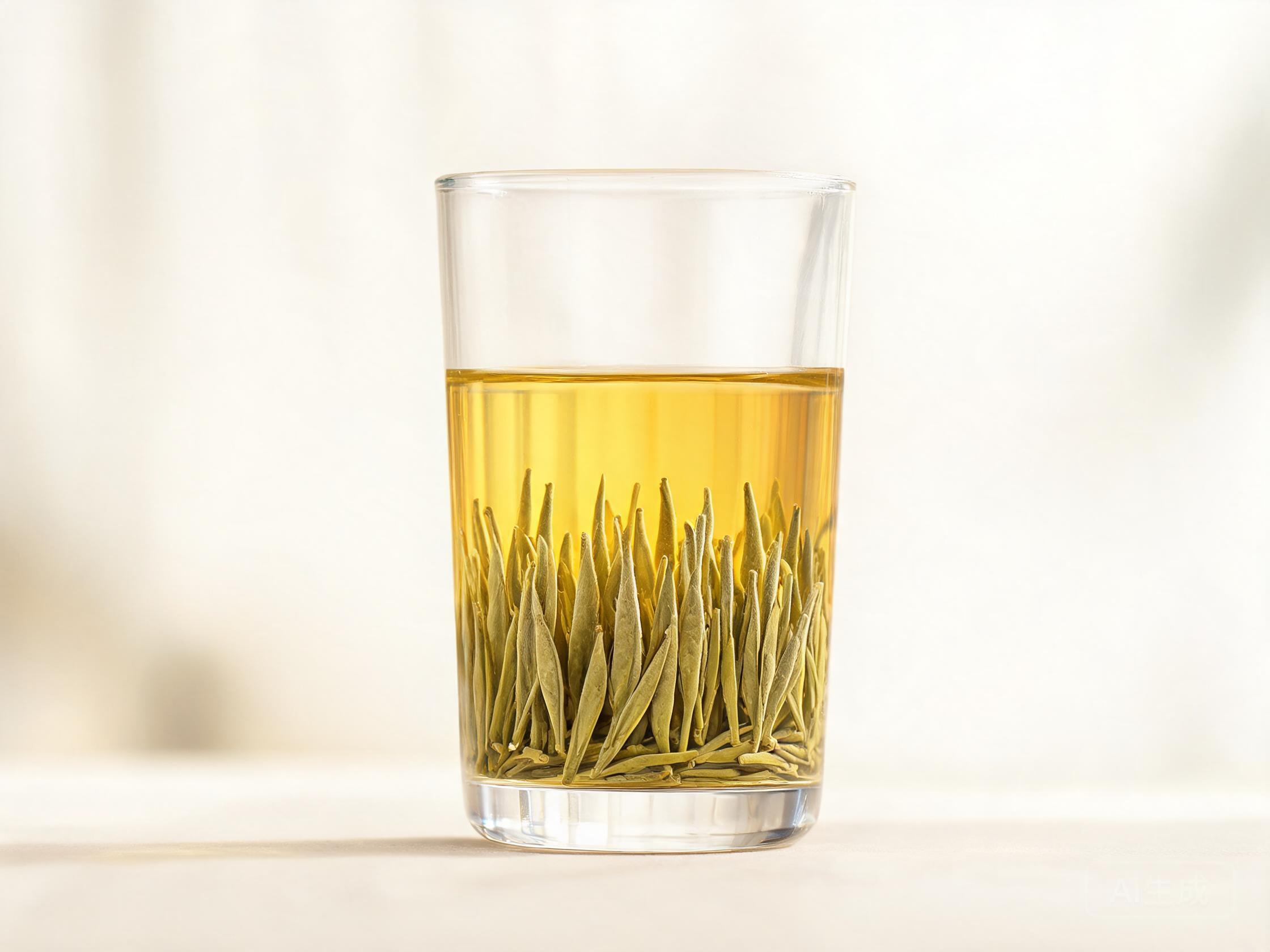
Look at the liquor as well as smelling it. Yellow tea gives a pale gold to light amber cup, and a green substitute gives a greener, brighter one.
The wet leaf is diagnostic. Properly yellowed leaf is uniform in colour, and a poorly made one is patchy green and yellow.
Trust storage over label
Yellow tea has the shortest shelf life of any category, which makes storage the deciding factor.
It should be sealed, cold and drunk within about a year. It does not improve, and it does not last.
Refrigerated stock at 0 to 5 degrees is the right answer, and a seller keeping it on an open shelf is not selling you the best version.
Aged yellow tea exists and is sold at a premium. Most of what is sold as aged yellow tea is not.
Buy 50 grams rather than 200 grams. It is expensive, it fades, and a large tin is a false economy.
The rule that saves the most money here: buy from a specialist who can name both the garden and the picking date.
Ask when it was picked and when it was packed. Two different dates mean the tea sat somewhere in between.
Sealed tins in a refrigerator are the right answer, and a shop keeping yellow tea on a warm shelf has already lost you the tea.
Buy from a specialist rather than a general tea seller. Yellow tea is a small enough market that generalists rarely stock the real thing.