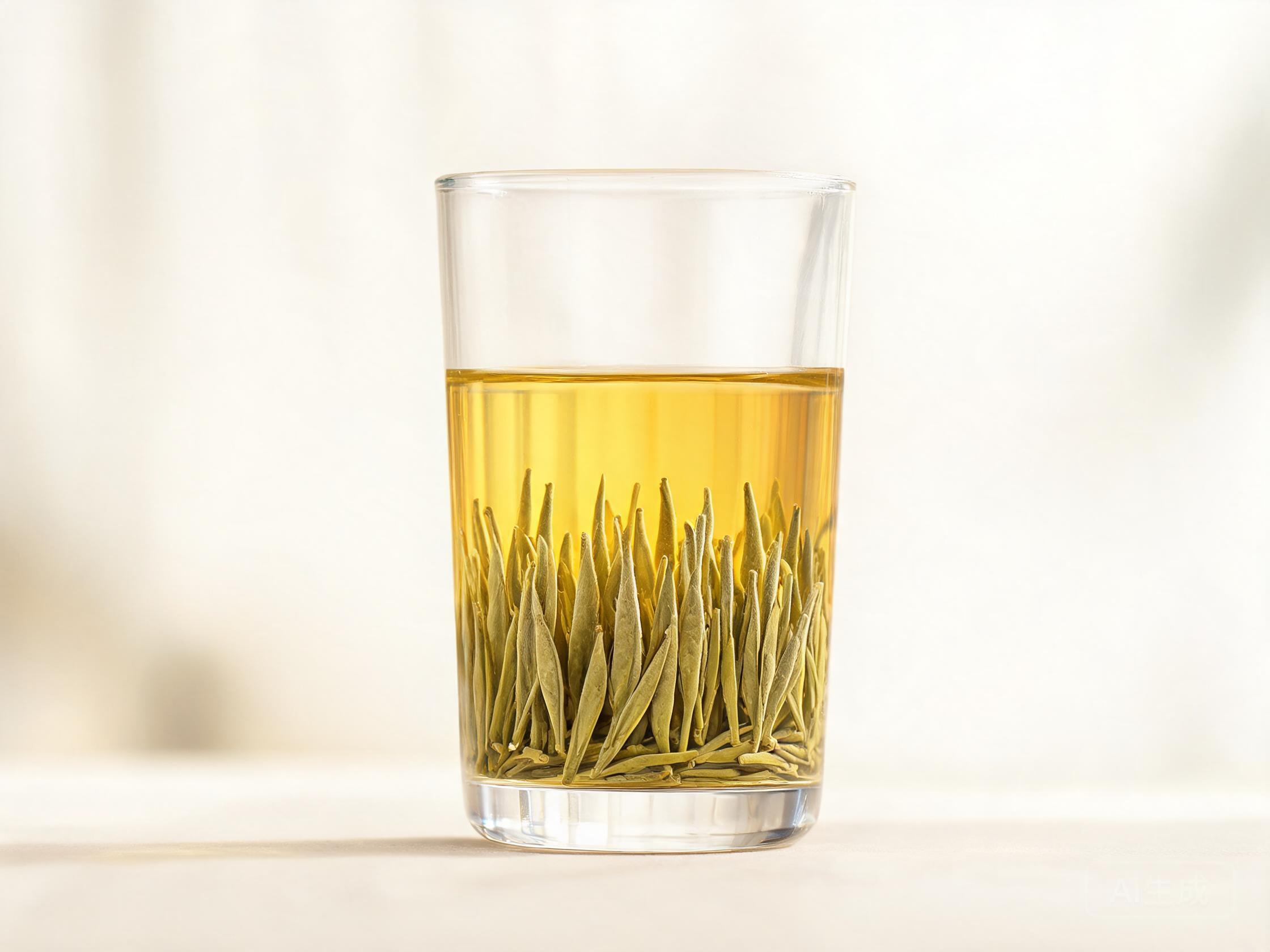
Before you buy Yellow tea
Yellow tea is the smallest and most expensive category, and much of what is sold under the name is not yellow tea.
The defining step is men huang (闷黄), a slow damp piling that removes the grassy edge of a green tea and leaves something rounder.
It is neither a green tea nor a light oolong. If it tastes like either, it was probably made like one.
Decide before you buy whether you want the delicate version or the stronger one. Junshan Yinzhen is fine and light, Huoshan Huangya is nuttier and more robust.
Then accept the price. Real yellow tea is made in small quantities, and it costs several times a comparable green tea by weight.
If that puts you off, buy a good Longjing instead. It is a better use of the same money than a poor yellow tea.
Step 1: judge the leaf
Yellow tea leaf is yellow-green rather than green, and that colour is the easiest first check you have.
Junshan Yinzhen buds should be fat and straight, a uniform pale yellow, with fine down on the surface.
Huoshan Huangya is looser, with open leaf and a deeper yellow, and it smells faintly of toasted grain.
Bright green leaf in a tea sold as yellow has not been through the piling step, whatever the label claims.
Smell for corn, chestnut or warm hay. Grassy means the piling did not happen, and smoky means someone was hiding something.
Ask to see the wet leaf. It should be a soft, even yellow, with no green patches.
The tea is rare in the trade and easy to fake badly, so buy leaf you can inspect rather than a sealed gift tin.
Step 2: buy small first
Buy 25 to 50 grams. Yellow tea is expensive per gram, and that quantity is still four to eight sessions.
Compare a yellow tea against a good green tea from the same producer if they have one. The step shows up clearly side by side.
Try two producers of the same named tea. Yellow tea has no standardisation, and the best and worst versions are far apart.
Order the smallest size online. Gift tins in this category are frequently ordinary green tea behind a yellow label.
Drink it within the year. Yellow tea keeps about as well as a green tea, and the piling does not turn it into an ageing tea.
Keep a note of the price per gram and the producer. Two years of those notes is worth more than any guide.
Step 3: check storage and source
Ask for the garden and the picking date. Yellow tea is produced in tiny volumes, and a real seller knows both.
Junshan Yinzhen comes from one island in Dongting Lake, and Huoshan Huangya from Huoshan county in Anhui. Both names are used loosely elsewhere.
Ask whether it has been kept cold since production. Most yellow tea is stored like green tea, and it should be.
Stored warm and dry, it loses the rounded note that the piling produced, and what is left tastes like an average green.
Check the packing date. Yellow tea sold 18 months after picking is not a bargain at any price.
If the seller cannot tell you who made it, they do not know what they are selling, and neither will you.
Step 4: pay for the leaf, not the story
Yellow tea is priced on scarcity, and scarcity is the easiest thing in tea to invent.
Pay for a named garden and a producer, and treat imperial tribute history as marketing rather than information.
Compare two yellow teas at very different prices before you decide what the category is worth to you. The difference is often smaller than the price.
A tea sold at green tea prices is a green tea. The piling step costs time and leaf, and nobody gives that away.
Pay for freshness and a name before you pay for grade. Grade in yellow tea is not standardised enough to price on.
If you enjoy it, buy 50 grams a year from one producer. That is a sustainable way to drink the most expensive category in tea.
Two or three producers is plenty. Beyond that you are collecting labels rather than learning a tea.