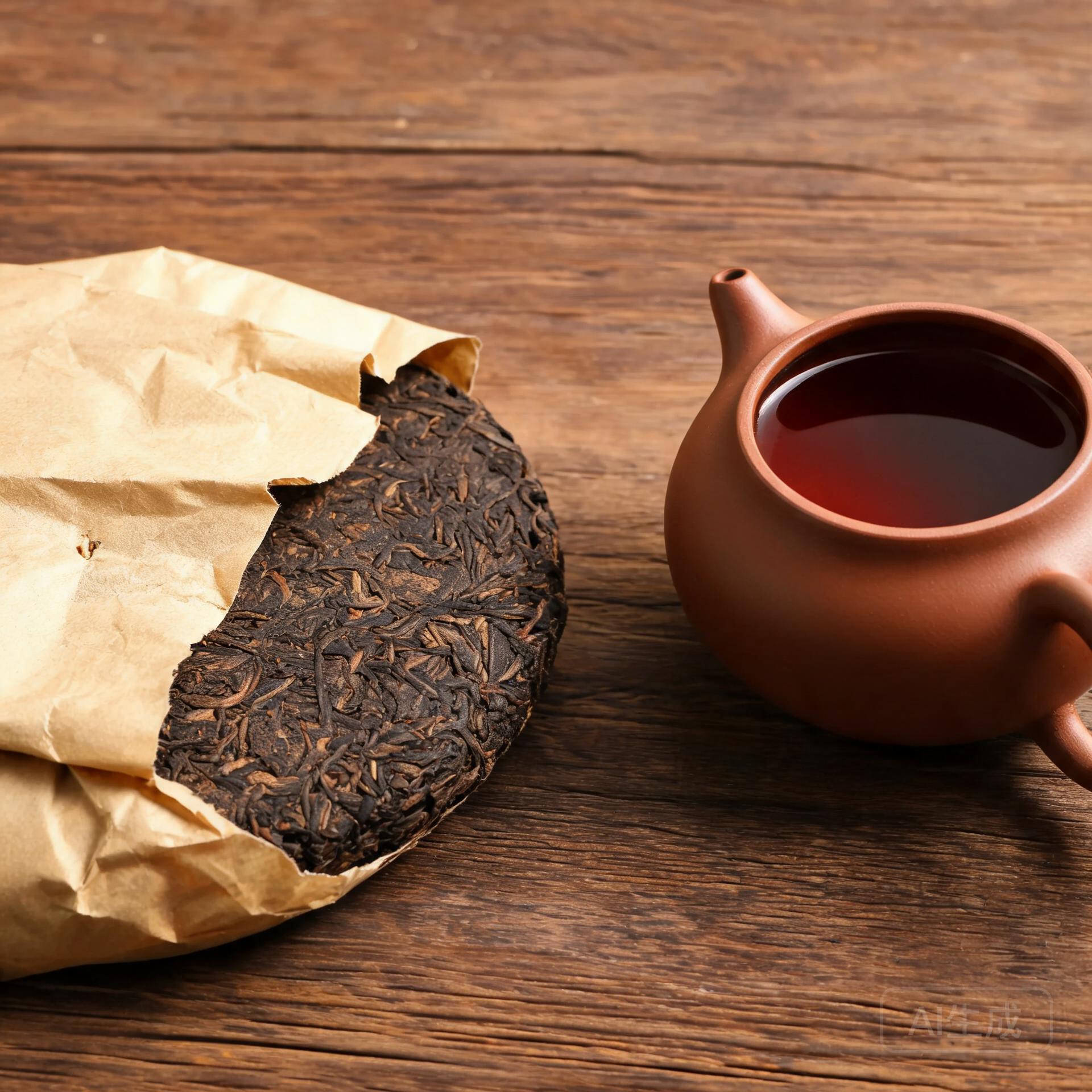
Where the value sits
Dark tea is the one category where price and quality genuinely track each other, but only if you avoid the aged market entirely.
Value sits in clean young cakes from known factories. They are cheap, they are honest, and they improve on their own.
A factory cake pressed in the last few years costs a fraction of a claimed 1990s cake and is usually better tea.
The second place value sits is loose ripe pu-erh, which is the cheapest way to drink the category well.
What does not represent value is any cake whose price rests mainly on a date.
If you remember one thing from this section: buy the tea, not the year.
The honest parts of this market are boring and cheap. That is not a flaw, it is where the value is.
Factory cakes from the large producers are consistent in a way that small pressings are not, and consistency is what you are paying for.
What is not worth the premium
The single biggest waste of money in tea is a fake aged pu-erh cake, and it is not close.
There is far more old pu-erh on the market than was ever produced, and the fakes are sold at genuine aged prices.
Gift boxes and presentation cakes are the second. A cake wrapped in silk and boxed in wood is the same cake sold loose.
Single mountain claims at low prices are the third. The famous regions produce very little, and the names are used freely.
Very old ripe pu-erh is the fourth, and it is impossible by definition. The process was only developed in the 1970s.
Certificates, wrapper scans and storage stickers are the fifth. All three are reproduced, and none are evidence.
Anything sold with a dramatic provenance story is worth avoiding. The story is the sales tool for the weakest cakes.
If a cake comes with a tale about a village, a monk or a discovery, walk away. The story is there to distract from the tea.
Spend on freshness
Freshness means something different here, because this is the one category where the tea is supposed to age.
What you are buying instead is a clean starting point: leaf with no storage damage, from a factory that knows what it is doing.
A young cake with no musty or sour notes is worth more than an old one with a doubtful history.
Ask when it was pressed rather than how old it is. A 2019 cake stored dry and clean is a better bet than a 2005 cake with no history.
Buy from a seller who stores their own stock in known conditions, around 60 percent humidity at 25 degrees.
The only freshness question that matters here is whether anything has gone wrong with the cake yet.
Check for a consistent colour throughout. A dark outside and a lighter middle means the ageing was uneven or faked.
Buy from a seller who will open a cake and let you smell it. That one habit removes most of the risk in this category.
Keep a written note with each cake: where it came from, what you paid, and what it smelled like on opening. You will not remember otherwise.
A simple budget rule
Buy young, buy clean, and buy more of it than you think you need, because it improves while you drink it.
For drinking now, loose ripe pu-erh by the 250 gram bag is the cheapest good tea in the entire category.
For keeping, buy whole cakes from one or two known factories, one or two a year.
Sample before you buy a cake. 25 grams costs little and tells you whether the storage was clean.
Set a hard ceiling on anything with a date claim, and treat every cake above it as unproven until a seller has earned trust.
The rule: young cakes for drinking and keeping, samples before whole cakes, and never pay for a year.
If you drink dark tea daily, a 250 gram bag of loose ripe pu-erh plus two cakes a year covers it for very little.
Budget for two or three cakes a year plus loose ripe pu-erh for daily drinking. It is a cheaper habit than most people’s coffee.