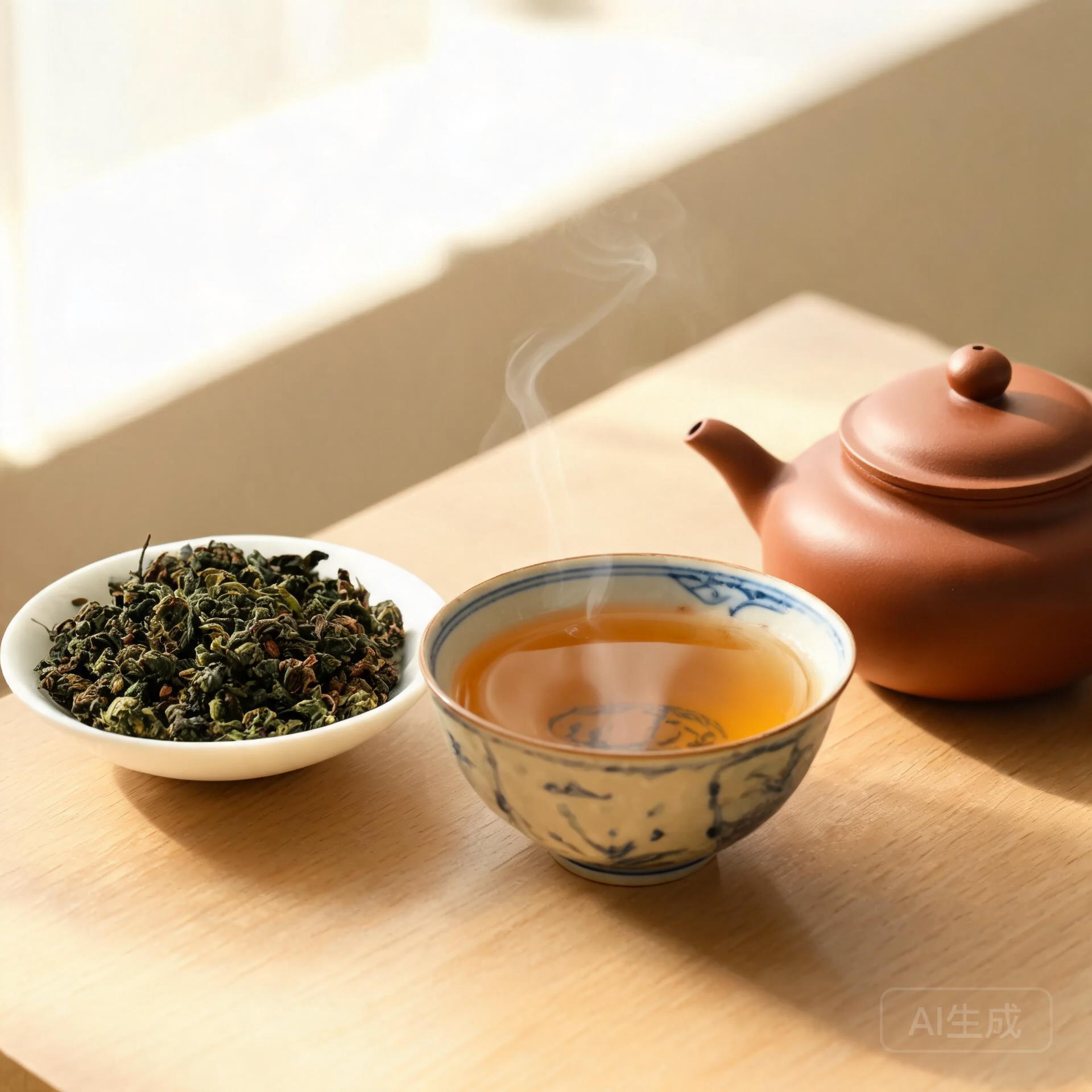
Two different purchases
Oolong is one of the few categories where both halves of this question are real, because some oolong is genuinely worth ageing.
A daily oolong is a roasted, mid-oxidation tea that costs a sensible amount and tastes the same every time you brew it.
A collected oolong is a heavy roast or a competition-grade light oolong kept for years, and it changes as it sits.
The dividing line is the roast. Light oolongs fade and heavy roasts develop, which is the opposite of what most buyers assume.
That means the two purchases genuinely need different leaf, and a good daily oolong is usually a poor candidate for the shelf.
Work out your own split honestly. Most people drink far more than they age, and buying to age is more fun than waiting.
A realistic split for someone who drinks oolong a few times a week is one cake or tin set aside a year, and the rest drunk.
The other half of the decision is how much space you have. A cupboard that holds twenty tins is a different commitment from one that holds five.
For daily drinking
Choose a mid-oxidation roasted oolong, around 40 to 50 per cent, and buy it in 150 gram tins.
Roasted oolong is the most forgiving daily tea there is. It survives a boiled kettle, a long steep and a forgotten cup.
Buy one house oolong from a shop you trust and stay with it for a year. Consistency is worth more than variety here.
At 6 grams a session, 150 grams is about 25 pots, and it will hold its character for two years in a sealed tin.
Avoid the light, green oolongs for daily use. They are delicate, they fade within about 18 months, and they punish inattention.
Keep the tin away from light and heat, and do not refrigerate a roasted oolong. It picks up smells and does not need the cold.
Restock before you run out rather than after. A gap of a few weeks is how people end up drinking tea they do not like.
Decide whether you want a charcoal roast or an electric one. Charcoal gives more depth and a slightly dry finish, and it costs more.
For collecting
Only two kinds of oolong are worth keeping: a heavy roasted tea and a top-grade light oolong kept cold.
Heavy roasted oolong develops for five to ten years, turning darker and thicker, and it is the safest thing in this category to age.
It needs a sealed tin and a stable cupboard, and it needs to be left alone. Opening it twice a year to check is not ageing.
Light oolong is a different proposition. Vacuum-packed and kept at around 5 degrees, a competition-grade tea holds for several years without losing its top note.
Once opened it behaves like any other light oolong and should be drunk within a few months.
Traditional Tieguanyin, aged Wuyi rock tea and old Dong Ding are the three names with a real track record. Most other oolong does not improve.
Buy two of whatever you age, drink one now and keep one. Without the comparison you will never know whether the ageing did anything.
Keep one tin back unopened from every year you buy. After five years you have a vertical of your own storage, which beats any bought comparison.
How to split your budget
Roughly 80 per cent into drinking tea and 20 per cent into ageing stock is a workable split for oolong.
In practice that means one or two cakes or tins a year set aside, and four or five purchases for the cup.
Ageing stock only makes sense once your daily tea is settled. Buying to age before that is shopping rather than collecting.
Spend the ageing money on one good heavy roast from a named producer rather than three cheaper ones. Concentration reduces the risk of getting nothing.
Write the purchase date and price on everything you set aside, and check one tin a year, not more.
Expect most of it to be drunk rather than sold. Oolong has a thin resale market compared with dark tea, and tastes change.
If after three years you have not opened any of it, you have overbought. That is the commonest mistake in this category.
Tea you have forgotten about is money spent on storage rather than on drinking. A yearly look at what you have stops that quietly.