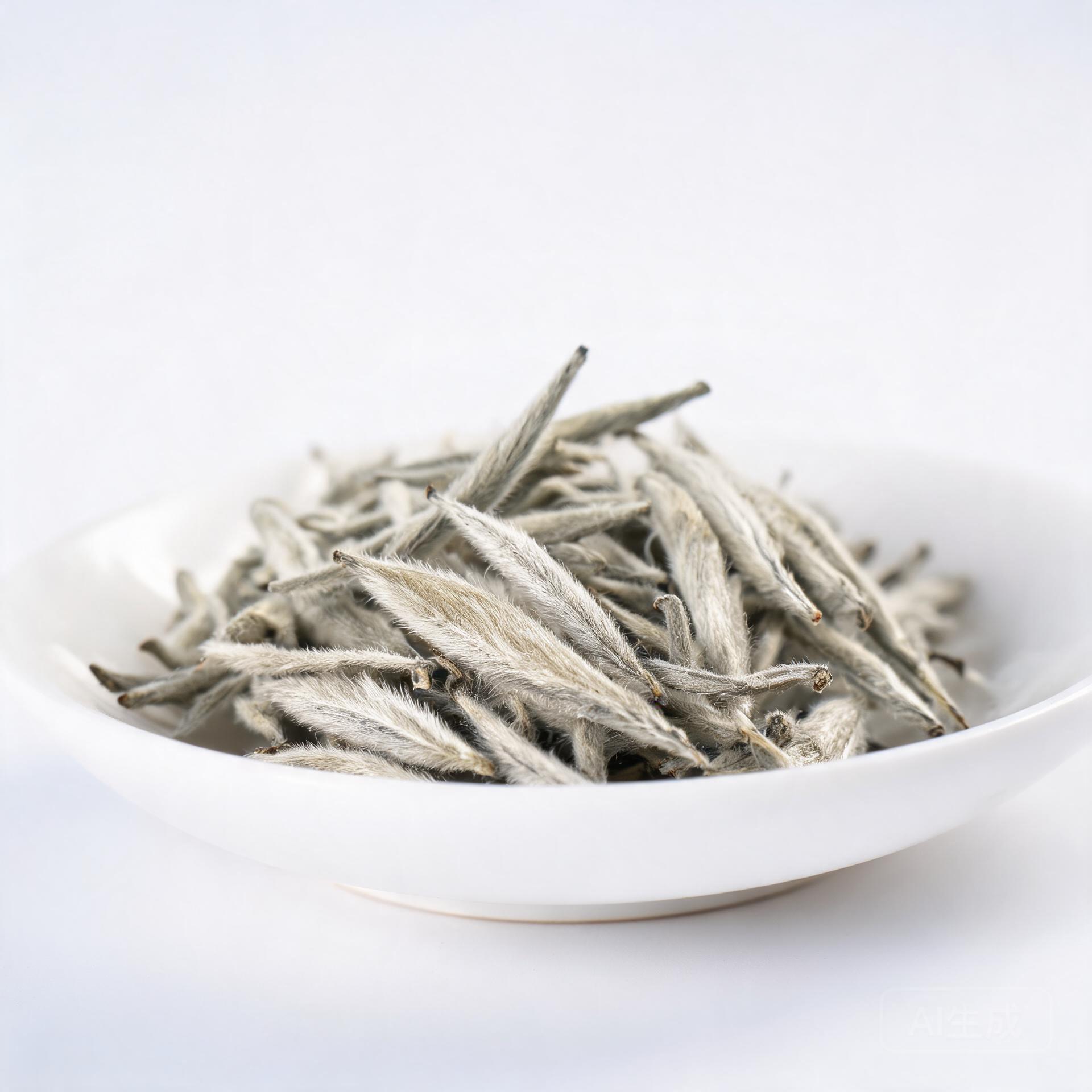
The cultivars that define the cup
White tea is built on a small number of named cultivars, and the names are worth learning.
Fuding Dabai(福鼎大白)and Fuding Dahao(福鼎大毫)supply most Silver Needle and Baimudan.
Both were selected for bud size and for the downy white covering that gives the tea its name.
Zhenghe Dabai(政和大白)gives a fuller body and withers more slowly than either of them.
That slower wither is why Zhenghe white tea looks darker and tastes rounder.
Caicha(菜茶), the old landrace population, adds the flavour profile that predates all three.
It is a mixed seed population rather than a selected bush, and no two plants in it match.
White tea has very few new clones, which is unusual at this point.
The category prizes old bushes and stable landraces over breeding novelty.
A bud tea shows its bush directly, so novelty has nowhere to hide in the cup.
Breeding here has been slow, and the category still rewards the bushes it started with.
That leaves 3 cultivars and 1 landrace covering nearly everything you will be sold.
Learning those 4 names is quicker than learning the grades, and it tells you more.
Why breeders select
A cultivar is chosen for what it gives in the field as well as in the cup.
Bud size sets the grade a bush can reach, and down sets how the dried leaf looks.
Yield and disease resistance decide whether a grower can afford to plant it at all.
Aroma sits last on the list, and a white tea bush is rarely selected for how it smells.
How a leaf responds to withering decides whether it suits this category or another.
Fuding Dabai was selected because a fat bud survives handling and dries handsomely.
That is a commercial trait, and it happens to give the delicate cup people want.
Zhenghe Dabai was selected for the same reasons in a cooler, hillier county.
One region can carry several cultivars that taste nothing alike.
Fuding grows Dabai, Dahao and caicha within a few kilometres of each other.
Knowing which one you are drinking tells you more than knowing the category does.
Grade tells you the leaf, and cultivar tells you the bush, and the bush came first.
Read them in that order and most of the confusion about white tea disappears.
Clones versus landraces
A clone is a cutting from 1 plant, and every plant in the field behaves the same way.
It ripens together, it picks together, and it processes on a single schedule.
Factories value that above almost anything, since it makes a production line possible.
A landrace is a mixed old population grown from seed, and it does nothing on schedule.
Some plants ripen early and some late, and the picker has to go through the field twice.
What the landrace gives back is variation, and many drinkers find those cups more interesting.
Caicha is the classic case, and its flavour runs deeper and less tidy than a clone’s.
Neither is automatically better, and the trade is consistency against diversity.
Clones trade genetic diversity away for uniformity, and the loss is real but invisible now.
It becomes visible when a disease or a weather shift hits a field of identical plants.
The trade-off shows up in price, since landrace leaf costs more to pick and grades unevenly.
A mixed population usually loses part of itself and carries on.
That resilience is why old landraces still matter in a market built on clones.
Reading the label
A cultivar name on a white tea is a fact worth having rather than decoration.
‘Fuding Dabai’ tells you the leaf lineage, and therefore the likely body and aroma.
It tells you the bud will be fat, the down heavy, and the cup delicate rather than strong.
It does not tell you the grade, the year or whether the withering was done well.
Those are separate facts, and a label offering one of them is ahead of most of the market.
The absence of a cultivar name usually means a blended base.
That is fine for daily tea, and less useful if you are trying to learn the category.
A blended base is not a lesser tea, and it is simply harder to learn anything from it.
Buy 25 g of 2 named cultivars and brew them side by side at 85 °C.
The difference between Dabai and Zhenghe Dabai is obvious in the cup and awkward to describe.
Once you can taste them apart, labels start being worth reading.
Before that, a cultivar name is just another word you cannot verify.
Three cultivars, one session, and the category gets much easier to buy.