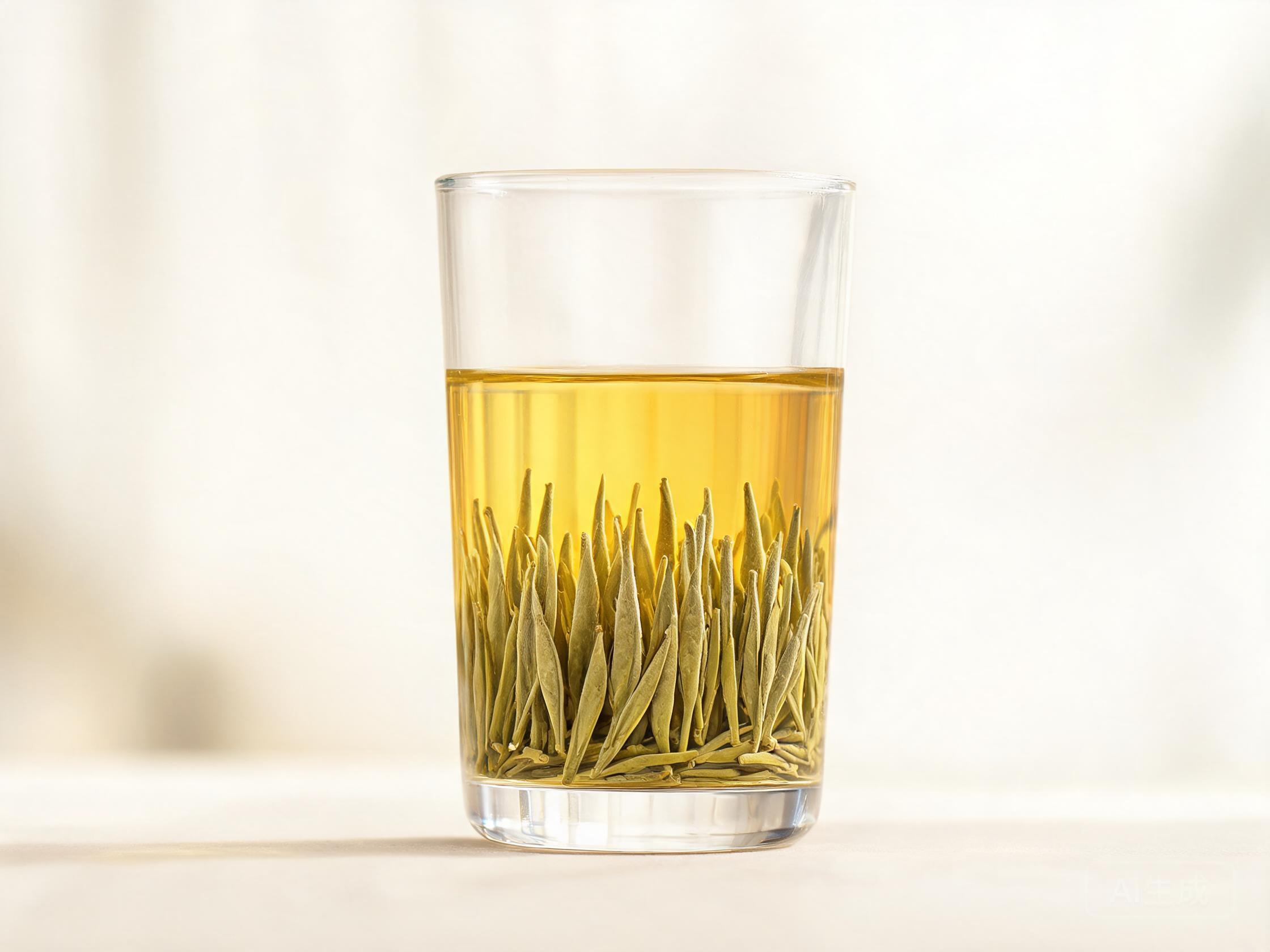
Wild and ancient trees
Yellow tea is rare and small scale, so wild trees are not really a feature of it.
The leaf comes from local old bushes rather than from any forest.
Junshan Yinzhen(君山银针)uses the stock growing on Junshan island itself.
Mengding Huangya(蒙顶黄芽)uses the Mengding mountain landrace, and the two are unrelated.
There is no wild yellow tea tradition anywhere, and there never was one.
That is worth saying plainly, because the label sometimes implies otherwise.
What matters in this category is the bush and the yellowing step, not the tree age.
A 100 year old bush on Mengding makes the same tea as a younger one beside it.
Men huan(闷黄)decides the outcome, and it decides it within hours.
Tree age works on a scale of decades, and the craft works inside 1 afternoon.
Only one of those dominates the cup, and it is not the slow one.
Huoshan Huangya(霍山黄芽)uses its own local bush, small leaf and slower to break bud, which suits a short picking window better than a fast growing import.
So the honest answer here is that this category is the exception to the rule.
Why age matters
For yellow tea, the old bush question is close to irrelevant, and that is unusual.
In most categories an old tree means a deeper root and a slower grown leaf.
Here the leaf is picked as a bud and then wrapped while damp and warm.
What happens in those hours decides the flavour, and the root system does not.
The bush still matters, since a local landrace suits the local climate better than an import.
That is an argument for place rather than for age.
A young bush on Mengding will outperform an old one planted somewhere else.
Picking standard decides more here, since a bud only grade and a bud with one leaf make different tea, and no tree age closes that gap.
Anyone selling tree age as the point of a yellow tea is reaching.
What they may be describing is an old garden, which does produce a different picking.
Old gardens ripen unevenly, and the picker takes the field in several passes.
That variation reaches the cup, and it is worth something.
It is worth less than the craft, and it should be priced accordingly.
What reaches the cup
What reaches the cup from an old yellow tea bush is subtle and hard to isolate.
The mouthfeel can be rounder, and the sweetness can last a little longer.
Neither survives a badly judged yellowing step, and that is the honest answer.
A tea ruined in the pile tastes ruined regardless of where the leaf came from.
Men huan(闷黄)also costs labour, and that scarce labour is what sets the price of the tea rather than any tree, so a cheap bag is cheap for a reason you can taste.
The reliable test is to brew 2 counties side by side instead.
Use 3 g in 150 ml at 85 °C, and keep both infusions to the same length.
The differences you find will be between Hunan and Sichuan, not between old and young.
That is the useful lesson, and it is the opposite of what most labels suggest.
Buy the county and the maker, and treat tree age as a nice detail if one is offered.
Never pay for it on its own in this category.
The price of yellow tea is set by scarcity of labour, and that is fair to pay for.
Tree age is not part of that calculation, and it should not be in the marketing.
A caveat on the word wild
Wild is a word that should set off alarms here more than in any other category.
There is no wild yellow tea, so any claim of that kind is invented.
What sellers sometimes mean is leaf from an old garden rather than a planted field.
That is a real distinction, and it has nothing to do with the word on the label.
The test is the same as anywhere else: a place and a tree age you could check.
‘Wild yellow tea’ is a mood, and ‘old bushes above Huoshan town’ is a claim.
Only one of those can be argued with, and only one is worth money.
Ask what the tree age is, and see whether the answer comes back as a number.
Buy 25 g before believing any of it, and brew it against a standard grade from the same county.
The grade comparison teaches more than any wild claim ever will.
A seller with real old garden leaf will describe the garden rather than the adjective.
That difference in vocabulary is the whole test, and it takes one question.