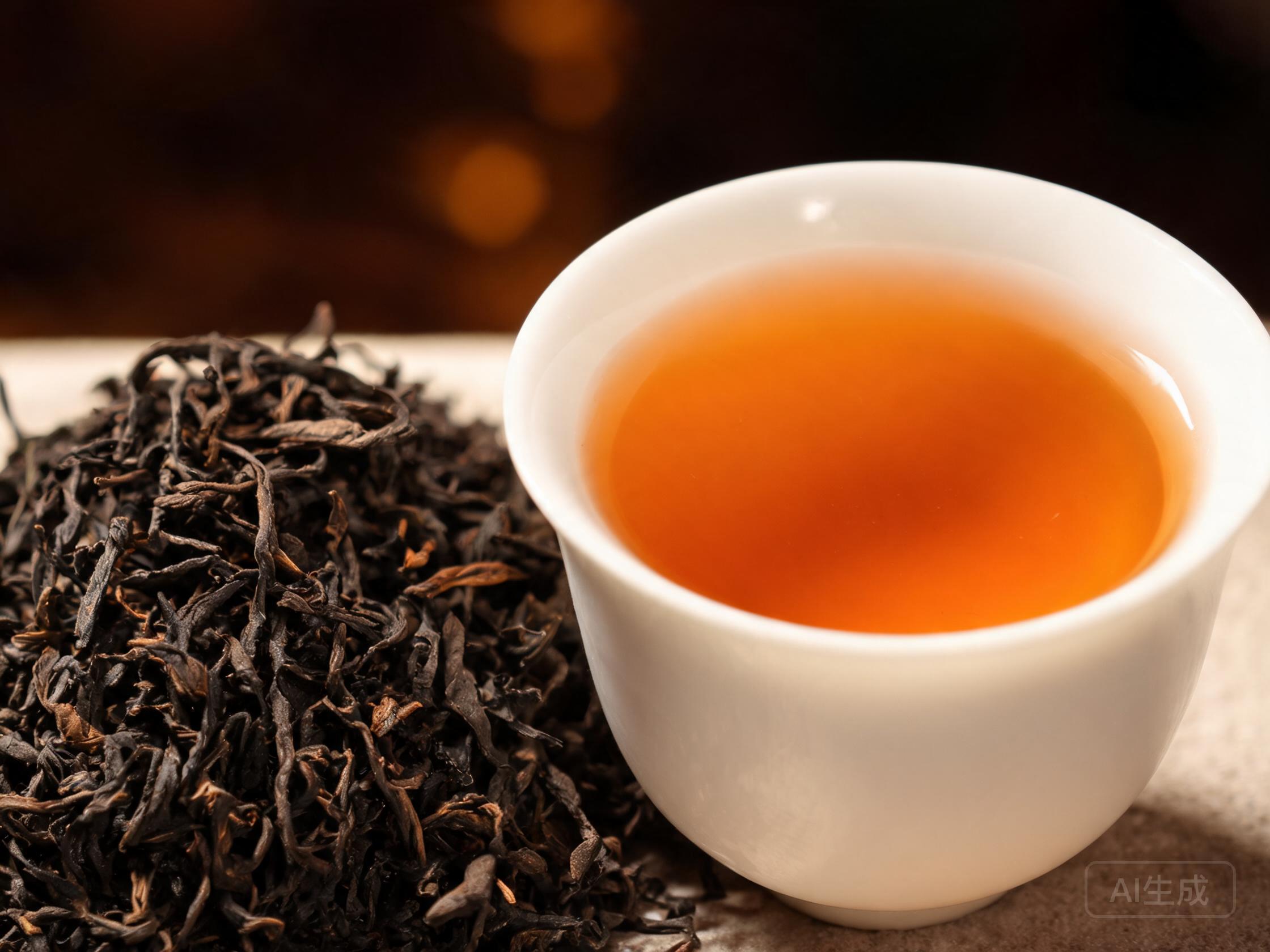
Wild and ancient trees
The backbone of red tea is the leaf, and in Yunnan that leaf can come from very old trees.
Yunnan large leaf assamica grows as old arbor trees in the ancient tea mountains.
Those are the same trees that make pu-erh, and the leaf goes to both.
Tongmu in Wuyi still uses local bushes for Zhengshan Xiaozhong(正山小种).
Those are the original small leaf plants, and the smoke was developed around them.
True wild assamica forest does exist in Yunnan, and some of it is genuinely ancient.
Almost none of it becomes red tea, since the leaf is worth more as pu-erh.
Fengqing and Menghai both plant large leaf assamica in rows, and those rows supply most Yunnan red tea, at prices that reflect grade and factory rather than trees.
Most red tea comes from managed plantations, large leaf or small leaf, bred for strength.
Breeding here selects colour and body rather than age or origin.
That is the opposite of the pu-erh trade, where old trees are the entire argument.
So the category sits oddly, with ancient trees available and rarely used.
That leaves 2 regions with real old bushes, and a market that mostly ignores them.
Why age matters
Age matters less in red tea than anywhere else, and the reason is oxidation.
Full oxidation rebuilds the leaf’s chemistry, and it does that thoroughly.
Whatever a deep root contributed arrives at the factory and then gets rearranged.
What survives is body and thickness, and those do come through.
An old tree leaf makes a thicker, sweeter red tea than a young plantation leaf.
The difference is real, and it is much smaller than it is in a raw pu-erh.
Soil, elevation and cultivar matter as much here, and the maker matters more than all of them.
A young bush tea made well beats an old tree tea made carelessly every time.
That is especially true in a category where oxidation can go wrong in an afternoon.
If you want the old tree argument to be legible, drink raw pu-erh instead.
Red tea is the wrong category for it, and the trade knows that perfectly well.
Which is why these labels talk about grade far more than about age.
What reaches the cup
What an old tree contributes to a red tea is body, sweetness and a longer finish.
The cup feels thicker, the sweetness lasts, and the tea takes milk without thinning out.
That last point is the practical one, since most of this tea is drunk with milk.
A thin plantation tea disappears under milk, and a thick old tree one does not.
Grade separates the two more sharply than age does, and a golden tip lot beats a plain one from the same hillside, whatever the trees were.
Brew both at 95 °C with 4 g in 150 ml and give each one 3 minutes.
Then add milk to both, and the difference becomes obvious in a way the plain cups hide.
That is the honest test for this category, and it is not the one the labels suggest.
Bitterness from old leaf is less of a problem here, since oxidation softens it.
What remains is weight, and weight is what survives the whole process.
Treat it as body rather than as flavour, and the old tree premium becomes easier to judge.
It is worth a modest premium, and not the multiple that some sellers ask.
The rest of the price is grade, origin and story, and those are separate things.
A caveat on the word wild
Wild is a word that means almost nothing in red tea, and it gets used anyway.
Wild assamica exists, and it is real, and it almost never becomes this tea.
Most leaf sold as wild red tea is plantation leaf from a large leaf varietal.
That is a perfectly good tea, and it is not wild in any sense.
The test is the same: a place and a tree age you could check.
‘Wild Yunnan red tea’ is a mood, and ‘arbor leaf from Fengqing, trees over 100 years’ is a claim.
One can be argued with, and one is designed so that it cannot be.
Ask the tree age and see whether a number comes back.
Buy 25 g before believing any of it, and brew it against a standard Dianhong of the same grade.
That comparison is more informative than any certificate on the tin.
A seller with real arbor leaf will describe the garden rather than reach for the adjective.
That difference in vocabulary is the whole test, and it takes one question.