Before you buy White tea
The first decision with white tea is whether you want to drink it now or keep it, because those are two different purchases.
Fresh white tea is light, sweet and floral. Aged white tea is darker, thicker and closer to a light dark tea in the cup.
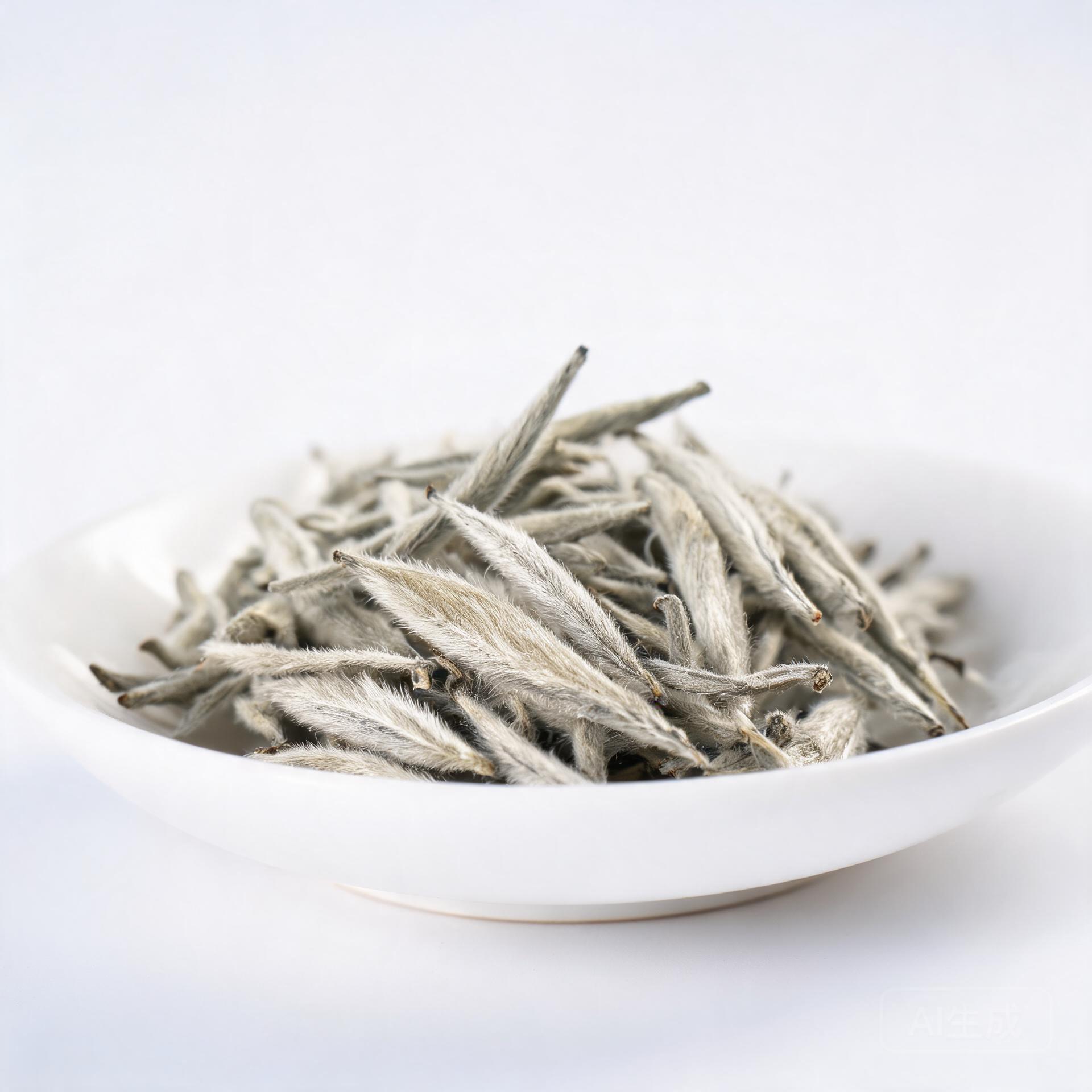
The three grades are not quality tiers. Silver Needle is buds only, White Peony is buds and leaf, Shou Mei is late season leaf with stems.
Shou Mei is the one worth ageing and also the cheapest. That combination is the best value in the category.
Decide on a drinking window before you buy. White tea aged at home wants a stable humidity around 60 per cent, and a kitchen cupboard is usually too dry.
If none of that interests you, buy 50 grams of fresh White Peony and drink it this year. That is a complete and sensible plan.
Step 1: judge the leaf
Silver Needle buds should be fat, straight and covered in fine white down, and roughly the same length.
Thin, dark or broken buds mean a later picking or leaf from a different plant, and neither is what the label says.
White Peony should show a mix of buds and open leaf, and the buds should still have their down. All leaf and no buds is Shou Mei.
For aged white, look at the whole cake rather than the surface. Break off a piece if the seller allows it, and check that the inside matches the outside.
A dark surface and a pale interior means the cake was stored damp to speed up the colour, and it will taste flat and slightly sour.
Smell the dry leaf. Fresh white smells of hay and dried flowers, good aged white smells of dates and old wood, and anything sharp is wrong.
Step 2: buy small first
Buy 50 grams of a fresh white, or one sample of an aged cake. Both are enough to know whether you want more.
For aged white, buy a sample cut from the cake rather than a whole one. Cakes vary, and the sample is the only honest look you get.
Pressed white appeared as a category around 2010, so a cake sold as twenty years old is a lie on the face of it.
Compare a fresh and an aged version of the same grade side by side. That one tasting settles the question faster than reading about it.
Keep 50 grams back from every purchase if you intend to age it. In five years it is the most useful thing in your cupboard.
Do not buy a whole cake of aged white from a seller with no storage history. The risk is genuinely that high.
Step 3: check storage and source
Fuding in Fujian is the reference origin for white tea, and Zhenghe is the other traditional one. Most white tea is sold as Fuding, and much of it is not.
Ask for the picking year and the pressing year separately. For a cake those are often two different years, and the gap matters.
Aged white wants humidity around 60 per cent and a stable temperature. Too dry and it stops developing, too damp and it turns sour.
Ask where the cake was stored before the seller had it. Guangdong storage is warmer and faster, and it produces a different tea from dry northern storage.
Loose aged white is easier to fake than a cake, because there is no interior to check. Be more careful with it, not less.
Any hint of mould on the surface of a cake is a reason to walk away, not a reason to negotiate.
Step 4: pay for the leaf, not the story
Price in white tea tracks grade, origin and age, in that order of reliability.
Grade is easy to verify by looking at the leaf, origin is mostly a question of trusting the seller, and age is the one that is genuinely hard.
So pay confidently for grade, cautiously for origin, and for age only when the storage history comes with it.
A Silver Needle priced near Shou Mei is not Silver Needle. The price gap between grades is large and it does not disappear.
Aged white carries a real premium after about seven years. Below that, you are paying for a claim rather than a change in the tea.
If two aged cakes cost the same and one has a storage record, buy that one. The record is worth more than the year on the wrapper.