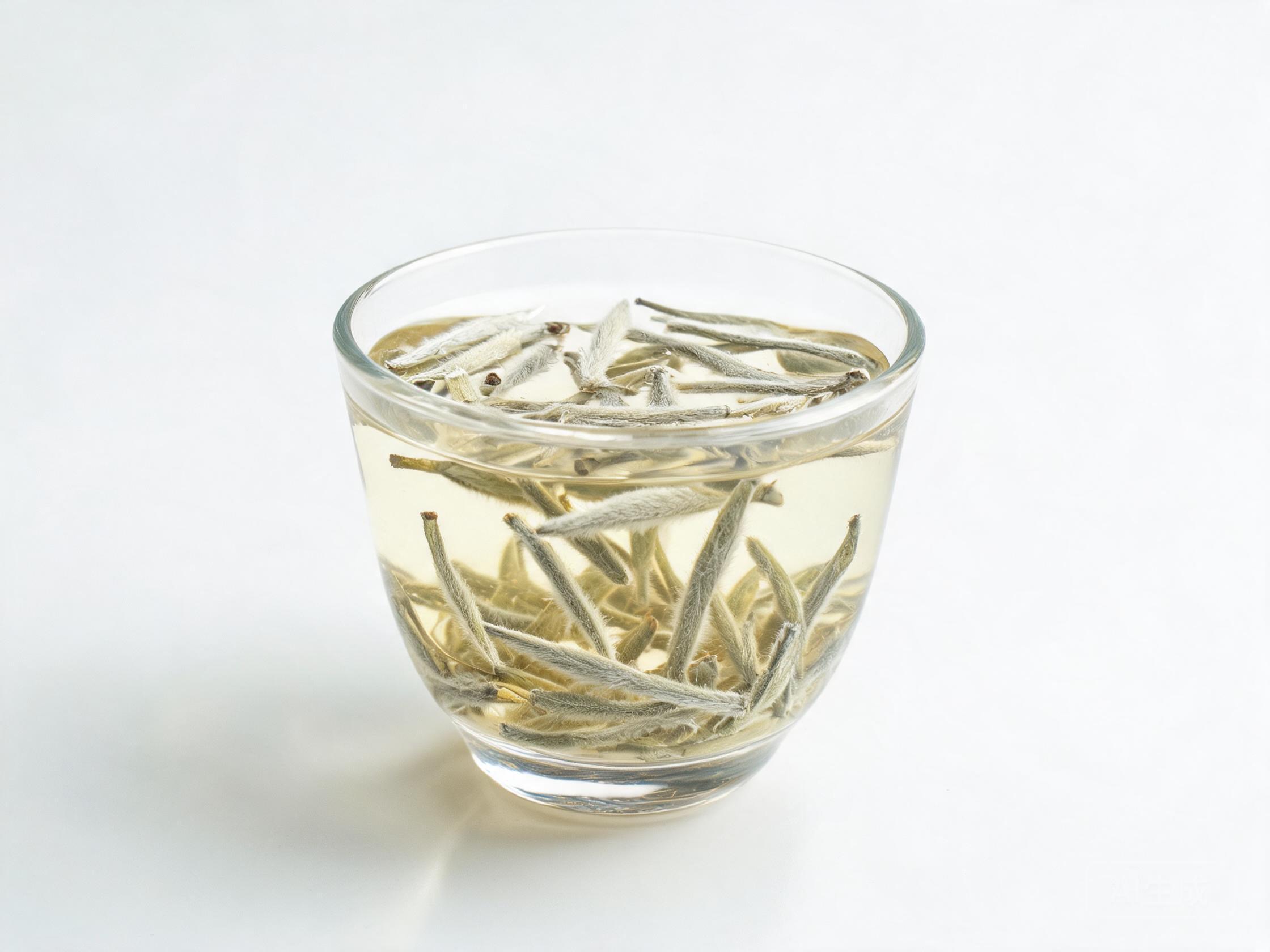
What Bai Mudan is
Bai Mudan(白牡丹), or White Peony, is a white tea made from an open leaf rather than a bud alone.
The name describes a grade and not a garden, and that is where most confusion starts.
A bud only white tea is Bai Hao Yinzhen(白毫银针), and it sits above Bai Mudan in most grading.
Bai Mudan takes a bud with one or two leaves below it.
The picking happens after the bud set has opened, which is later in the season.
That later picking is the whole difference, and it shows in the cup rather than in the name.
Fuding(福鼎)in Fujian is the origin most producers mean when they use the term.
Zhenghe(政和), also in Fujian, makes a version with a darker leaf and a fuller taste.
Both are legitimate, and neither is a copy of the other.
Below them sits Shou Mei(寿眉), which is made from larger leaf and sells for less.
Outside Fujian the name gets used loosely, and a loose name is the first thing to check.
A bag labelled Bai Mudan can hold almost any white tea that has leaf in it.
What defines it in the end is the ratio of leaf to bud, and nothing else.
How it is made
White tea is the least processed category, and the making is only two steps long.
The leaf is withered, and then it is dried.
There is no rolling, no shaping, and no heat beyond what drying needs.
Men huang(闷黄)does not appear here, since that step belongs to yellow tea.
The withering is where the tea is made, and it runs far longer than most expect.
Indoor withering on bamboo trays can run for two days depending on the weather.
Sun withering is the traditional version, and it is still used when the weather allows.
The leaf is turned by hand, and the turning is what stops uneven drying.
Nothing is added, and no oxidation is encouraged beyond what happens on its own.
That is why the finished leaf still looks close to the fresh leaf.
A Bai Mudan leaf is green, brown and grey at once, and the mixed colour is normal.
A uniformly green leaf means the batch was dried too fast.
A uniformly dark leaf means it was piled, which is a different process altogether.
Brewing it
Bai Mudan is forgiving, and that is its main advantage in the cup.
It takes hotter water than a bud only white tea without turning bitter.
Use 5 g for a 120 ml gaiwan(盖碗), or 3 g for a 250 ml mug.
Water at 90 °C suits most batches, and 85 °C suits a very leafy one.
A rinse is optional, and it helps a compressed or an aged cake.
Give the first infusion about 30 seconds, then add 10 seconds each round.
A good Bai Mudan gives 4 to 6 infusions before it thins out.
Brewing western style in a mug works, but it wastes the leaf.
One long steep in a mug gives a flatter cup than several short ones.
The taste sits between grass and honey, with a hay note from the leaf.
A bud heavy batch leans floral, and a leaf heavy one leans towards hay and wood.
Milk and sugar are not traditional here, and they hide the point of the tea.
Cold brewing works well, and 6 g in a litre overnight gives a sweet mild drink.
Ageing and flavour
White tea is one of the few categories that improves with age.
Bai Mudan ages faster than a bud only tea because the leaf carries more material.
Three years is enough to notice the change, and ten is a different drink again.
The grass note drops away first, and a date and honey note takes its place.
Older cakes develop a camphor note that some drinkers chase and some avoid.
Ageing only works if the leaf is stored dry, dark and sealed.
Damp storage ruins it, and it also gives the musty smell people mistake for age.
A musty cake is a spoiled cake, not an aged one.
Loose leaf ages more slowly than compressed, since less of it is exposed.
A compressed cake of Bai Mudan is the usual form for ageing.
Prices rise with age, and that has attracted fakes.
A ten year old cake at a low price is almost always a young cake with a story.
Buy from a seller who can say where it was stored, and walk away from one who cannot.