The short answer
Reprocessed tea splits cleanly on this question, because the two halves answer it in opposite ways.
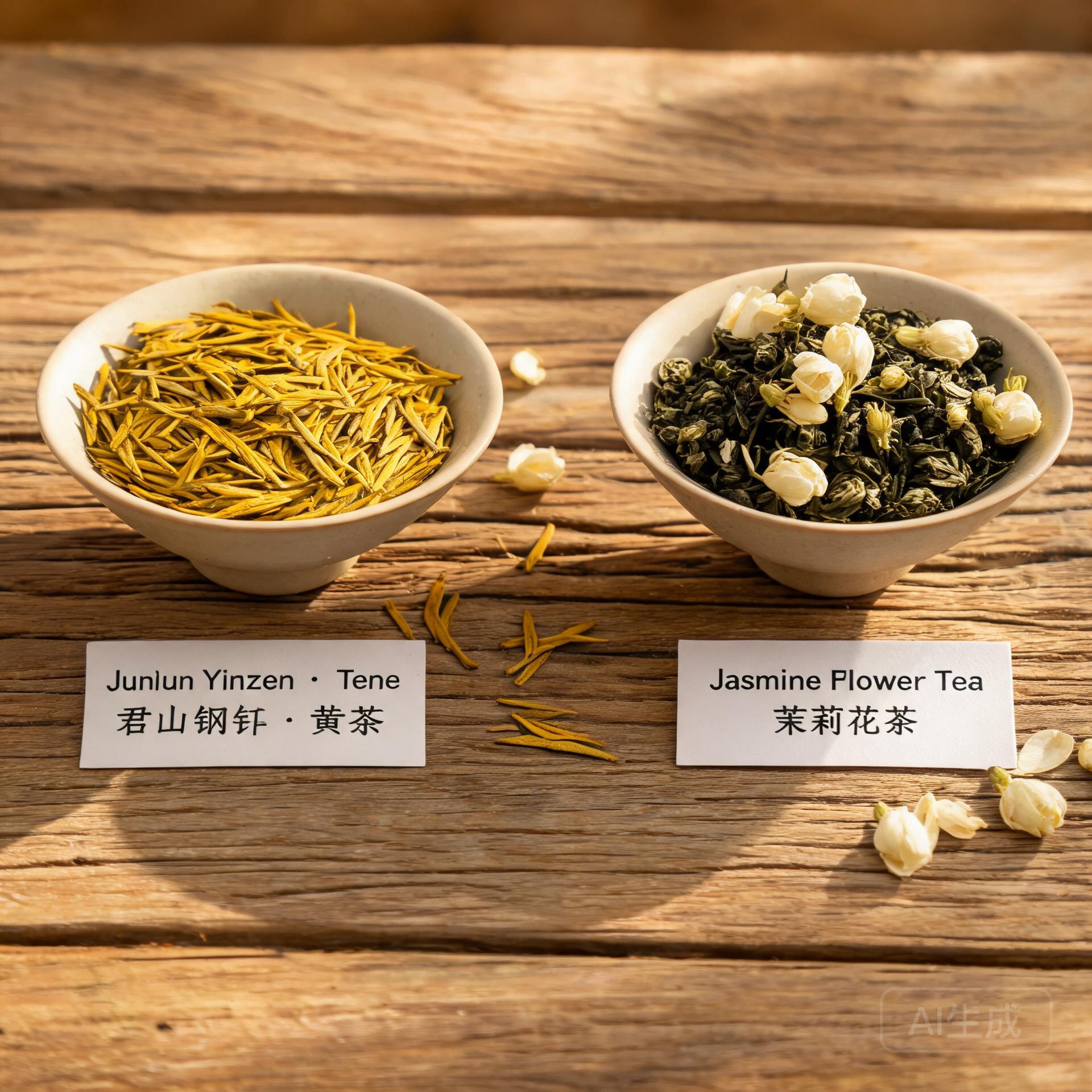
Jasmine tea is at its best within about six months of scenting, and it is a buy-now product.
Compressed tea is the most age-dependent tea in the world, and the aged version is what most of the market wants.
So the answer for jasmine is new, and the answer for compressed tea is often old.
Within compressed tea there is a further split between ripe and raw.
Ripe tea is finished when it is pressed and can be drunk the same week.
Raw tea is not finished, and it needs years before it is worth drinking at all.
That makes three different answers in one category, which is why this question confuses buyers so often.
Scented: drink it now. Ripe: drink it whenever. Raw: keep it, or buy it already kept.
Nothing in the scented half rewards waiting, and nothing in the raw half rewards impatience.
A standard cake is 357 grams, which at 7 grams a session is about 50 cups from one object.
Why age matters differently
Jasmine’s aroma comes from volatile compounds laid onto the leaf during scenting, and they leave from the day they are applied.
Six months is roughly the peak. After a year the tea is still tea, but the jasmine has largely gone.
Nothing replaces it, because scenting is a one-time event rather than a continuing process.
Ripe compressed tea has already been fermented over weeks, which is the process other teas do in storage.
It changes a little over the years, mostly by losing the fermentation flavour and becoming cleaner.
Raw compressed tea has not been through that process, and the decades in storage are what perform it.
That is the only tea in this category where age does real chemical work rather than merely removing something.
Moisture and microbes drive it, which is why storage conditions matter more than the year.
A raw cake kept badly for twenty years is worse than one kept well for eight.
The year on the wrapper tells you how long, and the storage tells you whether it was worth it.
How to tell
For jasmine, ask for the scenting date, which is usually the previous summer and never the packing date.
Smell it in the shop. A sharp, perfume-like smell means it was sprayed with oil, and that fades in weeks.
Good jasmine smells soft and slightly sweet, and it should still smell of something when you open it at home.
For compressed tea, ask for the factory, the recipe and the pressing year, in that order of importance.
Look at the cake. A young raw cake is greenish, and a well-aged one has gone brown, but evenly.
Smell the broken edge. Clean and earthy is right, and musty, sour or fishy are all wrong.
Look at the liquor. Young raw is pale yellow, and aged raw moves towards orange and then red-brown.
Taste for thickness and sweetness, since a well-aged raw tea has both and an old but badly kept one has neither.
Compare a young and an aged cake from the same factory if you can, which is the fastest way to learn.
Treat a vintage claim with no pressing date as decoration rather than information.
Six months is the number to remember for jasmine, and ten years is the one for a raw cake.
Storage caveat
Jasmine should be sealed, kept away from light, and drunk within six months. There is no plan beyond that.
Keep it away from compressed tea in the cupboard, because it will perfume anything stored beside it.
For raw compressed tea, storage is the product: air, stable humidity around 60 to 70 per cent, no strong smells.
Do not seal raw cakes in plastic, because they need to breathe and a sealed cake is not ageing.
Ripe tea is more forgiving and will hold for years in its wrapper without much attention.
A flat with a radiator and a kitchen is a poor place to age anything, and most flats are exactly that.
Check cakes once a year by looking and smelling, and otherwise leave them alone.
Write the year and the price on every cake, or in ten years you will not know what you have.
If a cake smells musty, the storage failed at some point and more years will not repair it.
Buying old is a bet on somebody else’s storage. Buying young and keeping it is a bet on your own.
Two cakes a year for five years is ten cakes, about 3.5 kilos, and more than most private buyers drink.