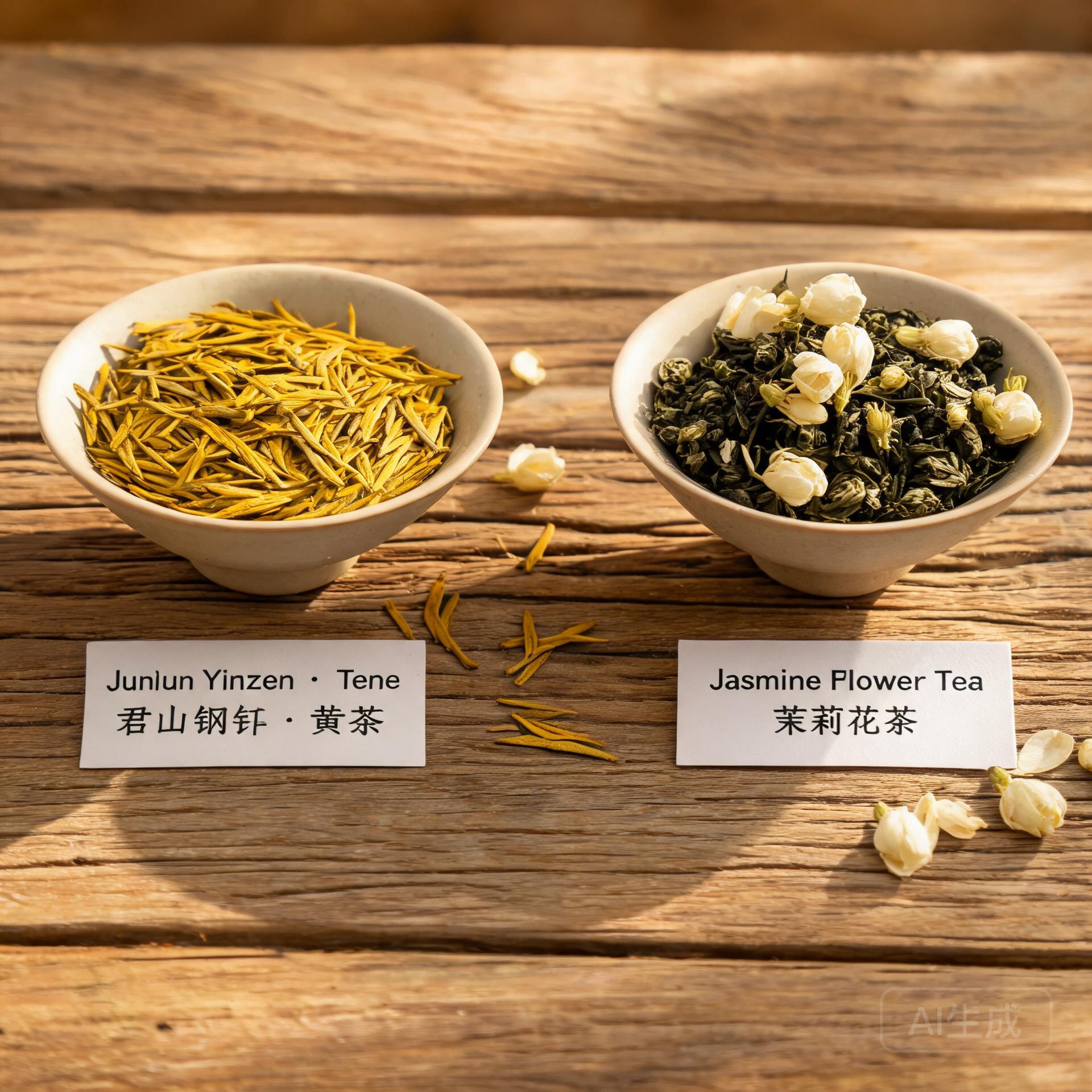
What standards cover
Reprocessed tea is the least tidy category in the standards system, because it is defined by what is done to finished leaf.
Scented tea, compressed tea and blended tea each have their own recommended standard rather than one shared one.
Those standards carry the GB/T prefix, which marks them as recommended rather than compulsory ones.
A jasmine tea standard, for instance, sets out how much flower may be present and how the base tea is described.
A compressed tea standard covers shape, weight tolerance, moisture and how the cake is expected to hold together.
Moisture, ash and water extract appear here as they do elsewhere, with limits set for each product.
Safety is not in these documents, since contaminants and residues are handled by GB 2762 and GB 2763.
Labelling rules apply as well, and they govern the claims a package is allowed to make about scenting.
The standard number is usually printed on the package, and it tells you which document the producer worked to.
That number is searchable in the public national standards library, which anyone can consult for free.
What they do not cover
What these standards do not do is tell you whether the scent came from flowers or from a spray.
Some do set a limit on added flavouring, but the check needs a laboratory and is rarely done at retail.
Age claims in compressed tea are mostly outside the standard, which is a large gap in that market.
Origin, garden and tree age have no standing here either, unless a separate geographical standard applies.
Nothing in a standard describes how a cake was stored between the factory and the shelf you bought it from.
Blending is allowed, so a compliant cake may contain leaf from several regions and several years.
The sensory sections are written in words and checked by people, so they leave room for disagreement.
Brewing guidance is never part of the standard, and packet advice is the seller’s opinion only.
Certifications such as organic sit in separate systems and are not covered by the product standard.
Compliance rules out the unacceptable, and everything beyond that is yours to work out by tasting.
Grades in practice
Grades in this category depend on the product, so a jasmine tea and a compressed cake are graded differently.
For scented tea, grade tracks the base leaf and the number of scenting rounds the producer claims.
More rounds should mean a deeper and longer lasting aroma, though the standard cannot really enforce that.
For compressed tea, grade is tied to the material inside rather than to the shape of the cake.
Measurable figures vary little across grades here, because they are floors rather than performance targets.
Grading is done within a lot, so it ranks a batch against itself and nothing outside it.
The producer assigns the grade, and there is usually nobody in a position to dispute the decision.
Gift packaging pushes grades upward, since a high grade on the box is worth more than an accurate one.
Material sold loose or unlabelled may carry no grade, which on its own means very little.
Read the grade as a note about sorting, then taste the tea and let the cup settle the question.
Safety versus quality
Safety and quality need separate attention in this category, more perhaps than in any other one.
Mandatory limits on contaminants and residues live in GB 2762 and GB 2763, and they apply here too.
The GB/T product standards are voluntary, so meeting a grade is a choice rather than a legal duty.
Moisture matters more for compressed tea than for anything else, since a damp cake spoils from the inside.
Mould is the specific risk, and no standard can guarantee what happened in a warehouse nobody inspected.
Added flavouring is the quality question that matters most in scented tea, and the label should declare it.
A named producer on the package gives you someone to ask, which is worth more than any grade.
Home test kits for residues or mould are not reliable enough to base any real decision on.
Ask the seller for a test report covering the batch, and notice how quickly one appears.
Treat safety as paperwork you check once, and quality as a question you answer every time you brew.