The common tricks
Reprocessed tea contains the most elaborate frauds in tea, and also the simplest one to explain.
For jasmine, the trick is spraying flavouring onto cheap leaf instead of scenting it with flowers.
It costs a fraction of the real process and smells stronger in the shop, which is the whole problem.
The second is understating the rounds: three rounds of scenting described in the language of seven.
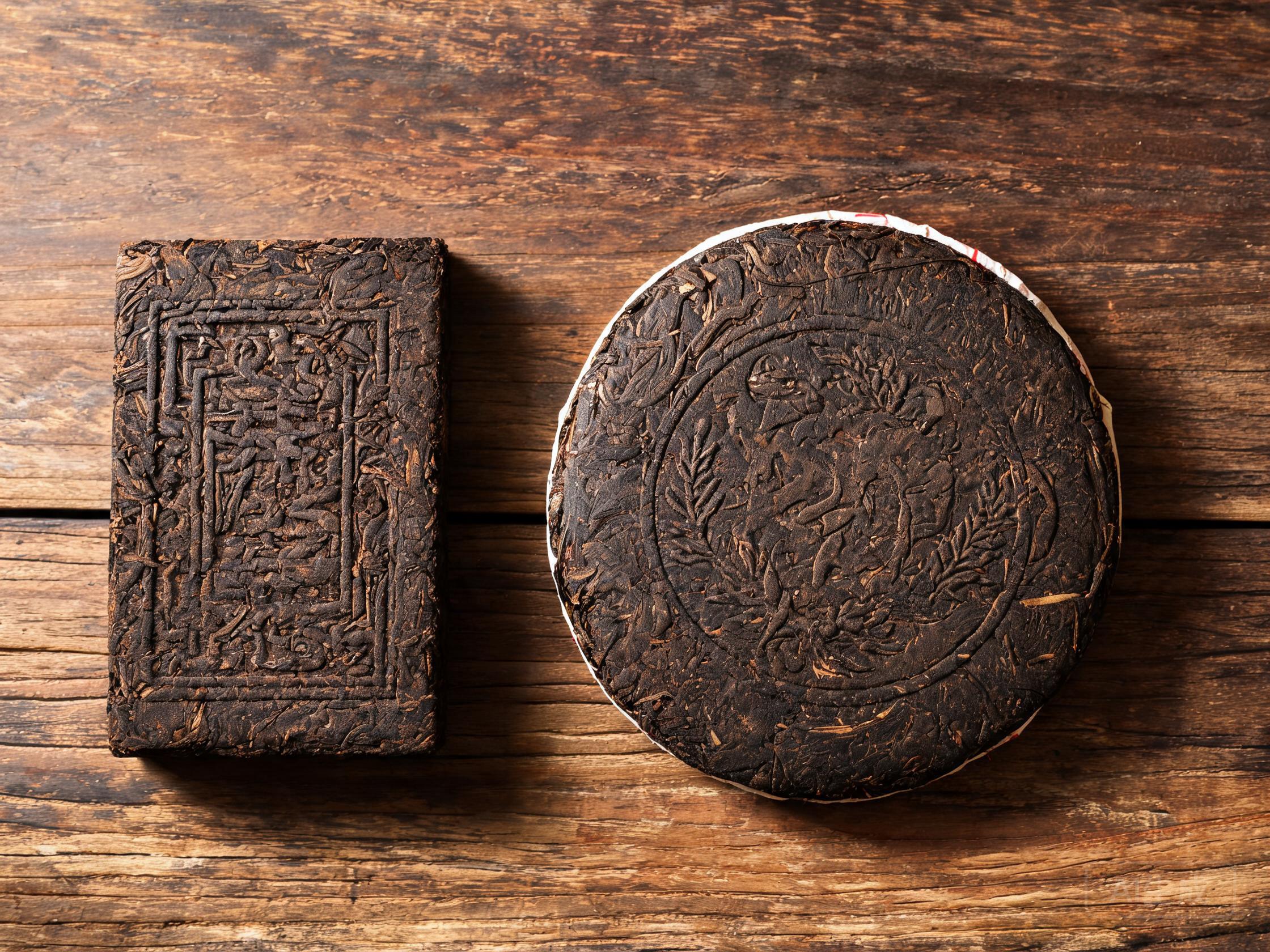
For compressed tea, the first trick is the fake vintage, usually with a plausible-looking wrapper.
The second is the unmarked cake, which is cheap because nobody will say what it is.
The third is surface dressing, where good leaf is laid over poorer material inside the cake.
The fourth is the warehouse find, a story attached to thousands of ordinary cakes.
The fifth is re-pressing old material into a new cake with a new date on the wrapper.
All of them rely on the buyer being unable to check the one thing that matters, which is the interior.
A seven round jasmine costs roughly twice a three round one, which is why the rounds get overstated.
Why they work
A compressed cake is opaque in both senses: you cannot see inside it, and you cannot easily find out.
The wrapper is printed by the seller, so it proves nothing about what it wraps.
Age drives the price, and age is the one thing that cannot be tested quickly.
Flavouring works because sprayed jasmine smells stronger than the real thing, and stronger reads as better.
Rounds of scenting are invisible in the finished leaf, so the claim cannot be checked in a shop.
Surface dressing survives because most buyers never break a cake open before selling it on.
The warehouse story works because it flatters the buyer into thinking they have found something.
Prices for old cakes rose fast enough that faking them became a trade in itself.
The market is international, and a buyer in Europe cannot check a factory in Yunnan.
All of which means the defences have to be procedural rather than visual.
A standard cake is 357 grams, and at 7 grams a session that is about 50 cups you cannot inspect first.
Defence
Buy samples before cakes, and buy the sample from the actual cake if you can.
Ask for the factory, the recipe number and the pressing year, and expect all three.
Look for photographs of the broken edge rather than of the wrapper.
Break every cake you buy and compare the interior against the surface.
Smell at the break rather than at the wrapper, since that is where the tea tells the truth.
For jasmine, smell it again a week after opening. Real scenting lasts, and spraying does not.
Buy from sellers who have traded for a decade, because they can hold stock that old and new ones cannot.
Treat any story as a reason to ask more questions rather than fewer.
Three rounds is the industry normal and seven is good, so a listing that does not say has chosen the lower one.
Keep the wrapper and write the price and date on it, so that the record exists later.
Compare two sellers of the same nominal cake, which is the fastest education in the category.
Twenty five grams of jasmine gives about eight cups, enough to see whether the aroma survives a week.
When in doubt
When you cannot verify a cake, pay the young price, because a young cake is what it is.
An unmarked cake is worth whatever ripe tea costs, and nothing above that.
A vintage with no pressing date is decoration rather than information.
Buy ripe tea instead. It is cheap, hard to fake convincingly, and drinks well now.
If you want something to age, buy young from a known factory and store it yourself.
Do not buy a cake because the wrapper is beautiful, which is what the wrapper is for.
Ask the seller to describe the tea without looking at the listing, and see what comes out.
Buy one cake rather than three until you have opened the first one.
There is no shortage of compressed tea, and no reason to accept a story you cannot check.
In this category more than any other, doubt is the correct default setting.
Ripe tea from a known factory costs a few pounds a brick, so there is no need to gamble on anything unmarked.