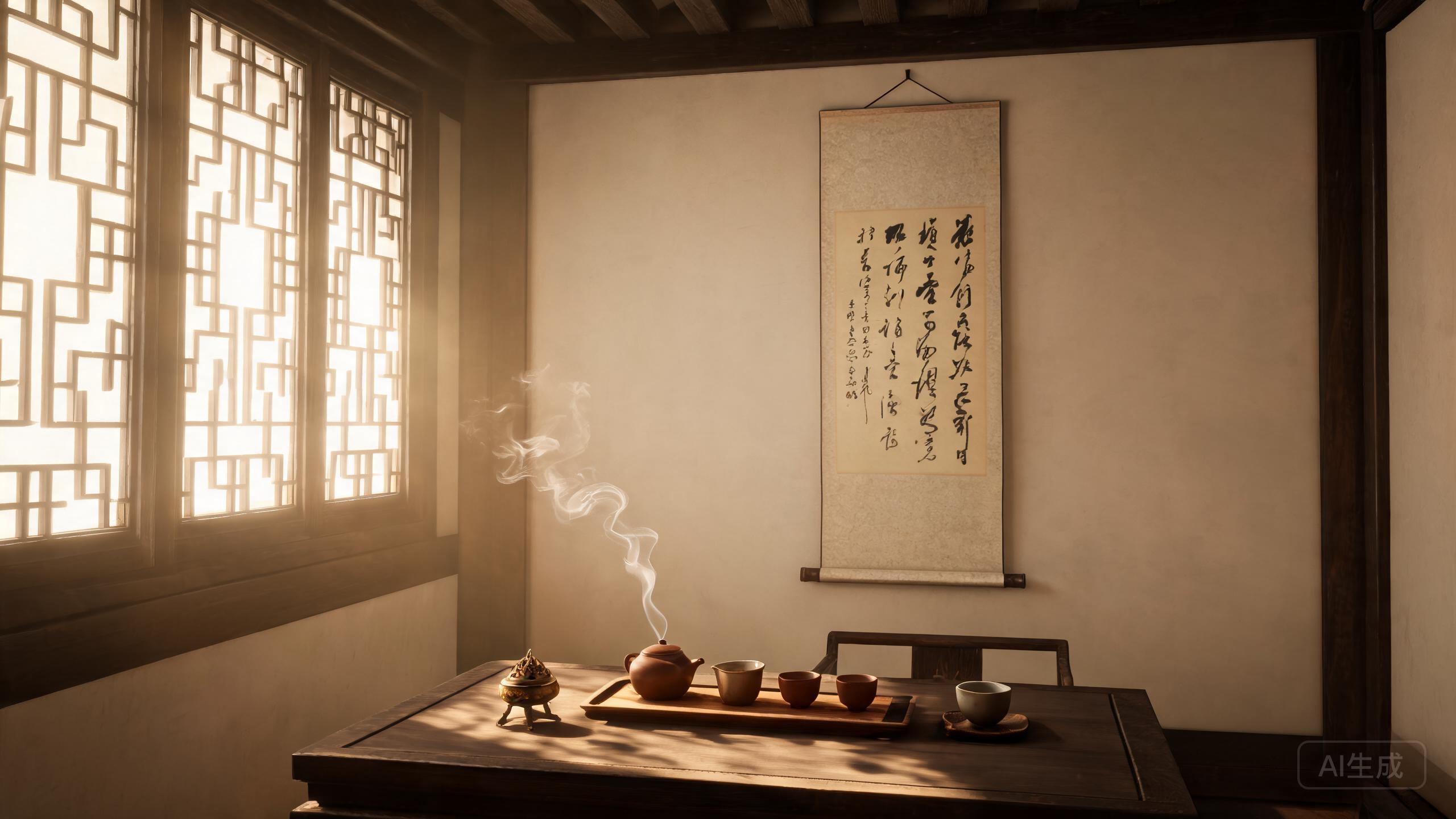
Perfume and process
Reprocessed tea is the newest category here, and its writing is about technique rather than mood.
Scented tea(窨制)is described in Ming and Qing sources, mostly in craft manuals and household encyclopedias.
Those texts explain how many rounds of blossom to use and how long to hold the leaf.
They are instructions, and they were written to be followed rather than admired.
A household manual from the Ming gives blossom quantities by weight and by the hour, and modern factories still schedule their rounds the same way.
Jasmine(茉莉)is the flower that dominates the record, and it has done so for centuries.
Fuzhou and Hengxian both appear as centres, and both are thoroughly industrial today.
There is no famous poem about jasmine tea, and the search for one usually ends in invention.
What the category does have is a vocabulary well worth learning.
The base leaf, the flower and the number of scenting rounds are the three facts that matter.
A 9 round jasmine is a different object from a 3 round one, and the label should say which.
That is a technical literature, and it rewards a technical reading.
Treat it as a craft record, and the category becomes far more interesting than the marketing suggests.
The shared foundation
Reprocessed tea inherits the shared canon at two removes, and the gap is worth naming out loud.
Lu Yu’s Chajing(茶经)describes plain compressed green cake, written between 760 and 762 CE.
Lu Tong’s bowls describe the same thing a generation or so later.
Neither of them describes adding flowers to a finished leaf.
Scenting appears much later in the written record, and in manuals rather than in verse.
The habit of drinking scented tea is old, while the documentation of it is young.
That combination is common in Chinese craft, where practice runs well ahead of writing.
What the shared canon gives this category is the social habit rather than the method.
Tea as something offered to a guest is the part that genuinely transfers.
The guest ritual long predates scenting, and the blossom was added to an existing habit rather than to a new one, which is why the canon mentions no flower.
The flower is an addition built on top of that habit, centuries afterwards.
Reading the classical texts as if they knew about jasmine would be a simple error.
They did not, and the category is none the worse for that.
What is type-specific
The type-specific literature here is entirely technical, and that is precisely its strength.
Ming and Qing manuals describe xun(窨)scenting in explicitly numbered rounds.
They specify how much blossom per unit of leaf and how long each round should last.
Those figures are the interesting part, and makers still work to them today.
Fuzhou is named repeatedly as the historic centre of the jasmine trade.
Hengxian in Guangxi dominates modern supply, and its literature is industrial.
There is no poetic tradition attached to any of this, and none is needed.
What there is instead is a vocabulary that tells you exactly what you are buying.
Base leaf, flower species and round count are the three facts worth knowing.
A 9 round jasmine silver needle is a different object from a 3 round one.
The label should state all three, and a good seller will state them without being asked.
That is a technical literature doing precisely what a buyer needs it to do.
Reading the record honestly
Honesty about scented tea is mostly about refusing to romanticise it.
No classical poet wrote a line about jasmine tea, and hunting for one wastes everybody’s time.
What exists is craft writing, and it is more useful than poetry would be here.
The practical reading takes three facts off the label and ignores everything else.
Which base, which flower, and how many rounds went into it.
Everything else printed on the pack is decoration.
Brew 3 g in 150 ml at 85 °C and give it 2 minutes.
The dry leaf should smell of the flower without smelling perfumed.
A sprayed tea hits the nose sharply and then vanishes completely in the cup.
A properly scented one holds through the second infusion and fades by the fourth.
An unscented base sold as jasmine usually gives itself away in the very first pour, since nothing carries the aroma past the water.
That profile is the whole test, and it takes a few minutes to run.
Trust it, and the absence of ancient verses stops mattering at all.