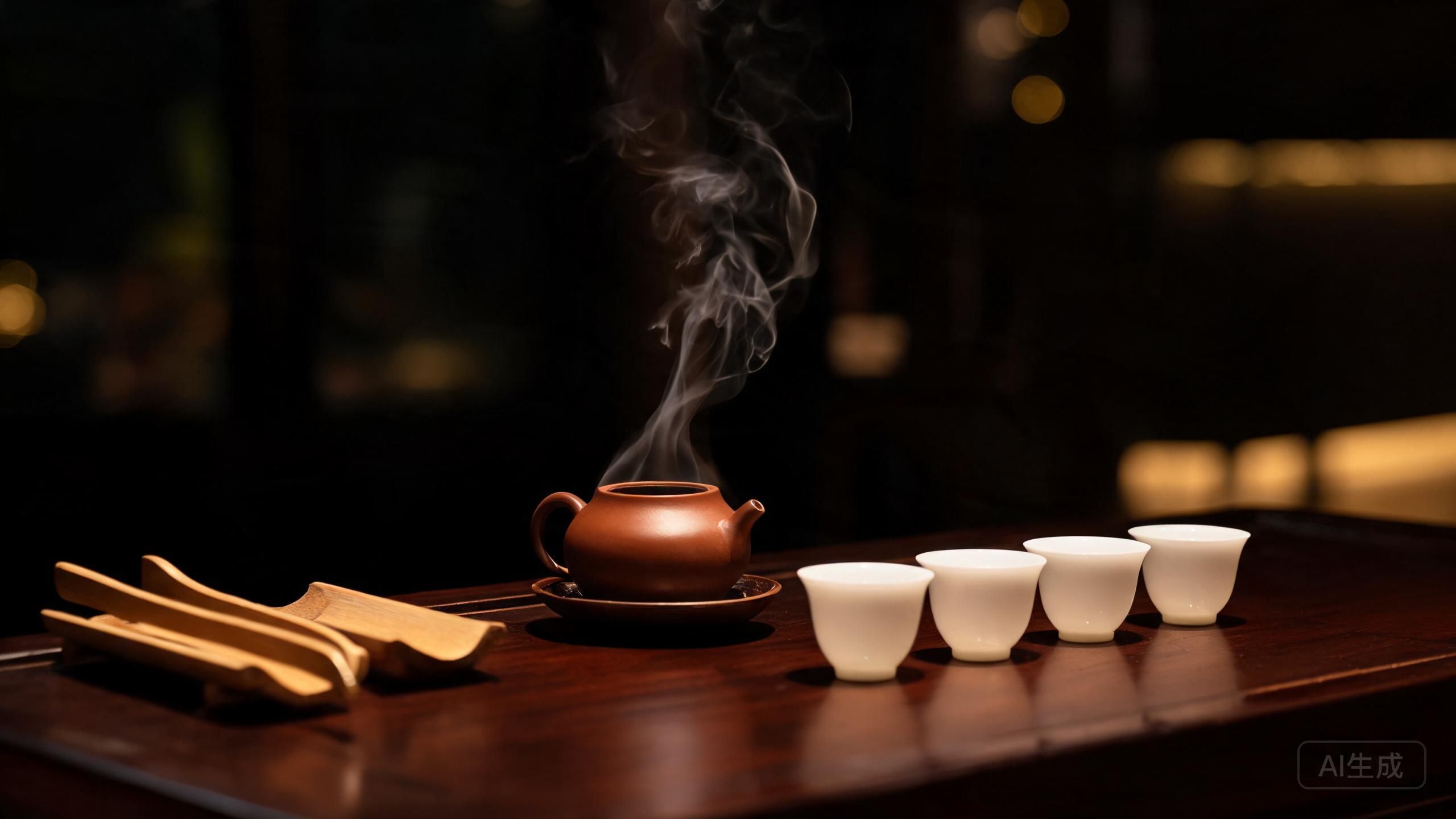
How Red (black) tea is served
Red tea has two serving traditions, and they are not really compatible with each other.
The Chinese method uses a gaiwan or a small pot, brewed strong and short.
A typical setting is 4 g in 150 ml at 90 °C, run across three infusions.
The western method uses a large pot, one long steep, and milk.
That method was designed for broken grades and for a different social setting entirely.
It is not wrong, and it does waste the leaf if the leaf happened to be whole.
Red tea also has the distinction of being the only category with a full western ceremony.
Afternoon tea is a real ritual, with its own equipment and its own rules.
It grew around this leaf, and it is as legitimate as gongfu cha is.
What it does not do is show what a good whole leaf red tea actually tastes like.
Brew the same leaf both ways and the difference is immediate.
Two traditions, one leaf, and a choice worth making deliberately rather than by default.
The wider picture
Ceremony is a family of habits, and red tea is the one with a foot in two of them.
Chinese practice uses the gaiwan and repeated steeps, as it does for every category.
Japanese practice barely touches red tea, since the country grows and drinks green.
Western practice is built entirely around it, from afternoon tea to the office mug.
That makes red tea the category where the western habit has the strongest claim.
It is also the category where the western habit does the most damage to good leaf.
Milk and sugar were solutions to a specific problem, and the problem was harsh tea.
A well made whole leaf red tea needs neither, and is generally better without them.
The ceremony survived long after the reason for it disappeared, which is how habits work.
Red tea sits inside the wider spectrum rather than outside it.
It is simply the category that travelled furthest from its own original method.
Reading it that way explains most of the confusion about how strong it should be.
What the ritual protects
A ceremony manages four variables, and for red tea they get set by tradition rather than by taste.
Temperature, ratio, vessel and timing, and all four of them are worth checking.
Temperature is the one the western habit gets wrong most often.
A full boil suits a broken grade and ruins a whole leaf one.
Around 90 °C is a better default than 100 °C, and the cup will tell you if it needs more.
Ratio in the western habit is far too low, which is why the tea gets stewed instead.
Vessel size follows from ratio, and a large pot with a small dose is the usual mistake.
Timing is where milk enters, since a tea meant for milk should be brewed stronger, not longer.
Get those four right and a whole leaf red tea gives three pours without any help at all.
Get them wrong and the first cup is harsh while the second is barely coloured water.
The form exists to serve the leaf, and this leaf wants moderate heat and a proper dose.
Milk is a choice made after that, and not a way of covering for a badly brewed cup.
A note on authenticity
There is no single correct way, and red tea has more candidates than most categories do.
Gongfu cha, afternoon tea and the office mug all have a defensible claim.
What matters is that the method fits the leaf in front of you.
A broken grade wants boiling water, one steep and milk, and it is good at exactly that.
A whole leaf grade wants moderate heat, a proper dose and no additions whatsoever.
Brewing those two the same way is the commonest error in the whole category.
Treat any claim of one true method with scepticism, and ask which grade it assumes.
The answer is usually whichever grade the speaker buys in bulk.
The practical alternative is the four controls, set per leaf rather than per habit.
Brew 4 g in 150 ml at 90 °C, taste at 3 minutes, and adjust one thing.
Then try the same leaf with milk and see whether it survives the milk.
That comparison settles more than any argument about which tradition is correct.