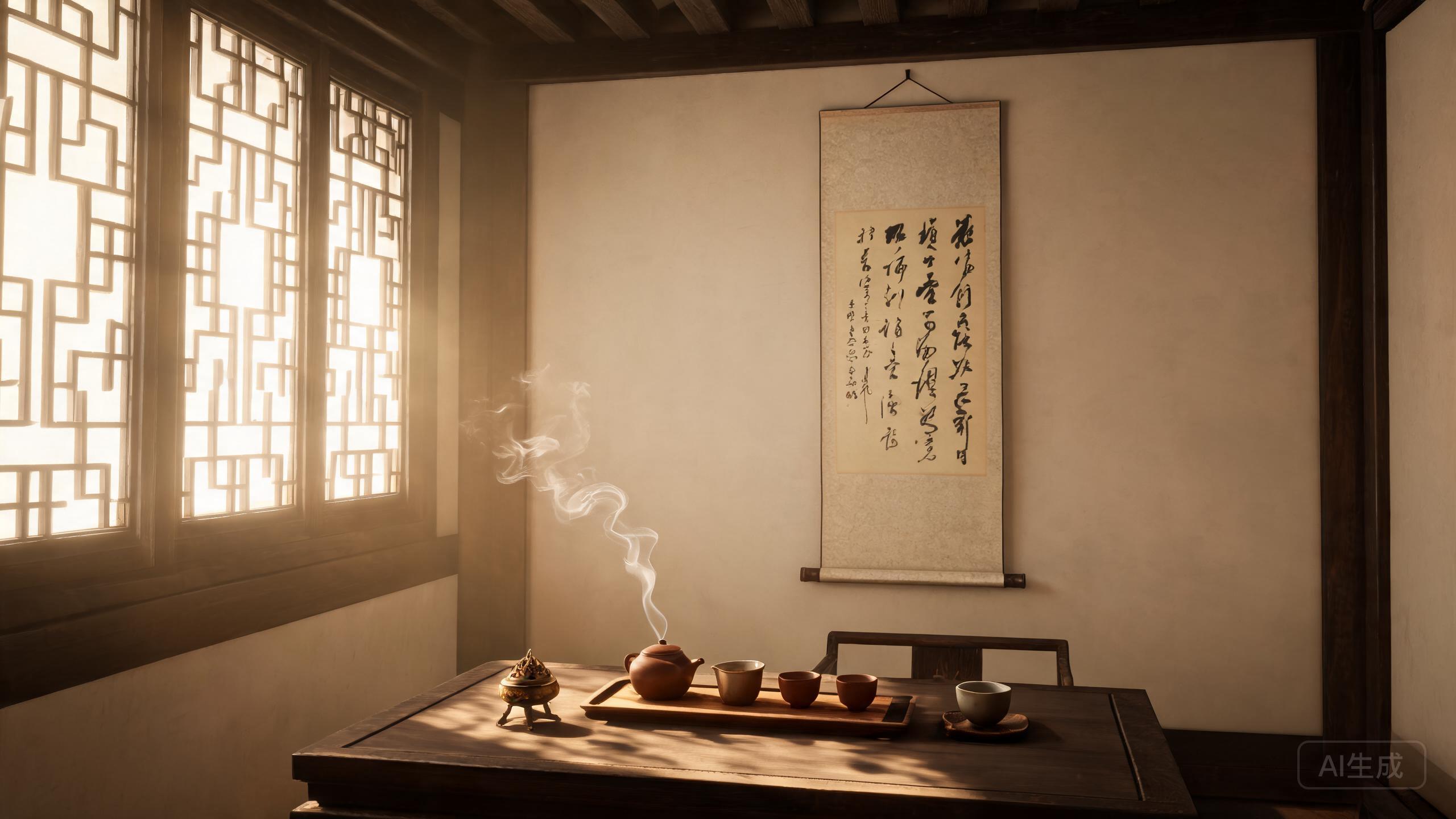
How White tea is served
White tea is brewed simply, and the simplicity is deliberate rather than lazy.
A gaiwan or a glass, cooler water and gentle steeps are the whole method.
The aim is to let soft floral and fruity aromatics show without being overwhelmed.
A gaiwan gives you control over the pour, which matters because this leaf is slow to give.
A glass lets you watch the buds stand up, which is most of the pleasure of a Silver Needle.
Water at around 85 °C is the usual setting, and boiling water flattens the top notes.
Gongfu cha suits white tea less well than it suits oolong, since the steeps run longer here.
Most people get better results from a few long infusions than from many short ones.
Aged white tea is a different case entirely, and it takes a full boil happily.
Pressed white tea cakes want the same treatment, after one rinse to open them up.
So the category has two methods rather than one, and age is what splits them.
Young leaf wants restraint, old leaf wants heat, and that is the whole rule.
The wider picture
Ceremony is a family of habits rather than a single ritual with one correct form.
Chinese practice centres on the gaiwan and on gongfu cha, which is a method more than a rite.
Japanese practice split into chanoyu for powdered tea and sencha-do for leaf tea.
Western practice grew around red tea, a pot, a strainer and milk.
Each of those was shaped by the leaf it was designed for and by what was to hand.
White tea is a late arrival in all three, and it borrowed rather than invented.
In China it is drunk from a gaiwan, and in the West mostly from a mug or a pot.
Neither is wrong, and the mug does lose a noticeable amount of aroma.
What white tea does not have is a ceremony of its own anywhere at all.
That absence is honest, since the category was never a court tea with a ritual attached.
It is a regional drink that became an export, and the method followed the trade.
Reading it that way is more accurate than dressing it in somebody else’s ceremony.
What the ritual protects
What a ceremony actually does is manage four variables on your behalf.
Temperature, ratio, vessel and timing make up the whole list.
For white tea, temperature is the one that decides everything else.
Too hot and the floral notes disappear under a cooked sweetness.
Too cool and the leaf never opens, and the cup tastes like hot water with a suggestion in it.
Ratio comes next, and 3 g in 150 ml is the standard starting point.
A larger vessel with the same dose is the commonest reason a white tea tastes weak.
Vessel matters less than people think, provided it holds its heat reasonably well.
Timing is the last control, and white tea wants longer steeps than green tea does.
Around 3 minutes for young leaf, and longer again for a pressed or an aged cake.
Get those four right and the category stops being unpredictable.
The form exists to serve the leaf, and this leaf wants gentleness and time.
A note on authenticity
There is no single correct ceremony, and white tea is where that matters most.
The category is too young in export terms to have accumulated a ritual worth defending.
What matters is that the method fits the leaf you actually have.
A young Silver Needle wants restraint, and an aged Shou Mei wants heat and patience.
Brewing both the same way is the common error, and it makes one of them taste wrong.
Treat any claim of one true method with scepticism, and ask which leaf it was written for.
The answer is usually whichever leaf the speaker sells the most of.
The practical approach is to learn the four controls and set them per leaf.
Brew at 85 °C with 3 g in 150 ml, and change one thing at a time.
Keep a note of what you did, since memory is unreliable across a week.
Two or three sessions of notes will settle the category for you.
That is less atmospheric than a ceremony, and it produces a better cup.