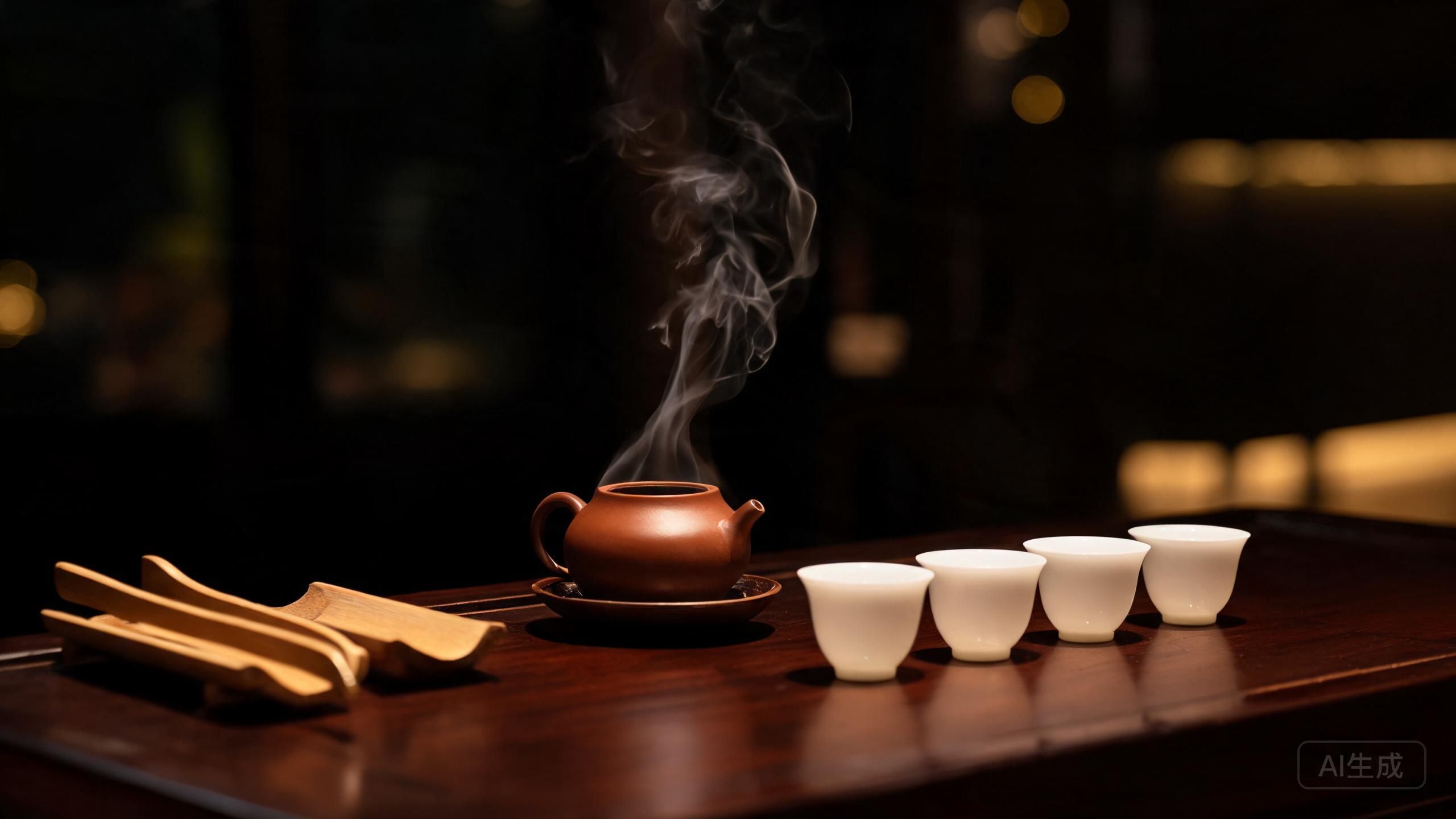
How Yellow tea is served
Yellow tea is served the way a fine green tea is, and that is not an accident.
It starts as green leaf, so the habits built for green tea transfer almost directly.
A gaiwan is the usual vessel, and a small glass works just as well for a bud tea.
Water sits around 85 °C, warmer than most green tea and cooler than most red tea.
Steeps run for about 2 minutes, and the leaf will usually give three of them.
The point of the method is to show the sweetness that men huang(闷黄)produced.
Too cool and that sweetness never arrives, which is the common failure at home.
Too hot and the category starts tasting like a green tea again, which defeats the purpose.
There is no separate yellow tea ceremony anywhere in China.
The category is too small and too young to have generated one.
It borrowed the green tea habit, and the borrowing is worth saying out loud.
Pretending otherwise would mean inventing a tradition that nobody ever practised.
The wider picture
Ceremony is a family of related habits rather than one ritual with a correct version.
Gongfu cha and the gaiwan dominate Chinese practice, and both are methods rather than rites.
Japan built chanoyu around powdered tea and sencha-do around leaf tea.
The West built a pot and table habit around red tea and milk.
Every one of those was shaped by the leaf available and by where it was drunk.
Yellow tea appears in none of them, because it was never a court or a trade tea.
It was a regional tribute tea made in small quantities for local buyers.
That is the honest reason no ritual ever attached itself to the category.
Small categories rarely generate ceremony, because ceremony needs an audience as much as a method, and yellow tea has never had either in quantity.
What it inherits is the Chinese habit of repeated short infusions from a small vessel.
That habit suits it well, since the leaf is a bud tea and gives up its material slowly.
Any ceremony that treats it like a roasted oolong will simply waste it.
Heat and time are the two controls, and the category has a narrow window for both.
What the ritual protects
A ceremony is really a control system, and the controls are the same ones everywhere.
Temperature, ratio, vessel and timing, and nothing beyond those four.
For yellow tea, temperature is the one people get wrong most often.
The instinct is to brew it like green tea, which is too cool to show what the leaf does.
Men huan(闷黄)produced sweetness and body, and cool water leaves both behind in the leaf.
Ratio is standard at 3 g in 150 ml, and there is little reason to vary it much.
Vessel matters mostly for heat retention, and porcelain is the safe choice here.
A thicker wall holds its temperature through the pour, which matters when the steeps run this long and the margin for error is narrow.
Timing runs longer than for green tea, since the leaf is denser and slower to open.
Two minutes for the first pour, and a little more for each one after that.
Three pours is a normal session, and four means the leaf was generous.
Get those four set correctly and the category stops feeling mysterious.
The form serves the leaf, and this leaf wants moderate heat and unhurried time.
A note on authenticity
There is no single correct way to serve yellow tea, and no tradition to appeal to either.
That absence is worth naming rather than filling with invented ceremony.
What matters is that the method fits the leaf, and this leaf sits between two categories.
Warmer than green tea, cooler than red tea, and slower than either of them.
A green tea method under extracts it, and a red tea method flattens the sweetness out.
Treat any claim of one true ceremony with scepticism, and ask what leaf it serves.
With yellow tea the answer is usually green tea, which is the wrong one.
The practical alternative is the four controls, set by taste rather than by rule.
Brew 3 g in 150 ml at 85 °C, taste at 2 minutes, and adjust from there.
If it tastes like a green tea, raise the temperature before you blame the seller.
A sour cup means the yellowing was wrong, and no method will rescue it.
That is the honest test, and it takes one session to run.