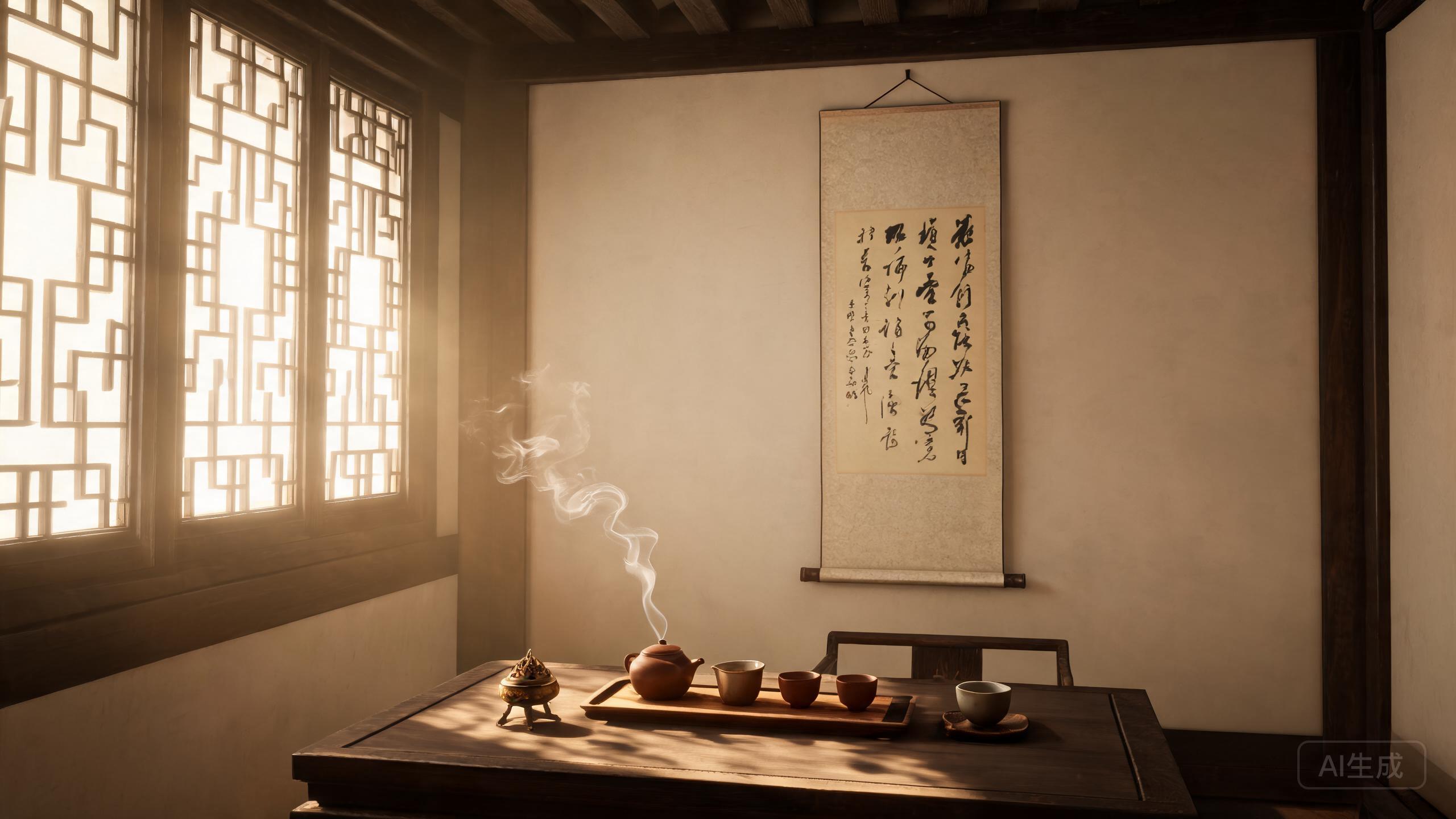
How Green tea is served
In China, green tea is most often brewed in a gaiwan or a simple glass.
The method is kept light and quick, which protects the fresh grassy notes the category is bought for.
A gaiwan suits it because the leaf can be watched and the pour controlled to the second.
A glass suits it because a good green tea is also something worth looking at.
Neither requires a tray, a swan necked kettle or a fixed sequence of movements.
Water sits around 80 °C, the dose is modest, and the steeps are short.
Gongfu cha works here too, and it is simply the same controls applied with more attention.
Japan developed a separate tradition for steamed greens, called sencha-do.
It uses a small pot, a cup and a tray, and it is a deliberate ceremony rather than a habit.
Chanoyu, the better known Japanese ceremony, uses matcha rather than leaf tea.
That is a different object entirely, and conflating the two causes endless confusion.
For leaf green tea, both countries arrived at the same idea: gentle, quick and repeatable.
The wider picture
Tea ceremony is not one ritual, and treating it as one is the root of most confusion.
Across China, the gaiwan and gongfu cha dominate how leaf tea gets prepared.
In Japan, chanoyu and sencha-do took green tea in quite different directions.
In the West, the pot and table habit grew up around red tea and milk.
Each of those developed around a specific leaf and a specific set of constraints.
None of them is a universal standard that the others are failing to meet.
A gaiwan, a chawan and a teapot are three answers to the same problem, and all three work on their own leaf.
Green tea sits inside this spectrum rather than outside it.
Its method is the Chinese one, and it is the simplest version of that method.
What changes between categories is the temperature and the vessel rather than the principle.
The habit of repeated short infusions goes back to the Ming, when loose leaf replaced cake.
A gongfu session for a roasted oolong and one for a green tea look alike and taste nothing alike.
The movements are inherited, and the settings are not.
What the ritual protects
Every ceremony, whatever the leaf, is really a set of controls rather than a set of beliefs.
Four variables get managed: water temperature, ratio, vessel and timing.
A gaiwan controls ratio and timing by being small and by pouring fast.
A thermometer controls the temperature, which is the variable that ruins most green tea.
A fairness pitcher stops one cup coming out stronger than the next.
A habit of counting keeps the steeps comparable right across a session.
None of that is mystical, and all of it is measurable.
A written setting is worth more than a memorised one, since memory drifts between sessions and the leaf does not change at all.
For green tea, those controls are what let its particular character come through.
The goal is this leaf tasting like itself rather than like a generic idea of tea.
A ceremony that flattens everything to one taste has failed at its own job.
A gaiwan holding 100 to 150 ml is the standard size, and porcelain is the safe choice.
The form exists to serve the leaf, and not the other way round.
A note on authenticity
There is no single correct way, and the search for one wastes a great deal of good tea.
What matters is that the method fits the leaf in front of you.
A delicate green tea wants gentler treatment than an aged and sturdy one does.
Cooler water, a lower dose and shorter steeps, and then adjust from there.
A ceremony designed for a roasted oolong will scald a green tea in a single pour.
And one built around matcha has no use for a leaf tea at all.
Treat any claim of one true ceremony with real scepticism.
It usually means one true ceremony for whichever leaf the speaker happens to sell.
The practical alternative is to learn the four controls and set them for each leaf.
That is less romantic and considerably more reliable.
Start at 3 g in 150 ml at 80 °C, and write down what you changed.
Two sessions of notes will teach more than a year of watching other people’s videos.