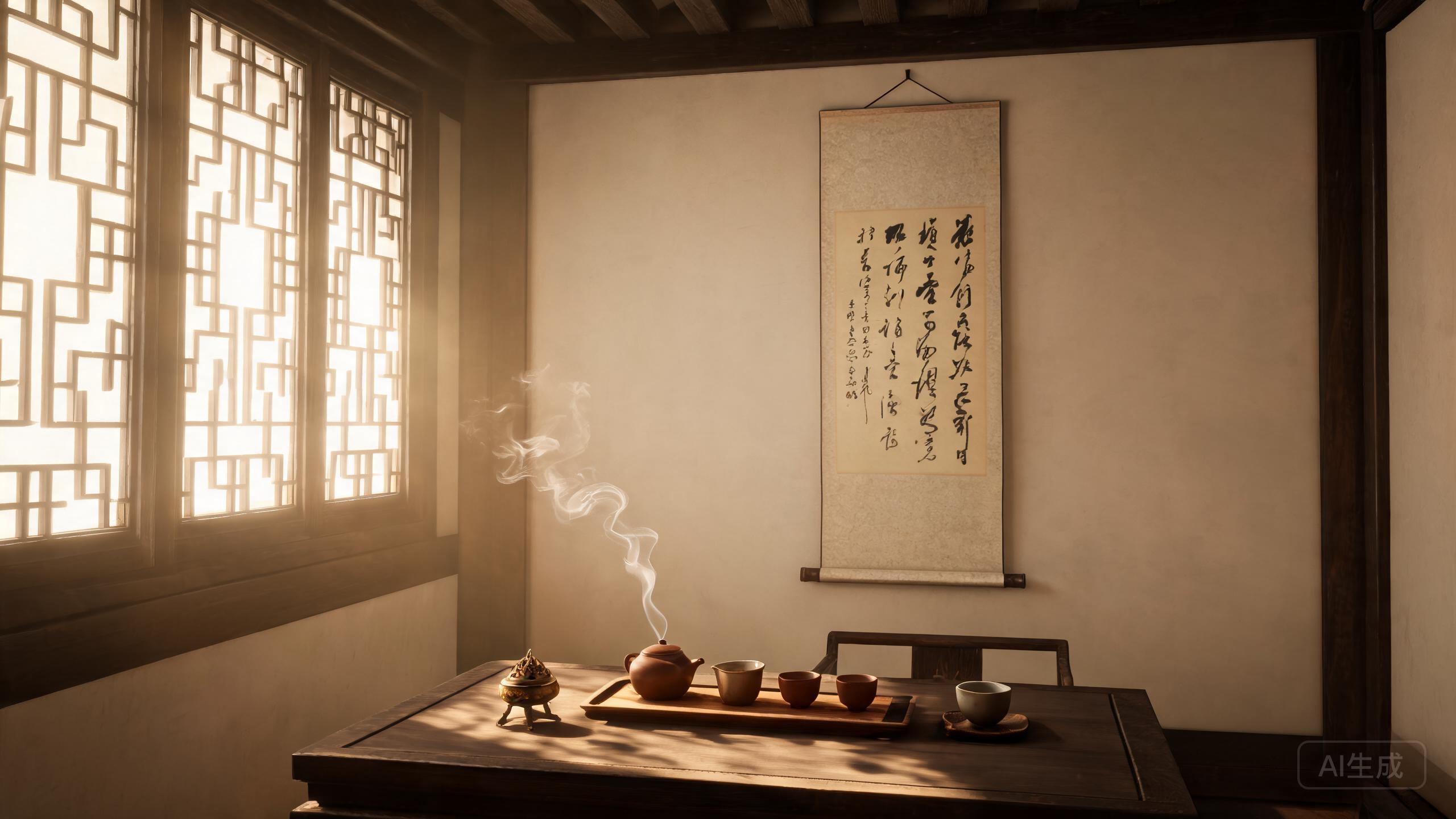
How Reprocessed tea is served
Scented tea is served simply, and the method is chosen to protect the aroma.
A lidded vessel is the most important choice, since the aromatic compounds are volatile.
A gaiwan with the lid on, or a small lidded pot, both work well here.
An open glass loses the top notes within a minute of the pour.
Water sits around 85 °C, which is cooler than most people expect for a scented tea.
The base is usually a green or a white, and hot water damages both of them.
Dose is modest at 3 g in 150 ml, and the steeps run for about 2 minutes.
The category gives fewer infusions than an oolong, and two or three is a normal session.
There is no scented tea ceremony anywhere, and the Fuzhou tea houses never developed one.
It was a commercial drink sold by the cup rather than a ceremonial one.
What it borrowed was the Chinese habit of a small lidded vessel.
That is the whole tradition, and it is enough for what the tea needs.
The wider picture
Ceremony is a family of habits, and scented tea is the category with the least ceremony in it.
Chinese practice uses a lidded cup or a gaiwan, and that is the extent of it.
Gongfu cha is possible, and it is rarely worth the effort with this leaf.
Short repeated steeps do not suit a tea whose whole point is a slow aromatic release.
Japanese ceremony uses matcha and sencha, and neither of those is scented.
Western habit treats scented tea as an afternoon drink, and mostly brews it in a pot.
That works, and it costs you the top notes if the pot is left standing open.
Scented tea sits inside the wider picture rather than outside it, and near the informal end.
It is a drink made for shops, for guests and for hot weather.
Tea houses in Fuzhou sold it by the cup to people passing through, which is not a ritual market, and the method that survived reflects that.
None of those settings produced a ritual, and none of them needed one.
Reading the category honestly means accepting that rather than inventing a tradition.
The method it does have is well matched to what the leaf actually does.
What the ritual protects
A ceremony manages four variables, and for scented tea one of them dominates the rest.
Temperature, ratio, vessel and timing, with vessel and temperature doing the real work.
A lidded vessel keeps the aroma in the cup rather than in the room.
That single choice changes the cup more than any other adjustment available to you.
Aroma is the product here, and an open vessel spends it on the room rather than on your palate.
Temperature is the second control, and cooler water preserves the blossom note.
Around 85 °C is the default, and hotter water simply cooks the flower off the leaf.
Ratio is standard at 3 g in 150 ml, and the category is fairly forgiving about dose.
Timing runs a little longer than for green tea, since the base is often a coarser leaf.
Two minutes for the first pour, and a little more for the ones after that.
Get those four right and the aroma holds for two infusions and fades by the fourth.
The form exists to serve the leaf, and this leaf wants a lid and moderate heat.
Everything beyond that is habit rather than method.
A note on authenticity
There is no single correct way, and for this category there is barely a contested one.
What matters is that the method protects the aroma, which is the thing you paid for.
A lid, moderate water and a measured dose will get you there.
An open mug and boiling water will not, and no ceremony rescues it afterwards.
Treat any claim of one true method with scepticism, and ask what it is protecting.
If the answer is not the aroma, the method was designed for a different leaf.
That is the commonest failure in how scented tea gets served outside China.
The practical alternative is the four controls, set by smell rather than by rule.
Brew 3 g in 150 ml at 85 °C, keep the lid on, and taste at 2 minutes.
Smell the wet leaf after each pour, and note when the blossom note goes.
That marker tells you the round count better than the label ever will.
Two sessions of that and the category stops being a lottery.