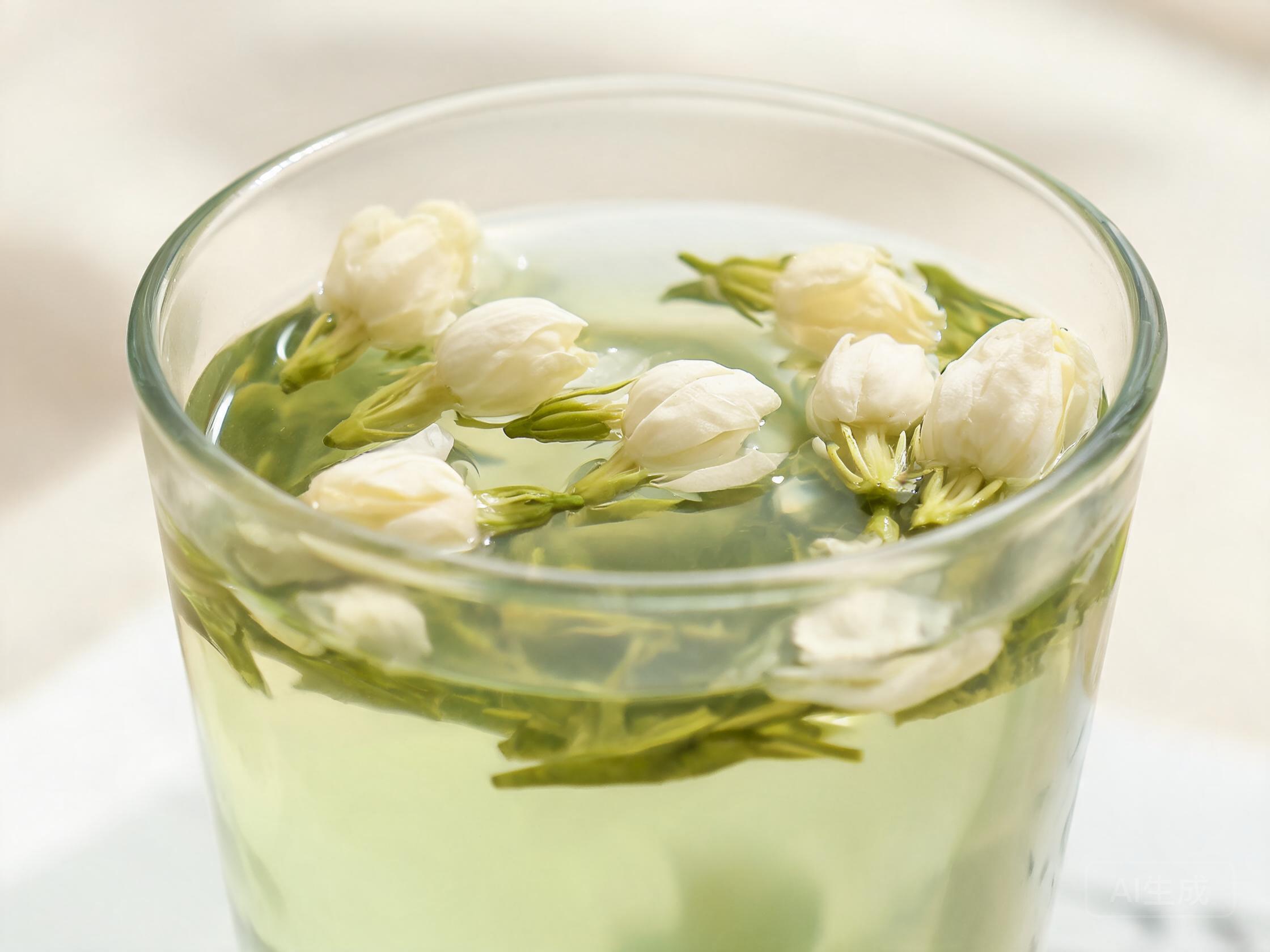
Two questions people actually ask
Two questions come up about reprocessed tea more than any others.
Is it made with artificial flavouring?
Sometimes, and the other answer is that proper scenting uses real blossom and no additives.
A scented tea is made by laying fresh flowers over finished leaf and repeating the cycle.
A sprayed tea is made by misting the leaf with an oil or an essence, which is cheaper and faster.
A good jasmine runs 7 to 9 rounds, and a sprayed one runs no rounds at all.
The two behave completely differently in the cup, and that is how you tell them apart.
How many infusions should it give?
A properly scented tea holds its aroma through the second infusion and fades by the fourth.
A sprayed one is loud in the bag and gone by the end of the first pour.
That profile is the most useful test in the category, and it needs no equipment.
The rest of the FAQ is about the base leaf, which is the fact that actually matters.
Buying and storing
Reprocessed tea varies by base and by flower, and both should be printed on the tin.
The useful question is what the base leaf is, since the flower gets most of the attention.
A Fuding Dabai(福鼎大白)base and a plain Hengxian green base are different purchases.
Smell the dry leaf, and expect the flower to smell like the flower rather than like perfume.
Jasmine should smell sweet and slightly green, not sharp and soapy.
Osmanthus should smell of apricot and honey, and rose should smell like dried petals.
A flat chemical top note that hits the back of the throat is the signature of a spray.
Look for intact leaf, since a good base is whole and a cheap one is dust.
Ask how many scenting rounds went in, and expect a number between 3 and 9.
Storage is simple, and the enemy is time rather than humidity.
Keep it sealed and dark, and drink it within about 12 months.
The blossom note is the first thing to fade, and it does not come back.
Drinking it right
The biggest question about reprocessed tea is strength, and most people brew it too hot.
The base is usually a green or a white, and hot water destroys exactly what you paid for.
Start at 3 g in 150 ml at 85 °C and give it 2 minutes.
Taste it, and change the temperature before changing anything else.
If the cup is bitter, drop to 80 °C rather than shortening the steep.
If it is thin, add leaf rather than time, since long steeps flatten the aroma badly.
Run a few infusions and count how many still smell of the flower.
Two good pours is a fair result, and four is excellent for a well made jasmine.
Use a lidded vessel here, since the aroma is volatile and you want it kept in the cup.
That is one of the few places where covering the vessel actually helps.
Water softness matters, as it does for green tea, and hard water shortens the aromatic finish.
Measure the leaf and the temperature, and the category becomes easy to brew.
Myths versus facts
Several popular claims about reprocessed tea do not hold up, and both directions do damage.
It is not all sprayed with perfume, since proper scenting is a documented and difficult craft.
Nor is it all made from waste leaf, though the cheapest versions certainly are.
And it is no modern invention, since Ming manuals already describe the round system in detail.
What is true is that the range is very wide, and the label usually hides where a tin sits in it.
That is why the category has such a mixed reputation among people who have only met the bottom of it.
The common misconceptions page for this category goes through the tests properly.
It is worth reading before deciding that scented tea is not worth your time.
Ask which base, which flower and how many rounds, and buy from whoever answers all three.
Those three facts cost nothing to ask for and tell you almost everything.
Then brew it and count the infusions the aroma survives, which settles the rest.
A well made jasmine is one of the great bargains in tea, and a sprayed one is worth nothing.